Thursday, November 9, 2017

5 Must-Haves for an Effective Marketing Campaign

email marketing list services

Putting together an effective marketing campaign takes a lot of work. There are a lot of moving pieces that all need to come together into one cohesive product that works flawlessly to accomplish your pre-planned goals.

In order to build a campaign that is synchronized and effective, you need some basic (although complex and well thought-out) components.

Here are 5 of the most important things you’ll need when crafting an effective marketing campaign.

Youtobe

What Tinder Can Teach Us About Growth Marketing

email marketing 101 pdf

Just in case you’ve been living under a rock for the past five years, Tinder is a hugely popular mobile dating app that matches potential partners based on user data and proximity.

Since the application was launched in 2012, it has experienced explosive growth.

Within two years, Tinder boasted 800 million swipes every single day. As of 2017, that daily figure is 1.6 billion.

So what makes Tinder so special, and what can we learn from Tinder’s growth that we can apply to other businesses?

You’ve probably heard the phrase “sex sells.” That’s certainly part of the picture, but there are many other facets of Tinder’s growth engine that are worth admiring.

Conceptual Design

If you look at all the major case studies for growth hacking in recent years, from Airbnb to PayPal, they all have one thing in common: an excellent product.

On a conceptual level, Tinder is ingenious.

All marketers know that consumer behavior is driven by emotions rather than logic. To be specific, people are motivated to act due to two reasons:

  1. The desire to move towards pleasure
  2. The desire to move away from pain

Tinder’s users are motivated by seeking out romantic encounters (pleasure) while simultaneously avoiding rejection (pain).

We’re not talking about mild emotions here. These are core human desires with an evolutionary basis.

It’s theorized that the fear of rejection stems from when humans lived in primitive hunter-gatherer societies. With limited amounts of potential mates in a small tribe, being rejected could entail the end of your lineage and in some cases, would lead to ostracization and death. Today, rejection is a stinging emotional experience that people don’t want to go through.

Google the term “approach anxiety” and you’ll find a library of articles on the subject – indicating how serious of a problem it is for people.

Since both parties have indicated a mutual attraction before a Tinder match is made, daters don’t need to go through the experience of approaching someone they’re attracted to while hoping the other person feels the same, and don’t have to worry about being approached by someone they have no interest in.

Additionally, Tinder uses the intermittent reward system. New matches are a “reward”. You get excited when you swipe right and it’s a match, you get the push notification telling you there’s a new match waiting for you when you open the app. When using Tinder, you likely won’t get 5+ matches a day, or even a match a day. So when matches become more scarce, they are more valued, and then when they come, it’s a huge (and addicting) reward. You get back into the app, keep swiping, keep messaging, and it becomes a “must have” in your life.

Rewards come early (the critical first few tries for a user, when it determines if they’ll be sticky, they quickly see the first signs of value from the app when they get new matches. Overtime, the rate of new matches will diminish, but by then you’re already hooked on the app. You get more matches because it’s suspected that new Tinder users are shown to more people, and thus achieve more matches.)

The emotional drivers of pleasure and pain are the cornerstone of Tinder’s success.

User Experience

Even with a great concept, Tinder’s success would have been severely limited if the user experience was inadequate.

Fortunately, Tinder’s creators were wise to the fact that we’re living in a culture of instant gratification. While traditional dating sites require you to read long-winded profiles for potential dates, Tinder gives you an avalanche of potential partners that you can accept or dismiss in one hand gesture based on first impressions.

In many ways, Tinder replicates real life. People make snap judgements all the time, and you’re unlikely to get to know someone’s favorite artists or movies unless there is an initial physical attraction.

Tinder’s CEO, Sean Rad, states: “We want to create experiences that emulate human behavior. What we do on Tinder is no different than what we already do.”

In order for word of mouth marketing to be effective, it’s important for user onboarding to be smooth and efficient. If your friend has got you excited about an application but you’re having trouble logging in or understanding how to use it, then it’s not very useful.

If you have a Facebook account, you simply connect it to Tinder, pick your photos, and start swiping. You don’t even have to include photos to start swiping (but you probably should considering this is dating).

The application has a four screen tutorial which you can skip at any time by logging in using Facebook. With a marvelously simplistic onboarding process, Tinder maximizes the impact of word of mouth marketing. (Image Source)

And while there’s a bio section, you don’t even have to go through the pains of creating a witty bio before you can start swiping. Tinder already looks at your Facebook Likes, Friends, and creates “shared interests” and “Mutual Friends” with potential matches.

Image Source

Compare this to the wringer that most dating sites put new users through. You have to write your bio, list your favorite books, movies, what you’re looking for, etc. By the time you can actually start viewing profiles you’ve already used 20 minutes of time writing a bio that few people will read.

Unlike the desktop, the smartphone is an ideal device for Tinder’s fast-paced dating action. Swiping left or right on a smartphone just feels natural – akin to swiping through a deck of cards.

Given that smartphone displays are image-centric, you’re compelled to make snap decisions primarily based on looks. Some would argue that this is superficial, but maybe dating is more superficial than we’d like to admit?

With an excellent product, in both concept and execution, the team at Tinder deployed some powerful growth marketing tactics in order to generate attention.

The Two-Sided Network

According to Wikipedia, two-sided networks are: “economic platforms having two distinct user groups that provide each other with network benefits.”

In the case of Airbnb, the brand was only successful because there were enough hosts and guests to facilitate each other’s interests. Simple laws of supply and demand.

For Tinder, both men and women would be required to make the app work. Additionally, a significant portion of the user base needed to be attractive – otherwise there would be insufficient matches.

In order to get heterosexual men on the platform, there needed to be heterosexual women already present, and vice versa. So, which demographic would need to come first?

Tinder came up with a smart solution to this quandary.

Having enjoyed her experience in a sorority at college, Tinder’s Vice President of Marketing at the time, Whitney Wolfe, set off to acquire campus VIPs as early adopters.

Tinder also got a fair amount of publicity during the 2014 Winter Olympics when snowboarder Jamie Anderson and others revealed that they’ve been using Tinder. This added to the social proof of Tinder, which only helped its user base grow more.

Image Source

Interestingly, former UFC champion Ronda Rousey stated that she didn’t have much luck with Tinder because of her fame, and actually signed up using a fake name before being found out. Given the UFC’s predominantly male fan base, I’m sure a significant number of UFC fans became Tinder users upon hearing the news.

With “high quality” models and sorority leaders using the application, this would do away with the negative stigma that digital dating is for lonely people. Instead, Tinder would be an application that social, attractive people use to make their good dating lives even better.

Campus Presentations

On a tour of numerous campuses in the United States, Wolfe gave group presentations about Tinder to sorority houses.

At the end of the presentation, Wolfe insisted that all the girls sign up for the application. Immediately afterwards, she would go to the corresponding brother fraternity and encourage the guys to sign up.

Right away, the guys would see profiles for the attractive girls that they already knew, but hadn’t had the opportunity to interact with in a romantic context.

Because campuses have a dense population of single students in close proximity, initial users had more than enough potential matches to keep them engaged with the application.

Parties and Outreach

In another display of Tinder’s marketing ingenuity, Tinder hosted a party for a USC student’s birthday and went the extra mile to make it amazing. Tinder paid the bill for the party in exchange for putting a bouncer at the door that only let people in after downloading the application.

When Wolfe returned after her college tour, Tinder’s user base jumped from 5,000 to 15,000. This is when word of mouth marketing gained momentum.

Parties would still play a prominent role in Tinder’s marketing strategy as the application expanded beyond the American college system. With launch parties in Mexico, Japan and England, Tinder brought nights of fun and entertainment to singletons around the world – while simultaneously promoting the Tinder brand.

As a result, Tinder’s user base expanded. In the initial months, 85% of Tinder’s users were within the 18-23 age, but by the following year that same age range represented only 57% of all users.

Conclusion

The growth of Tinder can be attributed to a quick onboarding system, an addicting product with random rewards (matches), a unique dating product that was different than current options, and successful launch parties.

Have you used Tinder? If so, what about the application encourages you to keep coming back?

Please let me know in the comments below.

About the Author: Aaron Agius, CEO of worldwide digital agency Louder Online is, according to Forbes, among the world’s leading digital marketers. Working with clients such as Salesforce, Coca-Cola, IBM, Intel, and scores of stellar brands, Aaron is a Growth Marketer – a fusion between search, content, social, and PR. Find him on Twitter, LinkedIn, or on the Louder Online blog.

FaceBook

Wednesday, November 8, 2017

5 Post-Purchase Email Campaign Tactics Worth Trying

email marketing landing page

Woo-hoo!

Your team just clinched another new customer. That’s great news. But before you celebrate, think about the next step in the sales process.

Communication plays a critical role in fostering customer loyalty. To transform buyers into die-hard advocates, it’s important to improve your post-purchase emails.

“For a business to thrive, it must provide customers with long-term value that translates into repeat purchases and, thus, increases the customer’s lifetime value to the company. And that is where carefully crafted post-purchase emails come in,” says entrepreneur and marketer Danny Wong.

It’s time to lay the groundwork for more sales. Let’s learn five strategies to ace post-purchase emails.

1. Focus on Relevant Interests

When you’re not interested in something, the easiest thing to do is to ignore it. You mentally set whatever it is aside and move to tasks that hold more value.

In the world of email marketing, relevancy matters to your customer. If it doesn’t offer value or bring an inkling of benefit to the individual, there’s really no reason why they should care.

A relevant message after a purchase may include a receipt with the total amount, a status update about the delivery of the item, or contact information to connect with customer support. Customers desire transparency and want reassurance that they made the right purchasing decision.

“Keeping customers up to date with the status of their purchase, especially if there is a delay or another issue, is important. In fact, consumers decide not to do business again with a brand because of lack of transparency about the status of their purchase delivery,” writes Alexa Lemzy, a customer service expert and content author at TextMagic.

Below is a post-purchase email from Amazon. Along with the order total, you’ll notice a proposed delivery date and recommended items.

As you create a post-purchase email, it’s vital to ask: why should my customer care? The goal is to exceed customer expectations by delivering messages that speak to the buyer’s needs and interests.

2. Segment to Nurture Relationships

Email marketing isn’t a cookie-cutter tool because every customer isn’t the same. You may cater to eight different buyer personas—each with distinct characteristics.

So sending a generic post-purchase email will get overlooked by your audience. To nurture more customers, you’ll want to use segmentation to send relevant emails.

“Segmenting your email list helps you speak more intelligently and directly with your customers, giving them information that they want at the opportune time. And when you do it right, the payoff can be huge,” states Joe Stych, marketer at Zapier.

Segmentation enhances relationship building, giving you a chance to effectively communicate with consumers. You can drop the blanket language in your email conversations.

For instance, a major holiday may be around the corner. So your team wants to send all new customers post-purchase welcome campaigns wishing them a wonderful holiday season.

Rather than delivering a bland message to every new customer, segmentation by location makes it possible to tailor your email to mention nearby festivities happening in the customer’s area.

You also can segment emails when it’s necessary to speak your customers’ dialect. (Your team doesn’t want to get caught describing a carbonated beverage as “pop” in Louisiana.)

Segmentation is the focal point to personalizing the post-purchase experience. You’ll build better relationships quickly.

3. Engage Based on Behavior

Only a few decades ago, business teams made wild guesses about their customers’ spending habits and shopping behaviors. Marketers relied on gut feeling and historical data to drive their future campaigns.

Lucky for you, technology is advancing rapidly and you can get real-time data about your consumers with a few clicks. And thanks to Kissmetrics Campaigns your team can nudge customers toward brand loyalty with behavior-based emails.


You can determine which post-purchase messages to send based on customer behavior, like purchase amounts, website visits to a specific product page, date of last purchase, or a combination of these actions.

Let’s say you want to invite only your most loyal customers to a VIP rewards program. You may segment your list to deliver this post-purchase email to customers who’ve purchased more than $5000 in the last month and rated your support team with 4 stars or above.

If you sent the same email to everyone on your list, you may engage people still getting to know your brand. Consequently, they wouldn’t be ready to be part of the loyalty program.

New Thrive Market customers receive 20% off their first three orders. After the first order, the eCommerce retailer sends a post-purchase reminder email (below) to entice consumers to take advantage of the remaining offer.

thrive market email

Pinpoint opportunities to customize your post-purchase emails. Sometimes it takes monitoring and understanding your audience’s behaviors.

4. Evaluate Email Frequency

Your customers receive emails on a daily basis, whether it’s from their best friends or work colleagues. So knowing how often to send an email is just as crucial as the content of that email.

Nailing down the right email frequency for your target audience helps you understand when to engage and when to leave your customer alone. People need personal space online, too.

Your post-purchase emails can add up fast. There’s the order confirmation, the shipping confirmation, the product review request, and the reorder email. And don’t forget your five-part welcome campaign.

Before you know it, you’ve sent your customers 10 emails in one week. Sending lots of emails in a short period of time can lead your subscribers to email fatigue. This problem results in customers ignoring and deleting your emails or worse, unsubscribing from your mailing list.

You can combat email fatigue by observing your engagement metrics. Check your open, click-through, and unsubscribe rates to spot any fluctuations in activity. Experiment with delaying general email campaigns until after a customer receives her post-purchase emails.

Swamping customers with emails isn’t ideal. So assess the value of each message and whether another email helps or hurts your brand.

5. Run Tests to Optimize Campaigns

It’s easy to set up your post-purchase email campaigns and forget about them as you work on more pressing issues. When specific business operations are working well, complacency may have your team missing opportunities to do better.

Running routine tests to optimize your campaigns is not only a good business practice, but also an essential process to learn which emails resonate with your audience. Plus, you can identify changes in customer behavior and adapt your campaigns accordingly.

With Kissmetrics, your team can track purchases from email campaigns. You’ll know exactly which campaign engaged consumers when they bought your product or service.

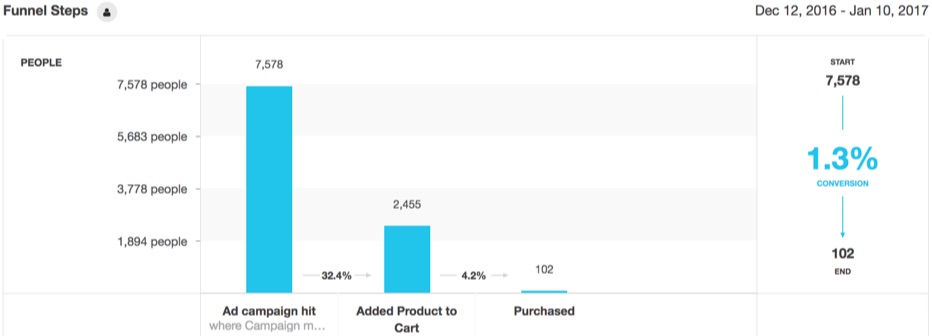
The Kissmetrics Funnel Report

This report is valuable for tailoring your email campaigns. For example, if a customer bought your product after engaging with your blog newsletter, your post-purchase campaigns may include recommendations to specific blog posts to encourage repeat orders.

Or what if you notice a sharp increase when you send 15% discount reorder emails compared to a 5% savings? Now, your team can adjust your strategy to fit the customer’s desires.

Don’t be afraid to run multiple tests to learn your post-purchase email sweet spot. It’s only by analyzing the data that you can satisfy your audience and boost your sales.

The Power of Email

Email isn’t reserved just for gaining a prospect’s attention pre-sale. It’s also an effective tool for nurturing customers into retention.

Revamp your post-purchase email by staying relevant to the recipient’s needs. Send emails that engage customers based on their behavior, not unfounded hunches. And optimize your campaigns by running experiments.

There’s power in email. Now, it’s your turn.

About the Author: Shayla Price lives at the intersection of digital marketing, technology and social responsibility. Connect with her on Twitter @shaylaprice.

FaceBook

Friday, November 3, 2017

How to Find Which Sites are Driving Retention

email marketing ideas for 2017

I’ve previously written about how to use Kissmetrics to find which backlinks drive signups. I wrote that article because we all know backlinks are great for SEO, which is great for traffic, but what really matters is the quality of traffic you’re getting. So, what that post explained was how you can use a Funnel Report to see who came to your site, and how many of them signed up. We then segmented that traffic by the first ever link that sent them to our site.

It’s a nice, handy way to use Kissmetrics to help provide some insights and potentially future campaigns.

But what about the step after the first visit or a signup? What about retention? How do you find which sites are sending you the visitors that keep coming back?

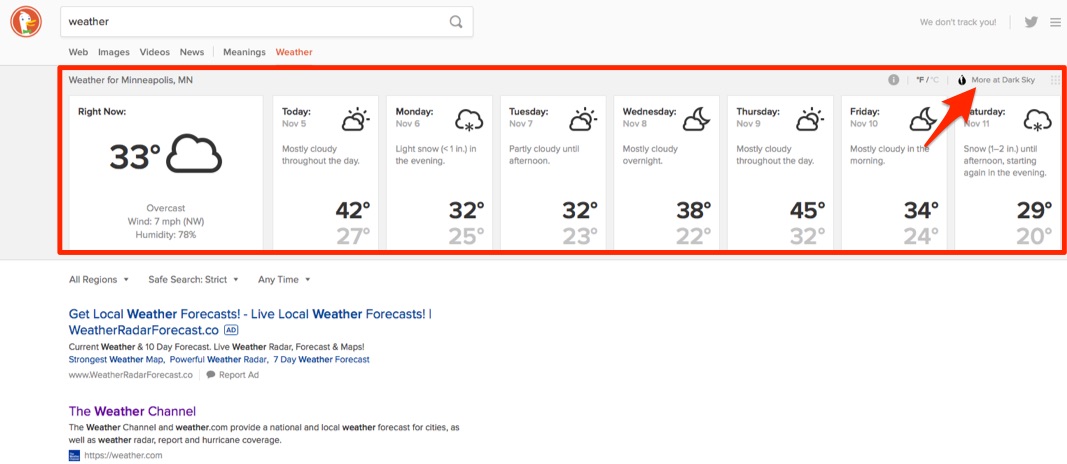
The idea for this post came to me from my own experience. I’ve been using DuckDuckGo (DDG) lately, and one day I simply entered weather just to see what would return. I saw that DDG uses a site called DarkSky, which is one that I’ve never heard of, even though they have the #1 paid weather app in the App Store.

darksky on duckduckgo

I liked the layout of the site, it’s ad-free content, and the forecasts have been pretty accurate. Now I use it as my primary weather site.

So this had me wondering – if I was working at DarkSky, how would I know where people are coming from? And of all the traffic channels (direct, organic search, DDG, etc.) that are sending us traffic, how could I track that to see which sources brought the highest retention? In this case, we’ll refer to retention as simply coming back to the site after their first visit.

So, here’s how to find that out using Kissmetrics.

The Cohort Report

Kissmetrics is full of reports that each serves a different purpose. Some can be used for analyzing customer acquisition campaigns; others can be used for retention analysis. And some can be used for both.

The Cohort Report is primarily used to track retention (some even use it for conversion rates). It groups people together based on similar attributes and tracks their behavior overtime. In our case, we’ll be grouping the people that have visited our site, and we’ll group them by the domains they were first referred by.


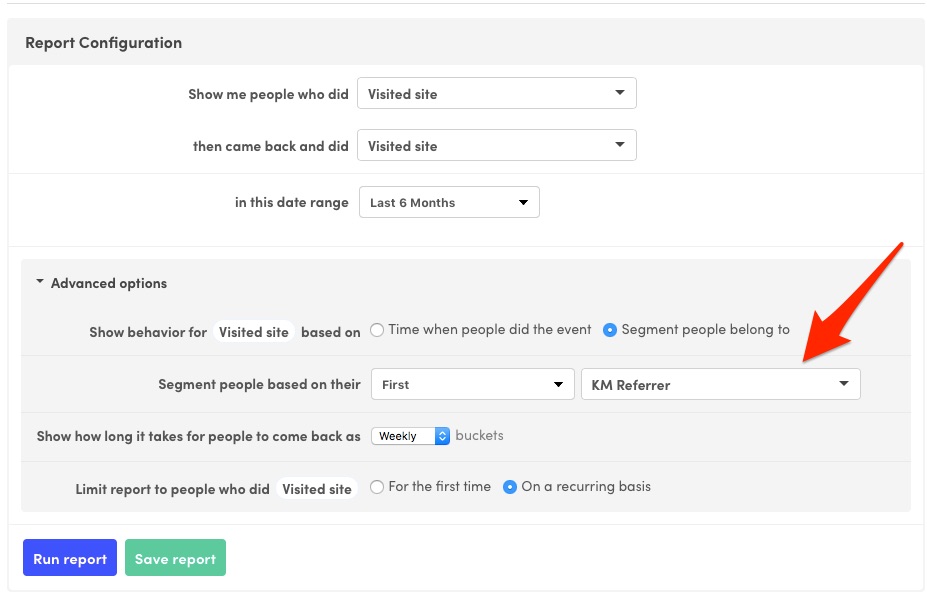
The set up is pretty easy. We’ll set our conditions for those that have Visited Site and Visited Site. We’ll then segment by the first referrer:

KM Referrer is simply the referring URL that brought traffic to your site. If a visitor came to your site via a Google search, the KM Referrer would be www.google.com. If they came from the Kissmetrics Blog homepage, the KM Referrer would record as blog.kissmetrics.com.

It’s also important to note that we’re tracking people on a week-to-week basis. This means that each week is a “bucket”. All visitors that came from Google in the last 6 months are put in the www.google.com bucket, then tracked each week. If they visit in the second week after their first week, they’ll be placed in that bucket. If they don’t return in the third week but do in the fourth week, they’ll appear in the bucket for the fourth week as well.

Now that we got that cleared up, let’s run the report and get our data:

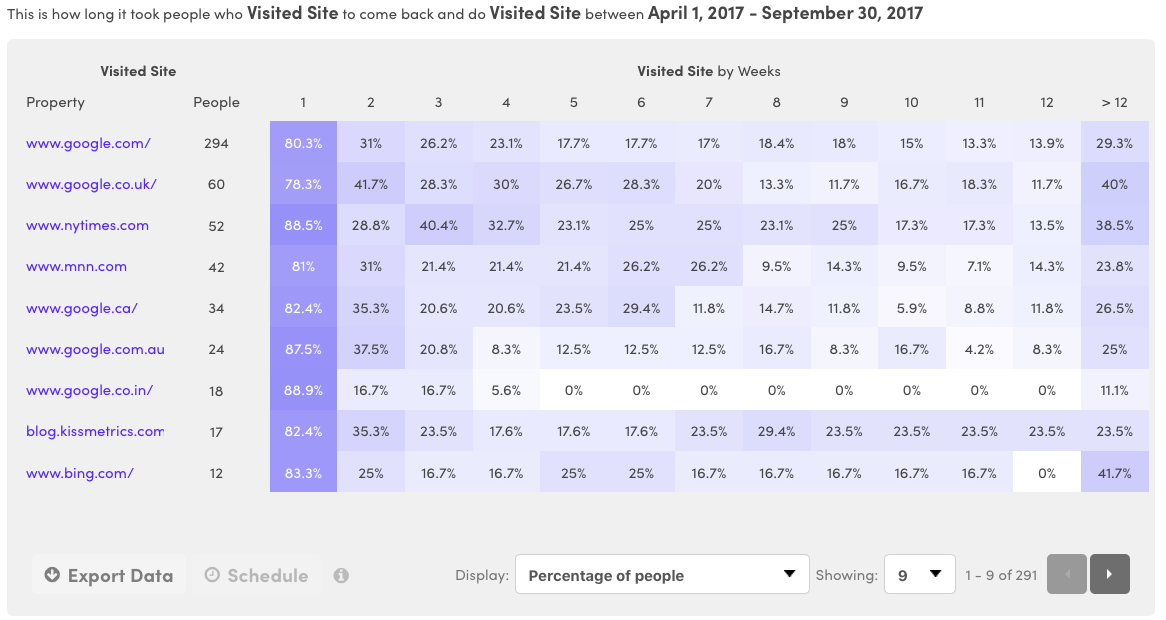
The key thing to look for when viewing our Cohort Report is that the darker the shade of blue, the greater the retention.

So it looks like organic search from Google is sending us the most traffic.

However, we see our highest retention is the 52 people that came from nytimes.com. To me, this data signals that we should spend more time trying to press coverage. SEO is always great, and it has good retention, but nothing beats the traffic coming from nytimes.com.

So What Does All This Mean?

Traffic is the first step. The second step is retaining that traffic by getting those people to come back. Find what percentage of new users come back (using the cohort report) and then see where you’re getting your above-average retention (with a significant amount of traffic). That’s where the Cohort Report shines – showing you where you’re underperforming and outperforming against your baseline retention.

Conclusion

Traffic is great. Signups are even better. But the most important part is retaining those new users. That’s the only way to build quality traffic and an audience.

So how do you measure your progress on retaining users?

This is where cohort reports come in. Specifically, the Kissmetrics Cohort Report (which was the example we used here). It’s segmentation flexibility (you can group people by whatever you track), along with our person-tracking analytics means that you get not just numbers, but also who you are retaining and where they came from.

This post really started out to answer a question – how would DarkSky (or any other site) know if the traffic they get from DuckDuckGo (or any referrer) is being retained? And, perhaps at a higher level, how would they know if they’re even getting traffic from DuckDuckGo? I wrote that post to answer this question. To recap, in two steps:

  1. Run a Cohort Report, segmenting your group by their original referrer domain.
  2. See how many of the people that come from that original referrer by viewing each bucket across the row in the report’s data.

Any questions? Let me know in the comments.

About the Author: Zach Bulygo (Twitter) is the Blog Manager for Kissmetrics.

Youtobe

Case Study Highlights: American Bedding Manufacturing

Thursday, November 2, 2017

7 Reasons To Work With A REAL HubSpot Partner

email marketing for bloggers

In 2014, Waypost Marketing officially became a HubSpot Partner. Last year, we achieved Gold-tier status, and we feel that we're pretty much safe in calling ourselves "HubSpot experts."

We've run across a few firms in our industry calling themselves HubSpot partners, but—and I mean this with all due respect—they're just not in the same league.

Often, they don't even utilize HubSpot's marketing automation software for themselves and haven't shown any demonstrable success in using the platform on behalf of their clients.

They simply haven't put in the investment of time needed to really dig in and both understand HubSpot's products and services, or utilize them effectively. Unfortunately, that means they definitely won't be able to get you the level of reward that you deserve.

While these companies can seem more affordable on the surface, there's a reason we charge what we do. We have learned first-hand that you cannot dabble in Inbound Marketing—it takes a lot of time, a lot of knowledge, and a lot of talent... and most of all, it takes learning how to achieve success through experience.

Here are 7 reasons why you want to work with a bona-fide, experienced HubSpot partner (and Waypost in particular).

Google

Wednesday, November 1, 2017

How a Structured E-Commerce Testing Plan Leads to Quick & Stable Wins

email marketing data analysis

If you were Amazon.com CEO Jeff Bezos, how would you structure your testing and experimentation process to drive growth?

Let’s look at what Bezos says about experimenting (emphasis mine):

“One area where I think we are especially distinctive is failure. I believe we are the best place in the world to fail (we have plenty of practice!), and failure and invention are inseparable twins. To invent you have to experiment, and if you know in advance that it’s going to work, it’s not an experiment. Most large organizations embrace the idea of invention, but are not willing to suffer the string of failed experiments necessary to get there.

Outsized returns often come from betting against conventional wisdom, and conventional wisdom is usually right. Given a 10% chance of a 100-times payoff, you should take that bet every time. But you’re still going to be wrong nine times out of 10. We all know that if you swing for the fences, you’re going to strike out a lot, but you’re also going to hit some home runs. The difference between baseball and business, however, is that baseball has a truncated outcome distribution. When you swing, no matter how well you connect with the ball, the most runs you can get is four. In business, every once in a while, when you step up to the plate, you can score 1,000 runs. This long-tailed distribution of returns is why it’s important to be bold. Big winners pay for so many experiments.”

As CEO of Amazon.com, if not the world’s first, than certainly the largest, and the most successful e-commerce business (which by now is involved in industries far beyond retail), Bezos convincingly puts forward the case for adopting a test culture in any e-commerce environment.

In this post, we’ll look at how you can structure your in-house e-commerce CRO program and create a testing plan that grows with your organization.

You might not be Amazon… but why not swing for the fences?

Plan to Fail (and Learn From it)

The process of conversion rate optimization, or CRO, aims to make e-commerce companies more profitable by increasing the proportion of purchasers to total visitors.

A structured process — encompassing research and hypothesis creation, testing itself, and the prioritization and documentation of those tests — is crucial to creating a testing culture that produces sustainable long-term results.

In most of these steps, the need for a plan is obvious. But most people don’t plan for the testing phase. In fact, testing is frequently regarded as an end in itself.

However, testing is just the culmination of the entire process that stands behind it. Its real end goal is to increase revenue.

In the same way that it’s not possible to formulate and create tests without prior research, it’s also not possible to run tests without planning. And moving from conducting individual tests or a sequence of tests to full-scale, constantly active testing is what separates a one-off CRO sprint from a thought-out, deliberate CRO program.

Guess which approach is better for establishing a testing culture that enables companies to grow while absorbing their mistakes?

Making mistakes and failures as an integral part of growth means embracing the main components of any learning process. Each experiment, no matter how successful or unsuccessful, is a learning opportunity for you and your organization. Implementing and integrating the knowledge that results from your tests is one of the primary tasks of a viable CRO testing program.

Just a few reasons you should structure and document your testing program…

  • Testing every aspect of your website also enables you to challenge your prior assumptions by grounding alternative assumptions in data — instead of opinions or wild guesses.
  • Experimentation allows you to estimate the results of all improvements in real time, without having to wait for the end of the quarter to see improvement (or lack thereof).
  • By applying deliberate structure to the testing process, you make it easier to follow, teach, and repeat.

All of this makes conversion optimization testing a pivotal consideration for any business with ambitions of growth. One of the most efficient ways to set yourself up for e-commerce CRO success is to establish an ongoing process within your organization, with a specific, dedicated team.

This requires you to consider CRO not as an a la carte service provided by an agency, but as an opportunity to institutionalize and embrace the CRO process. And it requires that you learn to conduct tests yourself.

Why is a Testing Program a Necessity?

Note: If you want to test one hypothesis at time, you can go ahead and skip this section.

Why? If you’re running one test at a time, your testing plan and program will be the same as the hypothesis prioritization list (which we’ll talk about below). There’s just one small issue that may bother you — the time required to put all your hypotheses to the test.

If you choose to go the one-test-at-a-time route, be prepared to spend some time on the journey. The best-case scenario, if you have 25 hypotheses to test, is that you’re looking at two years of testing. Why would it take two years? The recommended practice is to run each experiment for at least a month (or until the test reaches significance and/or covers a few buying cycles) to ensure valid test results.

“Significance” is a statistical concept that allows you to conclude that the result of an experiment was actually caused by the changes made to the variation, and not by a random influence. It’s key to ensuring that tests are actually valid and that their results are sustainable and repeatable.

Alex Birkett, Content Editor for Conversion XL, explains the concept of significance a bit more in-depth:

“What we’re worried about is the representativeness of our sample. How can we do that in basic terms? Your test should run for two business cycles, so it includes everything external that’s going on:

– Every day of the week (and tested one week at a time as your daily traffic can vary a lot)

– Various different traffic sources (unless you want to personalize the experience for a dedicated source)

– Your blog post and newsletter publishing schedule

– People who visited your site, thought about it, and then came back 10 days later to buy [your product]

– Any external event that might affect purchasing (e.g. payday)”

The 1-month rule above holds true for most websites. Those with exceptionally high traffic (ranging into millions of unique visits) will undoubtedly be able to achieve significant results within shorter periods. Still, to eliminate every outside influence, it is best to let tests run for at least a full week or two.

Say you have 37 different hypotheses to test. Your ideal aim is probably to create all 37 tests and conduct them all at once, as an alternative to going through the process of testing one by one.

Sadly, this isn’t possible either, for a different reason. Sometimes the experiments themselves will conflict with one another, limiting their usefulness or even invalidating each other’s results.

Since none of us want to be old men when our conversion optimization efforts reach fruition, we need an alternative. That’s where the concept of testing velocity comes in. Testing velocity is an indicator of how many tests you conduct at a given time frame, such as a month. It is one of the metrics of testing program efficiency and higher the velocity you achieve, the quicker your program will bring increased revenue. Provided, of course, you do everything right.

This is the simplified process of creating a testing program

The Building Blocks of Your Testing Program

The main elements that will determine the dynamics of your testing program are:

  1. Traffic volume
  2. Interdependency of tests
  3. The ability to support the design and implementation of multiple tests at once (operational constraint)

Let’s quickly go through what each of these elements means.

Traffic Volume

Traffic volume is an obvious obstacle, since your website traffic will influence not only what types of tests you can run, but also how many concurrent tests, and which pages will draw enough traffic to support tests.

Traffic volume is the reason to prioritize tests that have the greatest projected effect. Tests with higher expected lift have much lower requirements in terms of the sample size/traffic volume needed to reach statistical significance.

In practice, this means that if we expect a test to result in an increase in conversions of, for example, higher than 25%, we will need fewer observations to confirm this expectation than if we were expecting a 10% increase. This is the consequence of using a T-test as the statistical engine for running experiments: the smaller the effect of a change, the larger the sample needs to be in order to eliminate all outliers and reach statistical significance and confidence.

Interdependency of Tests

The ability to run experiments concurrently is the function of each experiment’s dependency on the others. What does this mean?

The basic principle is that we want to test a new page treatment on the maximum available number of visitors. If you happen to set up an experiment that will filter people out of the next experiment, then you will not be abiding by this basic principle.

If your visitors are split 50% on an initial page, meaning that half do not get to see the next page that’s also being experimented on, you will not have a valid test result.

For example, you may want to improve your funnel. So you create experimental treatments (variations) that will run on two different steps of the funnel. This may mean that the visitors that are shown one page do not get to see the other — because the experiment’s outcome has influenced how many people get to see the other experiment you are running.

Your sample will automatically be 50% smaller, meaning the test will have to run twice as long as it otherwise would have needed to achieve significance.
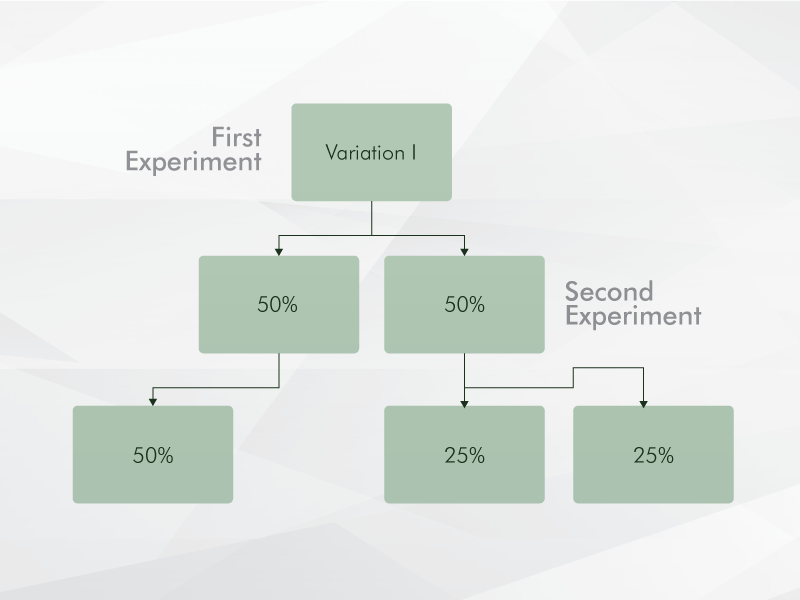
Running concurrent experiments can cause interdependency issues

To prevent this issue, estimate the interdependency risk prior to creating an experiment, and run interdependent experiments separately. You can sometimes solve this issue by using multivariate tests (MVTs), but sometimes your traffic volume will preclude this. Additionally, too many variants in MVTs can invalidate the experiment results.

Operational Ability — How Many Tests Can You Design and Actively Run?

In an ideal world, we would all be testing all the hypotheses we’ve created just as soon as the research is complete!

However, creating and running an experiment is hard work. It requires efforts from multiple people to create a viable and functional test. Once the research results are in and you have framed your hypothesis, the experiment won’t just spring into existence.

Making an experiment requires preparation. At minimum, you need to:

  1. Sketch out an updated visual design, which you’ll use to create a mockup or high-fidelity wireframe
  2. Create an actual design based on the mockup
  3. Code the design/copy changes
  4. Perform a quality assurance check and do a dry run before the test is live

All this requires time and effort by a team of people, and some of the steps cannot even begin before the previous ones are complete. This is your operational limitation.

You can overcome operational limitations by either hiring more people or limiting the number of tests you run.

Adjust Testing for Outside Influences

While it would be great if every experiment happened in a vacuum, this just isn’t the case. Website experiments performed for the purposes of conversion optimization will never enjoy the controlled environment of scientific experiments — where the experimenter can maintain control on all other influences outside of the one being intentionally changed.

However, we can at least account for obvious or expected test influences, such as holidays that affect the shopping habits of our customers or other predictable events that may change buyer behavior. By taking these factors into account when framing your plan, you can adjust for this and run the experiments at a time when the risk of outside influence is smaller.

Even More Benefits of Creating a Testing Plan

Having a testing plan not only makes your CRO process faster and more effective — it has a number of important additional benefits.

Let’s start with the benefit that’s most important in the long run. A test plan structures and standardizes your approach, making it repeatable and predictable.

An active, structured testing process with no expiry date essentially creates a positive feedback loop, so that even when your testing plan reaches its conclusion, you’ll feel encouraged to seek new challenges and run more tests.

In the long run, this leads to the establishment of a bona fide testing culture within your organization.

A structured process also allows for better feedback on the results. At each phase’s conclusion, you can review the results, update your expectations for the next phase, or adjust experiments that failed in the previous phase. In effect, you’re “learning as you go”.

Finally, a testing plan just plain-and-simple allows for better reporting and makes a more persuasive case for conversion optimization as an organizational must. If you are able to report progress in monthly increments, with results clearly attributed to experiments (which were built on hypotheses, which were derived from research), you’re much more likely to gain organizational support for your CRO program.

A testing plan creates clear milestones and enables the research team to accurately track progress, plan future activities, and remove potential bottlenecks in deploying and implementing experiments. That way, the chance that the testing process may spiral out of control is completely sidestepped, and each team member’s role is clear.

How to Structure Your Testing Plan

We’ve just explored why you need to make a testing plan prior to actual testing — let’s call that step zero, if you will. Now let’s talk about the nuts and bolts of creating that plan.

First, figure out what type of test(s) (A/B test, MVT, or bandit) you’ll run. Test type determines how much traffic you need, as well as the development effort necessary to deploy experiments.

Next, you need to carefully estimate the interdependency of your tests and make adjustments to your priority list if any tests clash with each other.

Finally, to determine the number of experiments you can run, estimate how many you can effectively support with available staff. Take into account that you need to have researchers framing hypotheses, designers and front-end developers to create variations and setup the experiment itself. Since each of these groups will have a number of tasks to attend to, you need to make sure you run only so many tests that your staff can support.

To ensure this, start by going through your list of hypotheses. If you prioritize tests accurately according to the effort necessary to deploy them, you’ll already have many of the inputs for your test plan.

Ultimately, your testing plan should take the form of Gantt charts, which are very helpful in indicating the time frame for each test phase.

A test program is usually presented in the form of a Gantt chart

A “test phase” contains all the tests that can be run simultaneously. For example, if you discover you can run four tests simultaneously, and you have 22 tests to run based on your hypotheses, you’ll have 5 test phases.

Your test plan should also list every proposed test and provide the following concise information for each:

  • Related hypothesis (the “why” of the test)
  • Required sample size
  • Expected effect
  • Who will be the subject (target segment or audience)
  • Where it will run (URL of the page)
  • When (the time period in which it will run)
  • Rough description of changes (the “what” of the test)
  • How to measure success (what metrics the experiment should improve/affect to be considered a success)

If you structure your testing plan this way, you will maximize your test velocity and allow for maximum efficiency of your optimization program.

How to Prioritize and Assign Testing Tasks

Once you create and structure a plan, the only remaining ingredient necessary for success is to actually run through the process.

Obviously, both to secure the greatest possible revenue and to create initial confidence, the first tests you run should be those you expect to have the greatest effect. Select the hypotheses that have high importance (for example, issues that affect your users’ movement through the funnel); that you are most confident will work; and that require the least effort to implement.

You can choose a prioritization model to apply to hypotheses during the research process. Apply the model properly and if your estimates are correct, you will almost certainly get the results you’re looking for.

For each experiment to succeed, you need to translate hypothetical solutions into practical web page designs as accurately as you can.

When you have a mental image of the variation you want to test, translate that into a visual image using a wireframe or mockup. Hand that off to your designers, who can turn it into an actual web page.

While the visual design is being prepared, your front-end developers need to check if any additional coding will be necessary to implement the variation.

The most important part of implementing an experiment is to ensure that it’s set up free of any technical issues. Do this by making quality-assurance protocols and checks part of your testing program.

Once a given step in the experiment development cycle is complete, staff involved with that step can immediately start working on the following experiment. Having a plan enables them to advance further without any delay, and adds to the efficiency of your conversion optimization effort.

Establishing a Culture of Experimentation

Building a testing culture is the main objective of a structured CRO process. A testing culture requires the company to make a switch from a risk-averse and slow-decision-making mindset to a faster, risk-taking approach. This is possible because testing enables you to make decisions based on measurable, known quantities — in effect reducing your risk.

Extensive research is a necessary prerequisite of successful A/B testing (which is something that hopefully, a majority of people involved in testing already understand)! Suffice it to say that the role of research is well publicized, and there are a number of articles about it.

We will also assume that by now, you know how to frame a hypothesis from this research. The hypothesis creation process is just as important to the ultimate success of your CRO effort as running the tests themselves. Only properly framed, strong hypotheses will result in conclusive A/B tests.

In a structured CRO effort, no element should be left to chance. Extend the same careful treatment to actual testing as you afford to research and hypothesis creation. Once you’ve properly prioritized your hypotheses by the effort each will take, their importance, and their expected effect, you need to prepare your tests with the same forethought.

How you approach setting up your testing program will greatly impact your end results. The aim of every good testing program is to attain the maximum test velocity and see meaningful test results in the shortest possible time.

About the Author: Edin Å abanović is a senior CRO consultant working for Objeqt. He helps e-commerce stores improve their conversion rates through analytics, scientific research, and A/B testing. Edin is passionate about analytics and conversion rate optimization, but for fun, he likes reading history books. He can help you grow your e-commerce business using Objeqt’s tailored, data-driven CRO methodology. Get in touch if you want someone to take care of your CRO efforts.

Youtobe