Thursday, September 3, 2020

How to Choose The Right Adwords Agency

email marketing data protection
Disclosure: This content is reader-supported, which means if you click on some of our links that we may earn a commission.

According to Unbounce, half of the people who click on your ads are more likely to make a purchase than those who came from an organic link. 

That’s a bit surprising. 

You’d think with 600 million devices running ad blockers —advertising would be less effective. Google Ads commands 73.1 percent of search advertising, roughly $40.3 billion. Advertisers couldn’t afford to continue spending that much money on ads if they didn’t work.

Google Ads are effective. 

What’s tough for many companies is choosing the right AdWords Agency. Managing Google Ads takes a lot of time, effort, and energy. Most companies choose to outsource that hard work to a PPC agency. If you plan on doing the same, you’re going to need to know how to choose the right agency to manage your Google Ads.

Here’s how you do it. 

Know Your Goals and Desired Outcomes

Google Ads is a direct response platform where customers are searching directly for your product or service. To achieve profitable results with your Google Ads campaigns, you’ll need to have some concrete goals in mind. In general, companies focus their attention on a few specific goals, such as these listed on Google’s website:

  • Get more calls to your business: Use this goal to book appointments, schedule a job, get customers, on the phone, or close a deal. 
  • Increase visits to your store: If you’re a local business, you’ll want to generate foot traffic to your physical location via your Google Ads campaign. This goal would be all about generating offline demand. 
  • Drive people to your website: The all-purpose goal that’s focused on sending people to a specific website so they can fill out a form, purchase your product, request more information about your services, or opt-in to your mailing list. 

The ultimate goal for each of these is revenue; each of the examples above would be considered a lead. Unlike SEO, where results require weeks or months of work,  Google Ads is a direct response channel. A successful ad triggers immediate action from searchers. 

The focus is on action

Next, you’ll want to create specificity around your goals. This depends on a few factors like your budget, the keywords you choose, match types, etc. For example, if you’re running a service business, you know you’ll need a certain amount of leads. This means you’ll need to identify details like your: 

  • Breakeven cost per click (CPC): This is the most you’re able to pay to receive a click without losing money. 
  • Conversion rate: Most people know this one; it’s the total number of conversions divided by the total number of visitors you’ve received. How many conversions do you need to be profitable? 
  • Breakeven cost per conversion (CPA): The average cost of a conversion. 
  • Breakeven cost per lead (CPL): The most you can afford to spend to acquire a new lead. 
  • Customer lifetime value: This measures the total value of a customer over the course of the relationship. 

There are more metrics you’ll need to track, but your agency can manage these for you and provide you with the reporting you need once you’re up and running. Providing your agency with these numbers makes it easier to set things up; you can use these to set your daily/monthly budget, identify profitable campaigns at-a-glance, or set goals to boost profitability. 

It would be best if you had a rough idea of the numbers you need to be profitable — the number of leads, sales, and customers you need each month for the campaign to be self-sustaining. 

7 Characteristics That Make a Great AdWords Agency

Here are some things you’ll want to look for when vetting an AdWords agency. These characteristics are important must-haves. Use them to determine if the agencies you’re considering are a good fit. 

1. Professional certification

The agencies you’re considering should have Google Partners status. Google explains this more, sharing why this is so important for your agency: 

“Achieving Partner status means that your company has demonstrated Google Ads skill and expertise, met Google ad spend requirements, delivered company agency and client revenue growth, and sustained and grown its client base. Partner status gives your company access to a number of benefits, including the Google Partner badge that can be shown on your website and marketing materials.”

If you’re looking for an agency to manage Google Ads on your behalf, this is important for a few reasons. It shows prospective clients that:

  • Your agency has enough clients to meet Google’s spend requirements
  • Active clients are achieving revenue growth, and you’re delivering on your promises
  • Your agency is growing (i.e., more clients and revenue)
  • Google feels you have the expertise needed to manage Google Ads accounts for clients

If you’re looking for a clear indication that your AdWords agency is legit, this is it. You’ll also want to verify that each of the paid search strategists on your account are individually certified. You can verify your agency’s partner status with Google at this URL. Verification will provide you with a list of Google products your agency has received certification for, their partnership type, and the number of offices certified by Google. If they have a banner/badge on their website, you should be able to click to verify your agency’s status with Google.  

If you’ve requested a proposal, you should receive links to the certification URLs for each of the strategists assigned to your account. The URL should be displayed in the following format:

https://academy.exceedlms.com/student/award/20xxxxx

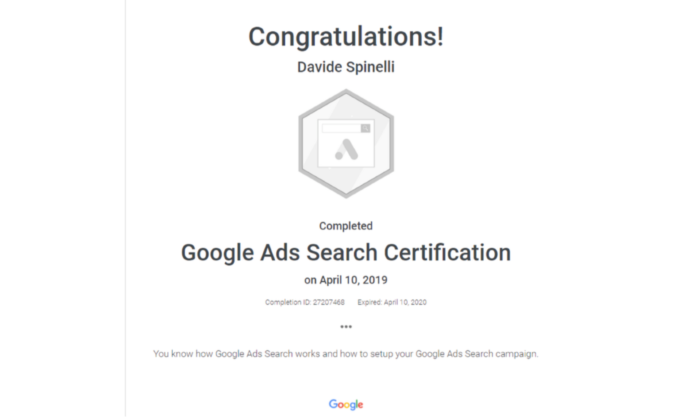
Their certification should provide you with a completion identification number and the completion and expiration dates for their certification. Here’s what an individual’s certification looks like: 
2. You keep assets and creative

Some PPC agencies rely on a pay-per-lead model. Using this model, they drive traffic to a general landing page or advertorial that generates leads for their clients. The downside to this model is the fact that clients don’t receive the landing pages, creative, or assets that went into producing the landing page. 

This arrangement is great for agencies but bad for clients. 

It’s great for agencies because they’re able to use one landing page or ad with multiple clients in the same industry. Sure, clients receive the leads that they need, but they’re always dependent on the agency that produced them. They never really figure out how to make things work for themselves. 

This approach can work. 

If you’re only interested in the leads and you’re not interested in creating your own content, landing pages, or marketing in the future, there’s nothing to worry about. If you’re also interested in sticking with the same agency indefinitely, there’s no problem. 

Change any of those things, and you may not be able to continue to receive the same amazing results you’ve come to expect in the long term. Insist that your agency provides you with the assets and creative they’ve produced for your business.

3. Total agency transparency 

Google requires agencies to be transparent with their clients. This has been a requirement for some time, and it’s another reason why Google Partner and individual certifications are so important. 

“If you work with another company to manage your AdWords campaigns, you should be able to find out how much of your advertising budget (cost) was spent on AdWords, how many times your ads appeared (impressions) and how many times users clicked on your ads (clicks). We’ll include these requirements in our legal terms and agreements.”

Google also mentions that almost all of its certified partners are already offering this transparency to its clients. Transparency isn’t common with non-certified agencies; most agencies won’t provide this if clients don’t know any better. 

If you’re working with your agency, you should have access to all reports. You should also have access to metrics including impressions, clickthrough rates, keywords, account and ad group structure, and more.  If you have questions about where or how your money is being spent, you should receive straightforward answers. Ask your agency about the information they provide to clients if you’re unsure. 

4. Short term contracts

Some agencies prefer to lock you into a long-term contract (e.g., 12 or 24 months); this makes sense when you realize it takes a lot of time and resources to set up and launch a new client account. Most AdWords agencies don’t make money on the account until they’re a few months into the campaign. 

This arrangement isn’t always what’s best for clients, especially if the agency fails to perform. Clients should be able to come and go as they please. When agencies focus on performing well for clients, the relationship is more stable. 

Some agencies can offer month-to-month arrangements profitably. A compromise could be an initial three-month contract that switches to a month-to-month agreement afterward. Whatever you negotiate with your agency, it needs to be beneficial for both. If you’re unhappy with your agency, you should be free to leave. 

5. A proven and consistent track record

Your agency should be able to provide you with references and case studies to validate their expertise. There shouldn’t be any doubt about your agency’s ability to perform. You should have the data you need to vet their experience and track record accordingly. 

It’s not enough to prove that you’ve achieved amazing results for your clients. You need to demonstrate that you’ve been able to do it consistently over time. 

Ask your agency for all of the data you need to validate their performance —references, case studies, anonymized campaign data, and before and after campaign data. 

6. A clear process and methodology

Your agency should have an established process for managing and maintaining your account. They should be able to tell you when they add keywords and create new ads, how they set and maintain budgets across keywords and ad groups, and the adjustments or changes they’ll need to make for various markets. 

They should also be able to tell you which tests will be run, how they’ll be run, and the metrics or KPIs they’ll be using to validate performance. 

7. Optimize for conversions and revenue

I’m not talking about the Ads setting in your account. I’m talking about your agency’s focus on boosting revenue. It’s common for many agencies to focus their attention on impressions or clicks. Your agency should focus on helping you convert those clicks to revenue. 

This means your agency needs to focus its attention on:

  • Ad messaging, improving the timing, targeting, and placement of your ads
  • Conversion rate optimization to improve the performance of copy, landing pages, and offers
  • Setting up analytics and reporting to track performance from keywords, to ad groups, to landing pages
  • A/B split/multivariate testing to improve campaign performance based on the data you receive from analytics

Google Ads is a direct response platform, so optimizing for conversions and revenue should be your agency’s primary focus. If they’re focused on anything else, they’re not a good fit. 

How to Work With an AdWords Agency

Here’s a list of the things your agency will need from you. These requirements aren’t hard, but they do require some effort on your part. 

  • Trust your agency: Your agency needs your trust. If you’re worried about being burned, watch them closely at the beginning of the relationship. Once you see that they’re competent and they’re able to manage your campaign properly, give them your trust.
  • Set quantifiable goals: Clear, measurable goals are what you need. If you’re looking for leads, set realistic goals on the number you need per day/mo. If you have a specific conversion rate, make that clear to your agency. Are you looking for a certain number of bookings? Make the requirements specific. 
  • Stability and focus: Goal setting is important, but you’ll want to avoid changing your goals and KPIs repeatedly. Your agency needs time to gain traction. Your account managers need time to run tests, analyze performance data, and optimize for KPIs. Changing your goals repeatedly sets progress back, so you’re unable to get the results you want. 
  • Commit to improvement: If your website can’t convert visitors, PPC is a waste of your time and money. This means tactics like website usability and conversion optimization are important must-haves if you’d like to improve your campaign performance. 
  • Be flexible with your offers and price: Use promos, discounts, bonuses, or incentives to attract shoppers’ attention. Give your agency the flexibility they need to attract the volume of visitors you need. Let your agency know what your breakeven costs are, then permit them to work with the parameters you’ve set. 
  • Create good products and services: If your product or service is terrible, conversions will be low. If you’re selling a product no one wants, or they’re unfamiliar with it, PPC won’t change much. Advertising can’t save awful products. Be willing to have a frank conversation about your products and services with your agency. 

Give your agency the permission they need to make important decisions on your behalf. Establish a clear point-of-contact so your account strategists can reach out when they need your help. Spell out your expectations and communication standards ahead of time. 

If you want weekly communication, let your agency know. 

How to Find the Right AdWords Agency For You

You can use Google Marketing Platform Partners, HubSpot Agency Directory, or Clutch.co to find an AdWords Agency. We’ve added a few of the best agencies to make things easier for you. 

1. NP Digital – Best for Driving Revenue

My agency, NP Digital, is focused on conversions and revenue. While many agencies are focused on clicks, we focus specifically on driving immediate revenue for our clients. Many agencies focus specifically on PPC ads via Google or Facebook. We offer A to Z paid search support covering: paid media, paid search/shopping, paid social, Amazon, and programmatic advertising.

2. Adventure Media Group – Best for Enterprise AdWords Management
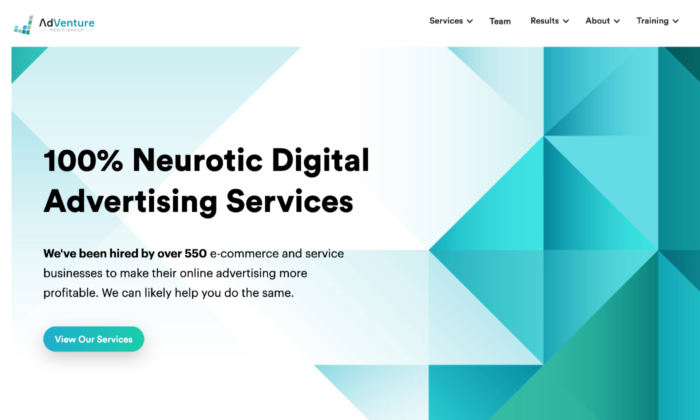

Adventure Media Group got its start as an AdWords training company, then they pivoted to Agency services, focusing specifically on AdWords and landing page design. They’ve grown quickly, shifting their focus to Enterprise AdWords Management. 

3. Ignite Visibility – Best for ROI Focus
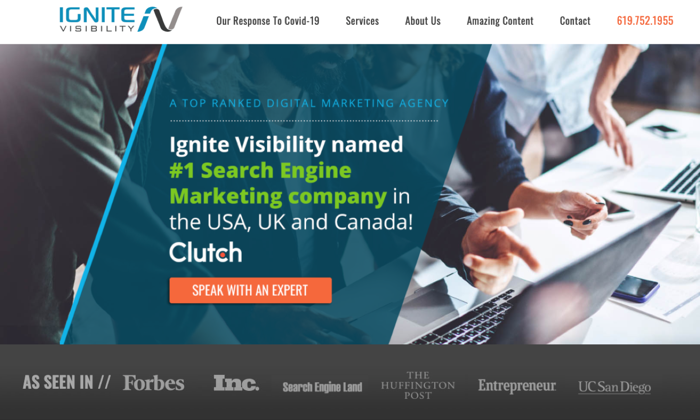
Ignite Visibility lists WeddingWire, Tony Robbins, and Mission Federal Credit Union as their clients. Their agency model is focused on returns. They’re a full-service agency, but they have the experience to manage paid search campaigns across several channels, including — social, display, and programmatic advertising. 

4. Disruptive – Best for larger budget PPC focus (10k minimum)
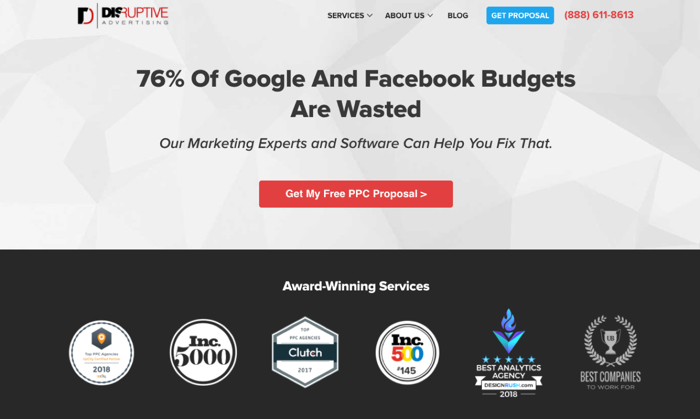
Disruptive Advertising focuses on something they call results-based relationships. Their agency has 152 employees and a high concentration of paid search consultants, something uncommon in the industry. They’ve been listed as a top agency by Clutch.co, Upcity, and others.  Their agency focuses on brands with larger PPC budgets.

5. Voy Media – Best for cross-platform ads
Voy Media focuses on client growth via paid advertising. They describe themselves as the Swiss Army knife of advertising. They’re Facebook Ad specialists as well, so their agency is a good fit for clients who are looking to optimize their ad spend and who also rely on multichannel advertising to grow.

6. Megethos – Best for Technical Industries
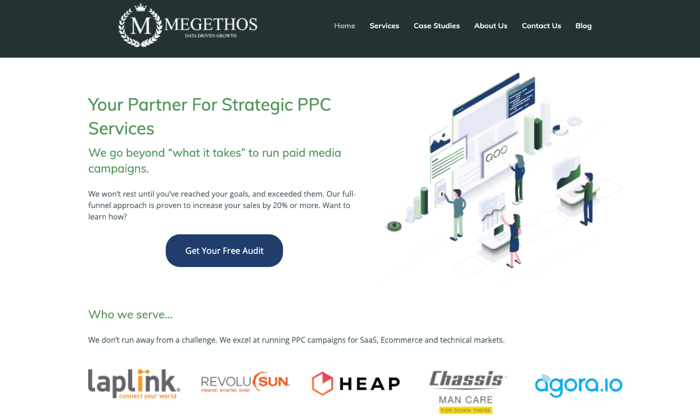
They’re listed as the #1 PPC Agency in Phoenix. They offer clients paid search management and conversion rate optimization services that are backed by their data-driven model. As an agency, they focus on 100 percent transparency with clients. They’re experienced pros when it comes to promoting tech companies, whether they’re in SaaS, Ecommerce, Tech, or Transportation.

7. KlientBoost – Best for Low Budgets
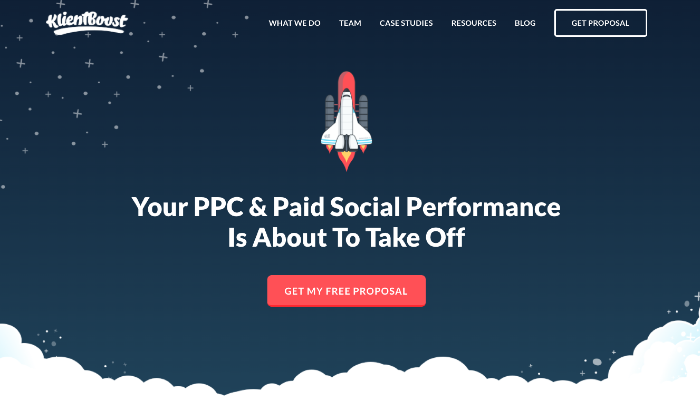
KlientBoost has a unique business model that works well with low/entry budgets. PPC is typically an expensive thing for agencies to ramp up, but KlientBoost can make it work consistently for their clients. Their agency works well with small or local businesses.

8. WebMechanix – Best for Mid-to-Large Businesses
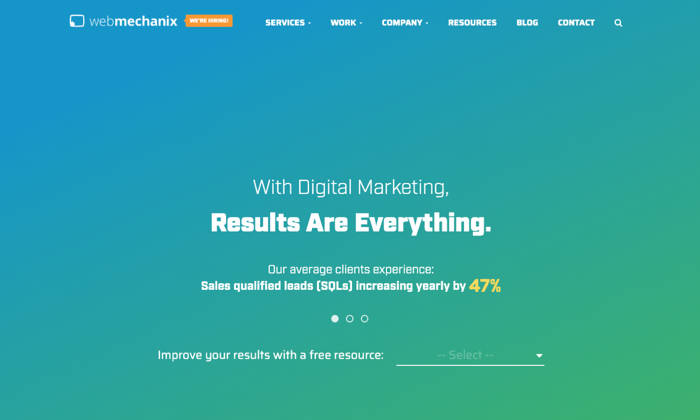
WebMechanix is a performance-based digital marketing agency for mid to large companies. They’re an award winning firm that’s focused on paid search advertising. They offer other agency services as well, but they focus on measurable results and financial impact for their clients. 

9. Directive – Best for SAAS Companies
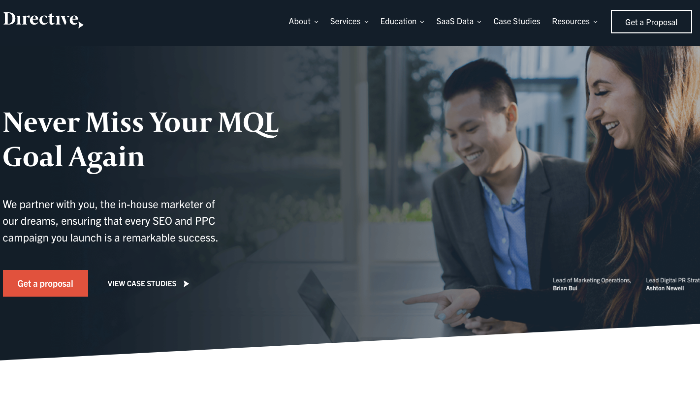

Directive is a paid search agency for software and SaaS companies. They describe themselves as next-gen performance marketing for software. They focus their attention on increasing qualified leads (MQLs) for their clients, helping their sales and marketing teams hit their performance numbers. 

10. JumpFly – Best for PPC Specialists
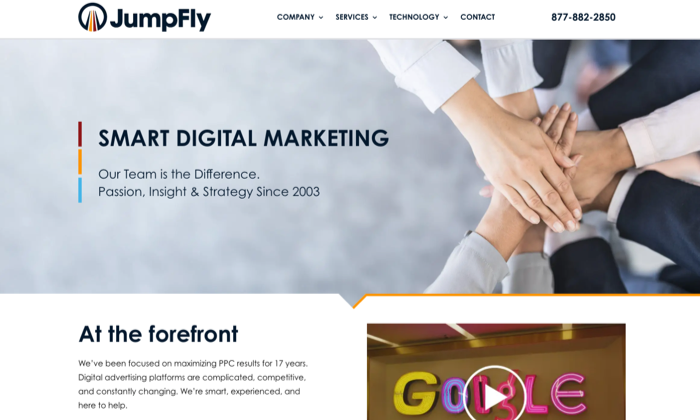
JumpFly specializes in digital advertising focusing on PPC account setup and management for Google Ads, Microsoft Ads, Facebook & Amazon. If you’re looking for a PPC specialist or you’d like PPC specialists to work with your in-house team, JumpFly may be a good fit. 

Conclusion

Clicks on your PPC ads are more likely to lead to a sale. It sounds surprising, but paid advertising is still more effective than organic links, even with the growth of ad blockers. 

Google Ads work. 

But AdWords management is difficult, that’s why you need an agency. Use this post as a guide to choose the right agency to manage your Google Ads. Vet your agency carefully. Then, once you’ve found the agency that fits your needs, give them the tools and resources they need to boost your revenue. 

Youtobe

Wednesday, September 2, 2020

Best Accounting Software

How to Set Up Microsoft Bing Shopping Campaigns for Ecommerce Businesses

email marketing designer salary

Google may lead the search engine ranks, but they’re not the only player in the game.

Bing holds 11.22% of the global search engine market share. Compared to Google’s 72.94%, that may not seem like much — but with upwards of a third of US desktop searches coming from Bing (and Bing-backed AOL and Yahoo), it’s pretty huge.

For ecommerce businesses, that makes Microsoft Shopping Campaigns (formally known as Bing shopping campaigns) a killer opportunity to boost your bottom line.

NOTE: Bing now refers to all platforms related to their shopping ads by the Microsoft name. For example, what was once called the “Bing Merchant Center” is now the “Microsoft Merchant Center.”

Bing Does Not Equal Google, but That Could Be a Good Thing

Long story short: Your paid media strategy deserves diversification, and Bing is the place to find it.

Why?

Because Bing offers unique demographics you may not be able to target from Google Ads.

More than 70% of Bing users are over the age of 35. At the same time, nearly 40% of Bing users have a six-figure annual household income. The company reports a good chunk of their user base comes from the South Atlantic region of the US (which includes various states from Delaware to Florida, plus Washington DC) — but they also have a stronghold across North America, Latin America, China, and more. 

If you are looking for high earners in a particular region, Bing could be your gateway into a lucrative ecommerce market.

Bing has some other perks too, like:

  • Affordable cost-per-click: Bing competition is significantly less than Google, with one ReportGarden study sharing the average cost-per-click for Bing Ads is just $7.99, while the average Google Ads cost-per-click costs more than $20. Of course, this depends on the industry — but a 250% price increase is nothing to ignore. 
  • User-friendly design: You don’t have to be a digital marketing pro to use Bing Shopping (though you may feel like one after you’re all set up.) You can easily craft ecommerce ad campaigns across platforms (Google included) to reach a wider audience.
  • Targeting differentiation: On Bing, you can target the device (desktop, smartphone, or tablet), operating system, timezone, and more. (Google allows similar targeting, but the options are far more limited.) 
  • An in with major websites: AOL and Yahoo both use Bing to power their search engines. This benefit provides Bing shopping marketers with a combined 700+ million unique monthly visitors from these two websites alone. Additionally, Amazon’s Alexa currently uses Bing for web searches.

When used in tandem with Google Ads, Bing can diversify your paid media campaigns for all kinds of ecommerce products. 

For more information about paid shopping and product campaigns, check out this video and the eCommerce Unlocked series on my YouTube channel:

How Does Bing Shopping Work?

When a user searches a branded or non-branded keyword on Bing, they’ll receive a grid of shopping results from various ecommerce platforms, which are usually from big ecommerce giants like Amazon and small businesses with compelling offers and inventory.

If the user has their location tracking turned on, Bing will refine the results by adding products they can find locally.

example of a bing shopping campaign ad -- How to Setup Microsoft Bing Shopping Campaigns for Ecommerce Businesses

Bing “hiking boots” search query

Depending on your layout, these ads might show up as a vertical grid on the SERP’s right-hand side.

As an ecommerce marketer, your Bing shopping campaigns can give you valuable real estate above the fold.

And it may just put you in contact with a whole new audience while you’re at it.

How to Set Up Your Bing Shopping Campaigns

First things first: Create your Microsoft Merchant Center account

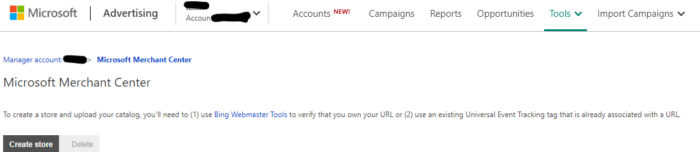
You can do this by logging onto your Microsoft Ads (formerly known as Bing Ads) account, click the “Microsoft Merchant Center” button, and create an account. You’ll need to verify your store with a destination URL, which may take up to 48 hours.

set up bing microsoft shopping account

Once that’s done, follow the steps below. 

Create an Up-To-Date Shopping Catalog

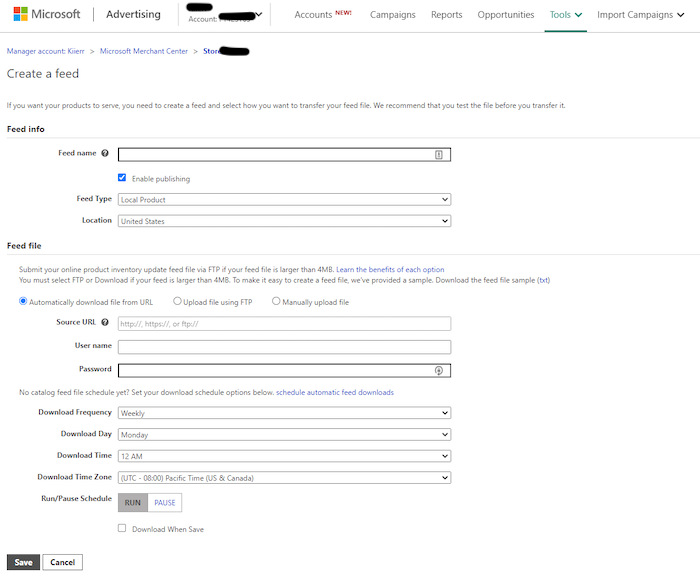
A shopping catalog (or shopping feed) is where your products live. You can either import your existing shopping feed from Google Merchant Center or create a brand new one. You can upload any new catalogs to your Microsoft Merchant Center.

Import ecommerce product feed into microsoft bing merchant center account

When creating a new feed, don’t forget to set up all of your product attributes.

There are mandatory product attributes (like title, link, price, description, product identifiers, and more), but there are also some optional ones (like color, gender, material, and size).

Add as many as you can because this info helps you connect with users in your target audience. That will help improve your conversion rates —  which is always a good thing.

Create an Audience

Creating a custom audience tells Microsoft and Bing who you want to reach. Aim to create a narrow audience, so you don’t waste ad spend on people outside your target audience.

On your Microsoft Advertising account, head to “Shared Library.” Under the audience header, you’ll click “View Audiences.” This section is where you can lay out your ad’s plan of action once it’s live.

Create a Campaign

From your Microsoft Merchant Center, click Create Campaign. Then click Sell Products.

You’ll adjust your campaign settings, like setting priority levels for each of your Bing shopping campaigns.

Priority levels can be high, medium, or low. The higher priority campaigns take precedence, so set your important campaigns with a bigger budget on high priority while leaving your runner-ups on medium or low.

Organize Your Product Groups

You can organize based on various attributes you’ve given to each product. This feature helps with targeting.

Turn on Automatic Item Updates

This option ensures your ad prices always reflect your website prices, and you’re not advertising products that you’ve already sold. A new consumer isn’t going to give your shop a second look if prices are off or you’re promoting out of stock items.

Instant updates also help you avoid wasting your budget. 

Use Custom Labels to Streamline Audience Targeting

Head to the “Labels” on your product feed in your campaign editor. You can organize campaigns, keywords, ad groups, and ads in a way that works for you.

While it won’t directly impact your Bing ads, this does help you better analyze your campaigns and improve future targeting. That can boost future campaigns and help you optimize existing ones.

Need a more hands-on guide? Microsoft has a training course for newbies.

Tips and Plugins to Optimize Your Bing Campaigns

Why settle for average when your ecommerce shop can run the Bing shopping game?

Try these tips and tricks to optimize your Bing ad campaigns and maximize your ad dollars. You can also view my free PDF of Bing Ads resources.

Import Google Ads to Bing Shopping Campaigns

It may seem like magic, but you can import your shopping campaigns to Bing straight from Google Ads.

All you have to do is make sure your website is set up on an ecommerce platform (think Shopify and the like.) Then, ensure your Google Ads shopping feed and campaign are up and running.

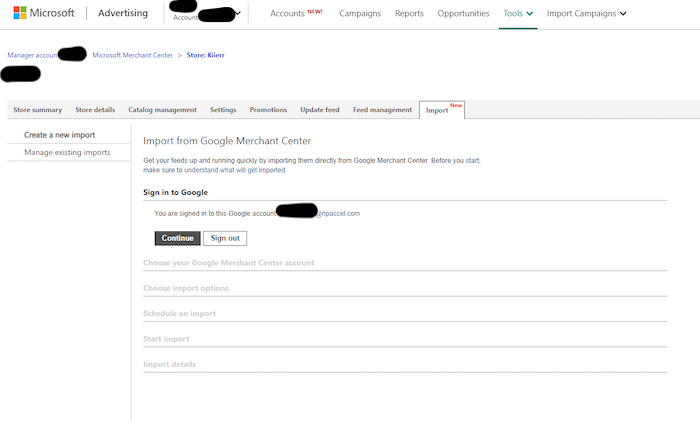
Once you create your Microsoft Merchant Center store and verify it, you can import your campaign using Microsoft’s Google Merchant Center (GMC) Import tool.

import google shopping campaign into microsoft bing shopping campaign

Then, tick the option that allows you to sync the two platforms to keep everything updated.

Universal Event Tracking

Universal Event Tracking (UET) is a Microsoft tool that helps track the sales and conversions that stem directly from your Bing shopping campaigns. 

Events are consumer actions like clicks throughs, add to carts, and purchases. You can track which events matter most to you and follow the consumer’s path from start to finish.

This tracking will help you understand how much revenue you can attribute to your Bing ads. The process includes applying a UET event tag and short web coding to record the conversions as they come.

Use Microsoft’s how-to guide for implementing UET for your Bing shopping campaigns.

Microsoft Ad Extensions

To help businesses of every kind (including you ecommerce folks), Microsoft has developed a series of ad extensions for Bing shopping campaigns.

What are my favorite extensions for ecommerce businesses?

Well, since you asked:

  • Sitelink extensions: Sitelinks are a cool tool that sends ecommerce customers straight to the right page. Word on the street is that you can’t actively control these on Google, so take advantage of this in Bing ads.
  • Image extensions: Add relevant images to your Bing ad using image extensions.
  • Review extensions: Show average reviews for your ecommerce products, right on the ad.
  • Price extensions: List your competitive price to lure in consumers from the SERP.
  • Action extensions: Add a call-to-action to your campaign that’s clear, concise, and action-oriented.

Shopify Ecommerce Store Integration

If you use Shopify to run your ecommerce store, you can integrate it directly with Bing Shopping.

Use the Shopify app to streamline analytics and keep all your data in one easy-to-access place. 

Shopify is especially helpful for ecommerce teams who want collaborative access to Bing shopping campaign info. But regardless of how many people you have on your side, it’s undoubtedly beneficial for Shopify store owners.

Set up Bing Remarketing Audiences

Remarketing is a process that lets you target consumers based on their prior web actions.

Keep in mind, if you import Google shopping feeds over to your Microsoft Merchant Center, you can’t import your remarketing data. That means whether you’re importing or starting campaigns from scratch, you’ll need to set up remarketing audiences manually.

Start with your existing audiences in your Microsoft Advertising platform.

You’ll also want to make sure you’ve set up UET tags and coded them into your website. This tagging makes sense considering you’re basing it off of the customer’s previous actions, so you need to track them.

Once you hit the “Audience” page, click “Create a remarketing list.”

From there, create a tag and configure the settings as you see fit. And whatever you do, don’t forget to save!

Use Local Inventory Ads For Storefronts

Bing’s local feature is pretty cool. It shows your ads for localized product queries, including cities, states, or phrasing such as “near me.” 

So if your ecommerce business also has a local storefront, set up Local Inventory Ads to maximize reach. 

All you have to do is provide your shop’s physical location, upload and submit product info, keep your inventory updated, and enable your Microsoft Shopping Campaigns.

Conclusion

There’s no denying Google‘s prowess, but ecommerce advertisers should consider Bing campaigns as well.

Adding Bing shopping campaigns to your marketing repertoire is an easy way to diversify your paid advertising.

Is your ecommerce business ready for an adventure into the world of Bing shopping?

Google

Tuesday, September 1, 2020

The 5 Best SEO Companies of 2020

email marketing flow chart

Disclosure: This content is reader-supported, which means if you click on some of our links that we may earn a commission.

Anywhere you find a cube of sugar in the open, you’ll find ants. 

Today, the SEO service providers’ industry, valued over $65 billion, is like a cube of sugar. It’s why you’ll find countless SEO companies scrambling for a piece of that sugary cake. 

And where does that leave you, a business owner eager to reach Google’s top pages, generate qualified traffic, and drive sales?

Insanity!

With all this confusion, I sense you came here pondering: 

  • How do I filter vetted SEO companies?
  • How can I find a top SEO company that doesn’t need ads to rank its website organically?

You’ll find the answer to those questions here. 

And that’s not all. 

You’ll also see the SEO companies that go beyond vanity metrics and deliver real business results.

The 5 Top SEO Companies in The World

  1. Neil Patel Digital (best for SEO content marketing)
  2. Voice SEO (best for Voice search) 
  3. ReachLocal (best for local SEO) 
  4. FATJOE (best for backlinks’ acquisition)
  5. OuterBox (best for eCommerce SEO) 

In the past, you could hire any Tom and Harry to stuff keywords into a page or website you wanted to rank, and it’ll make its way to Google’s 1st page.

Not anymore. 

In short, the constant evolution of SEO has reached a tipping point where ranking alone doesn’t guarantee business results—qualified traffic, leads, and sales. 

To get the most out of any SEO investment today, you need a holistic strategy. 

And a holistic SEO strategy must blend your website code, information architecture (IA), and content marketing with context to not only make your business discoverable online but valuable to customers.

Take this guide you’re reading, for example. If it wasn’t valuable to you, would you still be reading?

You’re experiencing excellent SEO execution at play here. 

Done well, it drives relevant website visits. But most importantly, it uses high-quality content to engage and convert visitors into leads and customers.  

I’m confident the best SEO companies we reviewed below will do no different. Hire any of them, and you’ll attract and convert visitors into leads and customers.

#1 Neil Patel Digital – Best For SEO Content Marketing 

Yeah, we’re tooting our own horn, and it’s not because charity begins at home. 

We’ve earned our place on this list. 

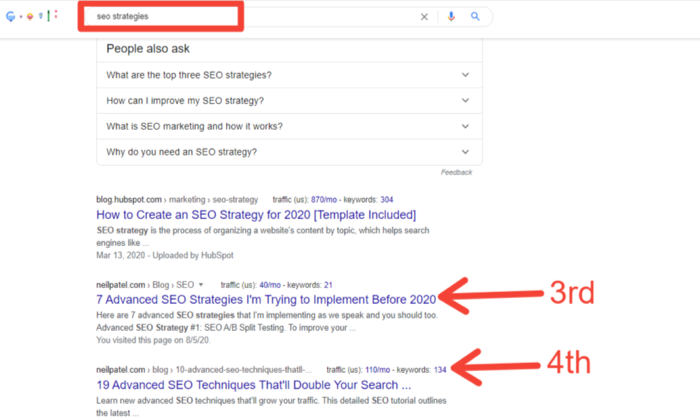
First things first, Neil Patel Digital was founded by hardcore marketers who walk the talk, and not some random wannabe. If you type “SEO strategies” into Google from anywhere in the world, you’ll find well-crafted content by our Co-founder, Neil Patel, on the 3rd and 4th organic positions: 

And that’s but the tip of the iceberg. 

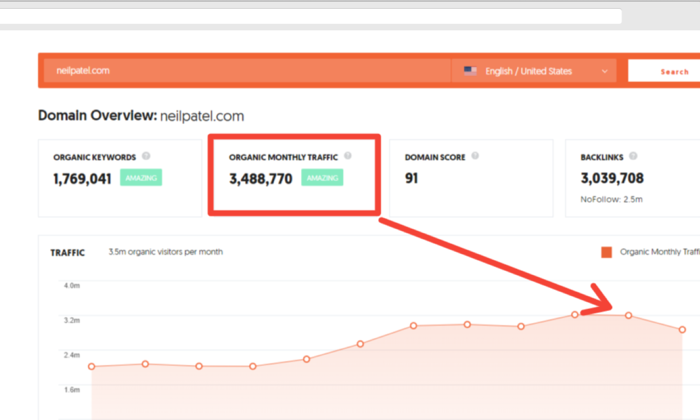
We generate millions of organic search traffic—about 3.5 million to be precise, to my blog. No ads, only through SEO-optimized content marketing:

As you can see from the snapshot above, through these efforts, our Co-Founder has accumulated more than 1.7 million organic keywords with over 3 million websites across the globe linking back to his content pieces. 

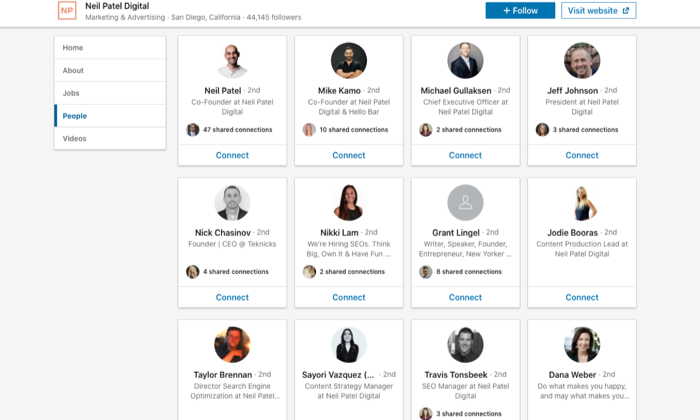
To build a rock-solid SEO content marketing company you can rely on, I also partnered with other marketing veterans to form Neil Patel Digital:

Together, the executive team here in Neil Patel Digital has garnered over five decades of hands-on experience. And this excludes other top-level, in-house marketing managers. 

In short, SEO-optimized content marketing is one of the prime reasons customers, from startups to enterprise brands, trust Neil Patel Digital to deliver top-notch search engine optimization strategies: 

If you’re just starting with search engine optimization or seek better results, it’s best to start with content marketing. 

Content is the bedrock that drives all other online marketing campaigns. 

It’s how you got here; it’s how your customers will find you, too. 

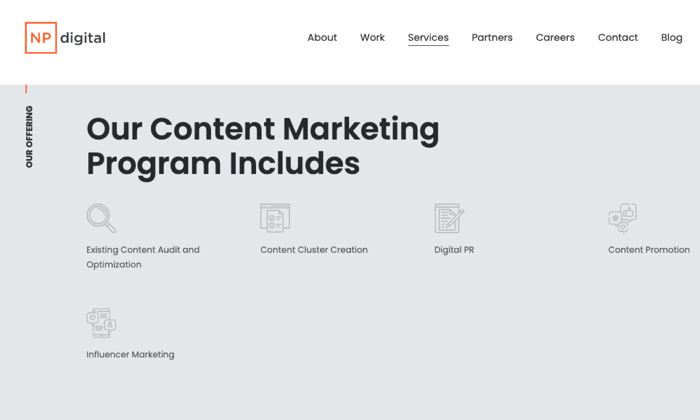
And not only is SEO-optimized content marketing Neil Patel Digital’s core offering, but we’ve also developed battle-tested programs we can bet our life on: 

Since you’re still here, get your free consultation with Neil Patel Digital here

#2 Voice SEO – Best For Voice SEO

No, this company didn’t name themselves Voice SEO for the fun of it. They’re the #1 ranked voice SEO company by TopSEOs. 

And that’s for a reason. 

Voice SEO took it upon themselves to study the trends surrounding how people use spoken commands—instead of typing words to query the search engines. From there, they discovered the ever-increasing use of voice search and positioned themselves as the go-to company for voice SEO.

If you own any of Siri, Google Echo, or Alexa devices, or you know someone who does, that should give an idea of the growing importance to optimize your website for voice. 

But, if you don’t, I’ll quickly let you in on it. 

Over 31% of smartphone users across the world use voice technology at least once weekly. Another research projected 50% of all online searches in 2020 to be voice-based. And by 2022, over 55% of households are expected to have voice search-enabled devices. 

These stats all point to one direction: The time to optimize your website for voice search is now. 

And that’s where Voice SEO, as the name suggests, comes in. 

This company started as a small team of SEO experts focused on putting their SEO skills to good use, helping businesses like them to grow. 

Through this intense passion for excellence, Voice SEO followed the highest standards in the industry, particularly in voice search engine optimization. 

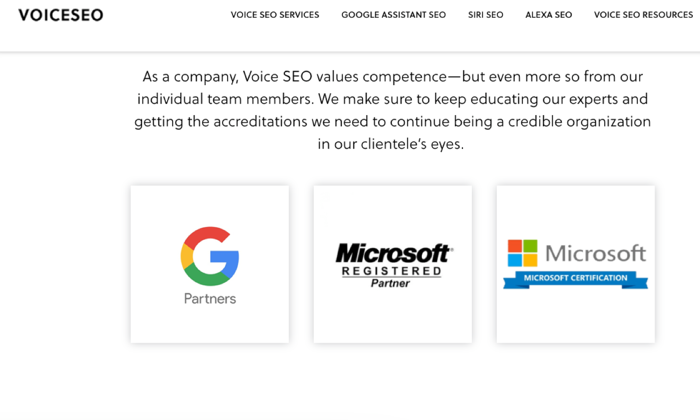
Although there are no client testimonials to their name, they have garnered accreditations, which shows they know their onions to deserve a place on this list: 

#3 ReachLocal – Best For Local SEO 

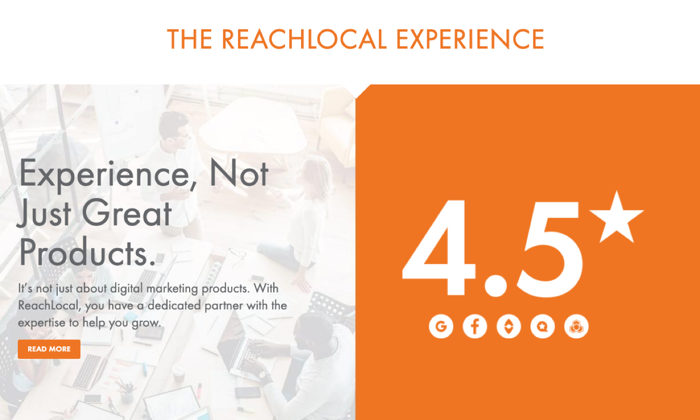
ReachLocal is the go-to company for strategic local SEO executions. And their experience, results, and high-value partnerships speak for itself.

Founded in 2004, their expertise in the local SEO niche has generated over 201 million local leads for about 19,000 clients worldwide. 

With offices in five continents, they’re a Google Premier Partner, and Bing Ads Certified specialists, and others. ReachLocal proudly partners with Google, Yelp, Yahoo!, Bing, and Facebook to help businesses optimize their local search engine optimization strategies and drive in-store customers. 

Local SEO Companies, a domain that vets and ranks top local SEO practitioners, ranked ReachLocal as the best for local SEO strategies

And not only that, across several review sites, this company’s experience and attention to detail have seen them receive 4.5/5-star ratings from happy customers: 

#4 FatJoe – Best For Backlink Acquisition 

Search engines interpret the relative importance of your web pages and websites as a whole, using the number of backlinks pointing to them. 

In order words, the more backlinks you acquire, the more the search engines see your site as authoritative. 

And the more it’ll rank your site over those of your competitors for competitive keywords. 

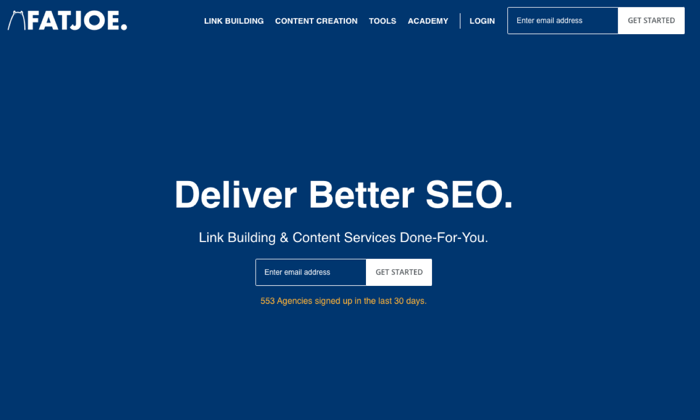
When it comes to acquiring backlinks for SEO, FATJOE comes highly recommended by us. They’ll help you generate high-value backlinks, and you can rest assured because even other SEO agencies turn to them for the same. 

FATJOE has grown to become one of the world’s largest outsourced link building agencies, serving over 5,000 clients worldwide.

When you sign up for FATJOE’s SEO link building services, you get premium access to every tool you need: A dashboard to manage and track your orders, and their Blogger Outreach product to find and reach relevant websites to build links from. 

About 97% of customers who use FATJOE rates them a 4.5/5, and even though they’re more positioned for agencies—because they do link building a lot.

#5 OuterBox – Best for eCommerce SEO 

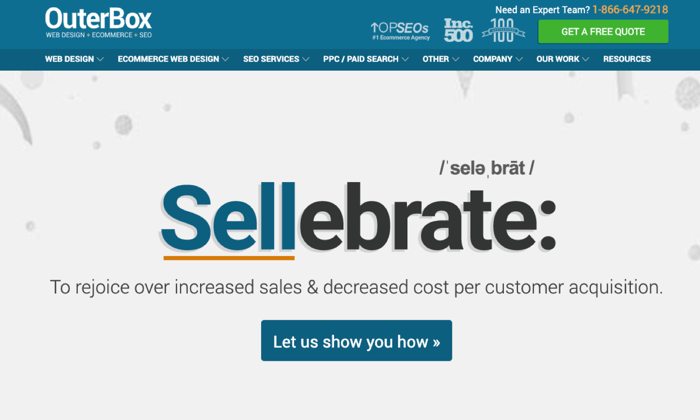
OuterBox, an SEO and performance marketing company focused on eCommerce brands, is our pick for eCommerce SEO. 

If you own an eCommerce website and seek a talented group of dedicated people to power your business through the search engines, you should look OuterBox’s way. 

Founded in 2004, this company earned the list of Inc. 500 fastest growing companies in the US, having served hundreds of customers across several eCommerce sectors. 

Their clientele speaks for itself: NewAir, AtlasOil, JetDock, UCFS, and others. 

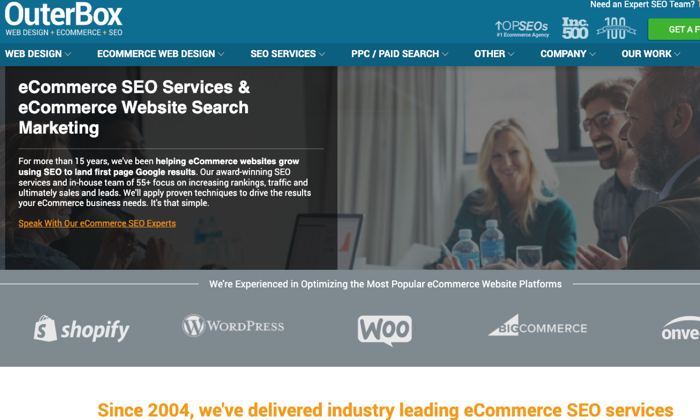
And it doesn’t matter which eCommerce platform you’ve built your business with. Be it WooCommerce, Magento, Shopify, Drupal, or others; you can rely on OuterBox for effective eCommerce search engine optimization: 

5 Characteristics That Make a Great SEO Company

You’ll find hundreds, if not thousands, of SEO companies out there.

So, let’s say you wanted to go out of our vetted list to find one for yourself. What are the characteristics that make a great SEO company you should be looking out for? 

They are as follows. 

1. Experience and Process for Implementing SEO

When it comes to SEO these days, anyone with a laptop, access to the internet, and a WordPress-installed blog can boast of being an SEO company. 

What you won’t see behind those claims, however, is the experience and process they take to deliver results. 

You should always lookout for this. 

Scroll their website, do a simple Google search and see if they show up on the search engine’s organic positions. If they don’t, it means they have little to no experience nor implemented what they claim to deliver. 

Can you give what you don’t have?

Likewise, a fundamental characteristic of a great SEO company is that they have experience implementing SEO for themselves first. 

And they have a process, showing you how they go about getting results: 

2. An Impressive Portfolio

The idea of showing off portfolios has become a characteristic of great SEO companies today. And the reason for this is simple. 

They’re proud of the businesses they’ve helped increase rankings on Google and driven traffic to get leads and sales. 

But, this idea to show off their portfolio does you more good. 

Scroll through it, and you’ll see the kind of clients they’ve worked with or frequently work with. From here, decide if you want to be in that mix and get similar results. 

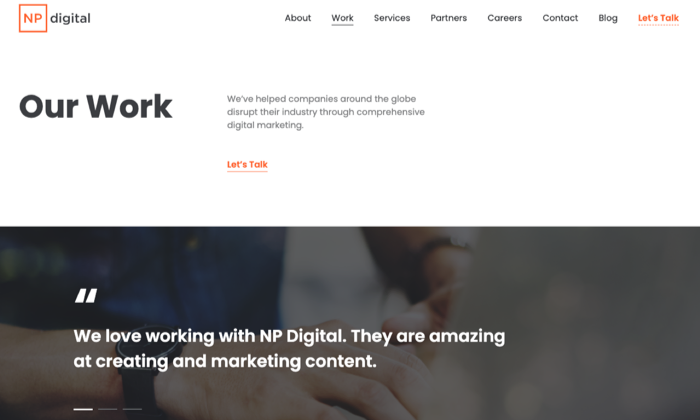
For example, at Neil Patel Digital, here are some clients in our work portfolio:

3. Thought Leadership 

SEO is always evolving. 

Today it’s Google’s RankBrain. Before you know it, it’s Panda. And just when you thought that one would stay, Hummingbird hits you right in the face. 

And those are major updates. In one year alone, Google makes upwards of 3,200 updates to its search engine algorithms. 

How can you—one focused on managing your business, keep tabs with all these changes?

You need thought-leadership, and that’s a characteristic of great SEO companies. 

Look out if they’re keeping up with SEO best practices as they evolve, and sharing tips to help businesses adjust for maximum impact: 

4. Real Life Testimonials

Who wouldn’t toot his own horn?

Definitely not search engine optimization companies. Developing winning SEO strategies, managing its implementation, and guiding teams on its execution to generate results is hard. 

When an SEO company does all this hard work and gets those fantastic results, their customers reward them with testimonials, having got value for their money. 

Thus, sharing real-life testimonials is a characteristic you’ll find with most great SEO organizations: 

5. A Complete Team of Leaders, Managers, and Executors

Just as no man is an island, turning SEO ideas into higher rankings, website visitors, leads, and sales needs a diverse team of specialists. 

When an SEO company makes too many promises without showing you the team to make it happen, hold tight. Why? 

Because that’s a red flag they’ll charge you a premium and outsource your job for pennies on the dollar overseas or Fiverr for $5. 

From strategic leaders to managers and different teams of specialists to execute your strategy, great SEO companies are proud to show off their amazing team members: 

What to Expect from a Great SEO Company

So far, I’ve listed our recommended SEO companies and highlighted the characteristics that make a great search engine optimization company, suppose you decide to find one yourself. 

Either way, after making a choice, what should you expect from a great SEO company?

1. Discovery session 

Your decision to work with an SEO company may come from the need to rank your site higher, generate more traffic, drive sales, or all three. 

But, no business case and needs are exactly the same. The SEO strategies that worked for another company won’t work automatically for yours. 

Great SEO companies, from experience working with different organizations, know this. Thus, they’re not quick to send proposals. Instead, to help you, they allow you to share your unique needs and business case in a discovery session: 

2. Research and Recommendations

After sharing your needs and business case with an SEO company, they take what you tell them and use their expertise to conduct in-depth research. 

They do this to get the right context needed to bring themselves on the same page with you, your target audience, and industry. 

After they’ve performed this research, expect a great SEO company to share their recommendations of what you need to do to get maximum results. This, they can do over another discovery call or via email. 

3. Contract with Deliverables

If your discovery session and follow-up conversations with an SEO company looks like a good fit for the exchange of mutual value, you’ll receive a contract for your business. 

However, a great SEO company won’t only send you any contract. In it, expect to see a detailed list of what they’ll deliver, how they plan to deliver it, and when you should start expecting results. 

4. Onboarding, Project Scoping, and Management

To help you, an SEO company would need access to some of your assets. 

Depending on your work scope, this could include your in-house staff, website or blog access, your analytics login codes, etc. 

So, to forge a smooth partnership with your company, expect your team to go through a detailed onboarding process from a great SEO company. 

From this onboarding process, they’ll also scope your project, timelines, and establish an understanding of how they’ll manage your project. 

Conclusion: Give SEO Time

SEO takes time before its results start to manifest. 

You should start expecting results from SEO in about 100 days

Any company that promises you overnight successes doesn’t know SEO well enough or what they’re doing. 

In short, great SEO companies don’t make wild promises; they show you what’s possible and how they’ll work hard to achieve it. 

If you give them time, you’ll start seeing results—qualified traffic, leads, and sales. 

And once things pick up, it’s like a flywheel, always getting better as long as you continue to work with a great SEO company.

Youtobe
9 Ways to Improve Organic Reach and Beat the YouTube Algorithm

email marketing landing pages

9 Ways to Improve Organic Reach via the YouTube Algorithm

As the most-viewed site globally, YouTube is a must-visit destination for marketers and content creators looking to increase audience reach.

While it is possible to optimize YouTube SEO to score top results, without an understanding of the YouTube algorithm, SEO alone won’t manifest videos on a potential viewer’s suggested video list.

YouTube’s product chief underlined the reality of the impact of suggested-to-watch videos in an interview, noting 70% of a user’s time spent on the platform was dictated by the company’s suggested video algorithm.  

70%. That number is huge.

To truly execute a successful YouTube marketing strategy, improve organic reach, and take advantage of that massive percentage, you need in-depth familiarity with the unique YouTube algorithm. Here are nine ways to increase your organic reach on YouTube.

The YouTube Algorithm’s Evolution

What began as a venture capital-funded technology startup in 2006 is now our go-to spot for all things video.

Although YouTube itself has undergone significant changes over the past fifteen years, its algorithm has, by far, been its most dynamic feature.

Before 2012, YouTube charted video success by the number of views alone, regardless of the length of viewing. This singular YouTube algorithm led to a profusion of clickbait videos that relied upon misrepresentative headlines and thumbnails to earn views, with most audience members jumping ship immediately.

Later the same year, YouTube began measuring success through view duration, a metric that rewarded longer-viewed videos with increased search promotion.

Today, we still see the roots of the platform’s infancy in the current YouTube algorithm, which draws heavily on view duration as a component of a video’s ranking.

How Does the YouTube Algorithm Work?

While YouTube’s stated mission is to give everyone a voice and a window to explore the world, one of YouTube’s lower-ranking goals is to engage viewers for extended amounts of time, maximizing the number of advertisement interactions.

Why does this secondary goal matter? Because YouTube suggests videos that satisfy this goal of increased exposure to advertiser content.

YouTube uses an algorithm based on three main qualifiers: relevance, engagement, and quality.

To benchmark relevance, YouTube explores the pairing of title, description, tags, and content with an individualized search query.

Engagement aggregates the number of responses from users, including watch time, engagement, and frequency.

Quality rating is determined by a channel’s ability to demonstrate trustable authority.

In addition to these three qualifiers, YouTube’s algorithm also draws on a user’s historical views and a video-specific assigned score, one that weighs both novelty and frequency of channel uploads, among other attributes.

This combination of statistics allows YouTube to recommend videos that speak directly to a viewer’s interests, continuing a narratively static viewing material chain.

These videos will appear in six different locations on the YouTube platform:

  1. Search results
  2.  Recommended Streams (as shown in the screenshot on the right side in the below screenshot)
  3. Notifications
  4. Channel Subscriptions
  5. Trending Streams
  6. YouTube Home Page
9 Ways to Improve Organic Reach via the YouTube Algorithm

Much like any search algorithm, YouTube’s ranking system is in constant flux, evolving and adapting in an ongoing attempt to better define and satisfy user engagement.

How do I Improve my Organic Reach on YouTube?

Armed with a concrete understanding of how the YouTube algorithm works, it’s time to break down how you can harness your newfound knowledge to increase your organic reach.

1. Keywords and Metadata

YouTube made it explicitly clear in their algorithm explanation that content-relevant keywords, descriptions, captions, and tags all matter when you’re optimizing videos for search. Make sure you do your keyword researching using a tool like Ubersuggest to make sure you’re mentioning terms users are looking for.

By writing compelling, keyword-rich titles and descriptions, you increase your chances of attracting audience members’ attention and increasing your video’s search visibility.

Check out this post if you need to brush up on SEO basics

2. Optimized Description

The quote “you never get a second chance to make a first impression” is true of YouTube just as much as life.

Ensure audience engagement by crafting attention-getting copy that not only attracts your potential audience but also harnesses your keywords’ power.

9 Ways to Improve Organic Reach via the YouTube Algorithm -- video description optimization

YouTube slants toward the verbose, advocating long descriptions, so don’t be afraid to go the extra wordy mile with them.

Although your prospective viewer will only interact with the first few lines of the description unless they select the “show more” option, those few short lines are valuable real estate when it comes to attracting your audience.

3. Video Transcription

Closed captions not only help those with accessibility needs, but allows users to watch videos in silence.

To make the most of closed captions, upload self-created subtitles. By uploading these yourself, you ensure that, when these captions are indexed for search, they are more accurate than automatically-generated ones, in many cases.

4. Whole-Video Views

Because YouTube ranks videos by engagement, longer watch times mean more opportunities to earn the coveted suggested video inclusion.

If you’re struggling with viewer attrition rates, you’re going to want to tighten focus on your videos’ first few seconds and ensure you:

  • match the description with the first few seconds of video content, and
  • snag a viewer with an impossible-to-ignore hook.  

Don’t forget to study your audience retention graphs and pay attention to what those metrics are telling you.

These quick fixes help you further engage your audience, extending watch time, and earning your video a higher score via the YouTube algorithm.

5. Conversational Conclusions

Rather than simply ending your video, use various tactics to influence your audience’s next view.

By directing viewers to another video on your channel, you increase interaction and likelihood that they’ll return to interact with future content, both of which satisfy the YouTube algorithm’s engagement portion.

To direct your audience, use watermarks, end screens, and cards, all of which can be clicked and linked to your next video, ensuring continued viewing of your channel and content.   

6. Subscriptions

When viewers subscribe to your channel, you automatically increase your organic reach. To increase your number of subscribers, consistently create great content, videos viewers are dying to see.

While consistently creating great content may be easier said than done, it’s essential to building your channel. Create a channel trailer, reach out to influencers, and engage with all comments left on your videos.

If you’re looking for additional strategies to increase your subscribers, check out our YouTube Marketing Guide.

7. Serial Viewers

By crafting videos that continue a conversation, viewers are helpless to resist watching the next in the series.

To keep viewers on your channel, you can create playlists of videos with similar content: these are collections that will attract and sustain viewership.

8. Cross-Promote Content

Social channels are free advertising for your YouTube channel. Promote your videos on all your social accounts, website, and in your email marketing—anywhere you have an audience.

9 Ways to Improve Organic Reach via the YouTube Algorithm
An example of a recent YouTube video shared on this blog.

 You can also publish a blog post with the video and a summary or transcription.

9. Actionable Analytics

These numbers don’t just exist to make you feel good; they tell you what’s working well and when, and to identify who is watching what and when.

Conversely, these numbers also tell you what isn’t working, which is inarguably the more influential insight. By identifying what isn’t working, you can try new strategies and content, attempting to delight your audience and improve your reach through different approaches.

By digging deep into YouTube analytics, you can unearth realities about your videos and your audience, allowing you to tailor your creation process to suit the needs of the audience you’re trying to reach.

Conclusion

With over one billion hours of video watched per day on YouTube, it’s undeniable content creators and marketers need to take advantage of the platform to curate and grow their audiences.

By understanding how YouTube suggests videos, content creators and marketers can make their videos work harder and use its nuances to your benefit.

How you changed how you upload videos to satisfy the YouTube algorithm? 

FaceBook