email marketing agency pricing


KPIs are due EOD.
Profit and loss statements need to be generated.
Budget status updates have been requested.
Juggling multiple marketing campaigns is stressful. But more importantly, it’s also incredibly risky.
Soon enough, you’ve depleted your budget to the last few cents, and you have nothing to show for it.
Or worse, you didn’t spot the right trends in a successful tactic before spending too much on the underperforming ones.
And now you don’t have enough money to re-allocate to top-tier mediums.
Curiously enough, adopting the same methodical mindset of a financial currency trader can help you better manage results.
Here’s how.
Here’s the problem with digital marketing.
It changes every day. Old stuff gives way to new stuff.
And you never really know how a campaign will perform until you try it.
That saying (1) is unhelpful and (2) requires extra money to experiment with potentially budget-draining activities.
But it’s true.
You really don’t know which playbook, game plan, or actionable tip is going to work until you experiment. The stuff that worked last year almost certainly won’t work the same this year.
Not to mention that every business is structured differently. Each caters to diverse audiences. So copying your competitors or that awesome tactic you read about is also out.
What works for Company X might bankrupt Company Z.
If there were set-in-stone tactics that produced million-dollar businesses overnight, every dude on GrowthHackers.org would be rich.
PPC might be amazing for your friend’s business. But that doesn’t mean investing in PPC is instantly going to turn you into the next Zuckerberg.
So where do people turn when they hit this realization? A/B testing.
You all know those case studies that promise a mythical pot of gold at the end of a rainbow.
I did X and generated a 40000000000% increase in conversions!
Okay, maybe that’s a slight exaggeration, but it’s not that far off.
Most A/B tests fail, though.
They take too long to get results. Plus that whole “bias” thing. And of course, sample size.
You need a minimum of 1,000 conversions monthly for statistical significance.
So what should you do instead?
Implement a currency arbitrage mindset.
Currency arbitrage is a strategy in which the trader takes advantage of different spreads offered by brokers for a particular currency pair by making trades.
Different spreads imply a gap between the bid and ask prices. Meaning, they can buy and sell pairs to make more money.
What does this mean in English?
Place lots of small bets on different tactics, channels, platforms, and mediums so that you can evaluate their effectiveness in real-time.
Once you see specific trends developing (either positive or negative), you double down on the winners and cut your losses on the rest.
This way, you can test multiple experiments at once without the bias and lack of statistical significance that comes with A/B testing.
You get in and out fast. And you come out on the other side with specific campaigns to focus on rather than a mixed bag.
For example, you can’t always control the end result. But you can control the inputs that eventually get you there. And you can monitor, forecast, or predict where those will fall based on just a few days’ worth of performance.

Then, you can fine tune and adjust each ‘level’ accordingly to squeeze out the best results.
The first banner advertisement ever appeared on HotWired in 1994.
Look at this gem:

By today’s standards, it looks like a joke, right?
Is that tie-dye? Yes, yes it is.
But it gets worse:
See that subliminal “YOU WILL” message on the right???
Super subtle. Lord have mercy on us all.
But guess what?
This banner ad debuted with a click-through rate of 78%.
Yes, you read that right. Seventy. Eight. Percent.
If you told any marketer today that your banner ads are getting a 78% CTR, you’d get laughed out of the room.
Why? It’s inconceivable. It’s probably impossible in today’s world.
Today, the average display ad CTR is 0.05%.
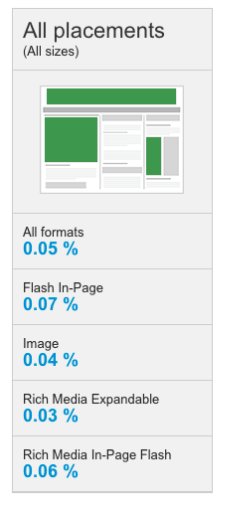
This all brings me back to one concept coined by Andrew Chen:
The law of shitty click-throughs:
All marketing strategies over time will result in shitty click-through rates.
As more and more people use these tactics, the market becomes saturated.
Users get sick of it, and they don’t click. Or they go banner blind.
You can see trends that follow this concept with almost any marketing activity.
Remember the good old days when Facebook organic reach was insane?
You paid nothing and reached thousands or millions of eager users.
Now, organic reach is almost nothing:

As more and more marketers use the concepts put in place, it results in fewer and fewer results.
This is a perfect example of market movement and active management in currency trading.
You can’t hold certain trades forever and expect exponential performance.
Just because something is generating an insane ROI now, doesn’t mean you can ride it off into the sunset.
Markets are constantly shifting, just like marketing tactics.
What was hot one day (banner ads) isn’t now.
If you don’t adjust your strategy based on analytic research and forecasts, you risk declining performances associated with passive management.
Passive management is when you sit idly by and attempt to cruise to the finish line on your current strategy.
Active management relies on analytical performance data over time to spot trends and make informed decisions about what needs to change.
If you notice a decline in organic reach on Facebook, you probably shouldn’t be dumping your campaign dollars into it.
Unfortunately, us marketers (including me) fall into this trap more often than we’d like to admit.
You log in to Google AdWords or Analytics and see some great conversion data:

Your plans are working as you’d hoped.
But that doesn’t mean you can sit back and let the good times roll.
Sure, you can do that for a little bit. But over time, as markets, tactics, and consumers shift, you’ve gotta take an active role in managing campaigns.
Adjust based on trends.
A great way to do this is by analyzing specific topics on Google Trends:
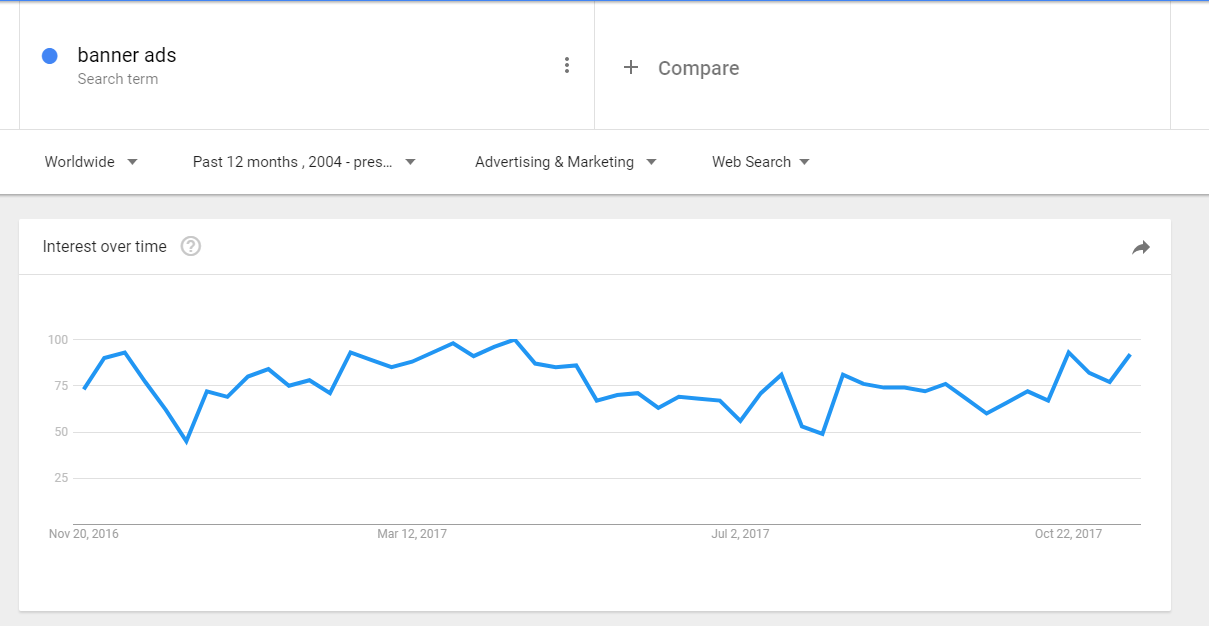
Or even keeping up to date with the latest studies on popular marketing tactics by conducting a basic Google search:
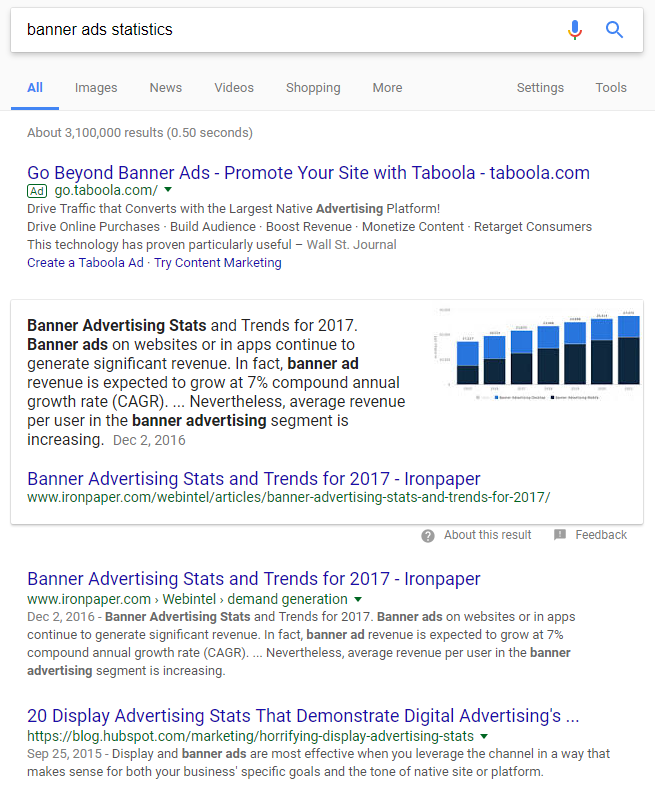
Stay up-to-date with market movement and look at the underlying trends or patterns. Because when people are blogging about it, tweeting it, favoriting it, or liking it, it’s already too late.
When everything is running smoothly, it’s referred to as a bull market.
Investor confidence and financial optimism are at an all-time high.
On the surface, everything is running like a well-oiled machine.
Unemployment is low. The economy’s GDP is growing steadily. Stocks are rising.
And your marketing tactics are getting more traction.
But with all of this surface-based optimism comes serious potential side effects:
It now becomes difficult to predict potential shifts and trends or when tactics might change.
Facebook’s organic reach was booming just a few years ago. Until, of course, it didn’t.
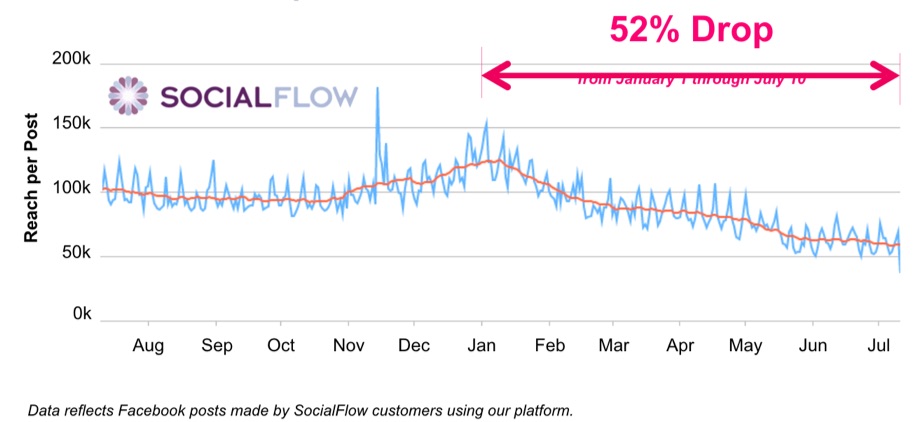
Now? Good luck. We’ve crapped out.
There is actually a pretty easy explanation for it. Simple supply vs. demand.
User growth is slowing while the number of content pieces has exploded exponentially. Too much supply, not enough demand.
Guess what’s going to repeat now on Instagram?
Right now it’s the place to be for your content. Just give it a minute.
And don’t get swept up by the bull market.
Have you ever seen The Big Short?
If not, I highly recommend it. It’s a great movie.
Not just because it’s an incredible, intense account of the 2005 housing crisis.
Mainly because it features Steve Carell:
Inspirational as always, Prison Mike.
In all seriousness, it’s a great movie that heavily relates to digital marketing.
The main concept of the movie was based on the true story of Michael Burry, a hedge fund manager who shorted the housing crisis of 2005.
He believed there was a housing bubble, leading him to short sell and bet against the banks who thought he was a chump, taking his deals like candy.
The idea of short selling is motivated by the belief that a security’s price will decline, enabling it to be bought back at a lower price point for maximum profit.
And people thought Michael (Burry, not Prison) was insane.
Who in their right mind bets against the housing market when prices are nearly doubling year after year?
But Burry noticed a few troubling trends. He saw that subprime home loans were in danger of defaulting. And many adjustable rate mortgages with balloon payments were all adjusting around the same time.
He decided to throw more than one billion dollars into credit default swaps.
It’s safe to say that the banks weren’t too happy in the end.
Here’s the moral of the story:
Very few people believed him. But Burry discovered the mystical unicorn that most marketers strive to find.
The main point as it relates to marketing campaigns is this:
You need to find your own big short.
Your own diamond in the rough that you can tap into before anyone else.
Your own display ad invention that generates a 78% CTR.
Finding the tactic that brings your conversions up by 10x.
Sounds wonderful. But you know it’s not easy. Because it hasn’t been blogged about or shared at conferences just yet.
But examples of it do already exist in the marketing world today.
For example, Brian Dean of Backlinko raised the link-building bar with his skyscraper technique.
He took a spin on a classic link-building tactic that increased his search traffic by 110% in just two weeks.
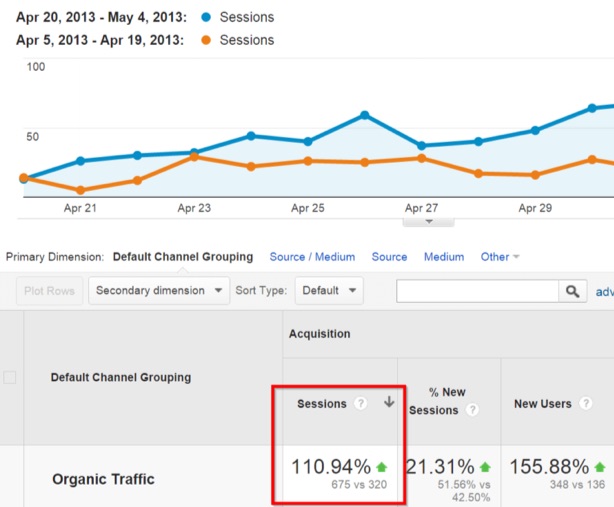
On top of a massive increase in traffic, he generated countless backlinks from thousands of different referring domains:
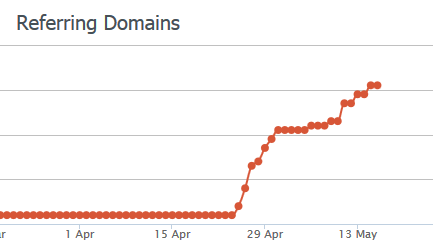
He effectively took his link-building strategy to the next level by going against the grain.
He didn’t sit back and ride the wave of guest blogging or other outdated, declining strategies.
He found his own big short.
While small marketing tactics like A/B testing and creating new ads or creative for your campaigns is a step in the right direction, it isn’t the end-all-be-all. Small bets don’t move the needle.
They merely help you figure out if you’re on the right track (or not). And help to show you when it’s time to go all-in.
Managing marketing campaigns is a stressful task.
Big, splashy, high-budget campaigns have high expectations. Bosses and clients expect big, lofty performance to go with it.
Money can get away from you fast if you aren’t careful.
Even worse, you can get so caught up in data that you miss the right trends.
Trends that tell you which aspects of your campaign are winning and which are losing.
Instead of flying blind or crossing your fingers, think like a financial currency trader.
Analyze the data with a currency arbitrage mindset. Keep up with market movement by taking an active management role in your campaigns. Be cautious in a bull market when everyone’s saying the same things.
And don’t be afraid to bet big when the time comes.
About the Author: Brad Smith is the founder of Codeless, a B2B content creation company. Frequent contributor to Kissmetrics, Unbounce, WordStream, AdEspresso, Search Engine Journal, Autopilot, and more.


Youtobe
email marketing for restaurants

It drives me crazy to see companies spending thousands of dollars each month generating leads online, only to leave them by the wayside if they're not ready for sales right this second.
If you're targeting B2B buyers, what were you expecting? B2B buyers spend 70-80% of their time researching online before they ever reach out to a company. It's the reality of the new buyer mentality.
Your job as a marketer doesn't end with lead generation. In fact, I'd say it's just the beginning.

Editor’s Note: Jeff Seibert spoke at Stanford University to discuss what he learned by building and selling startups. This post is a summarization of the talk.
It finally happened. Your promising little startup finally found its niche, got noticed, and got acquired by a big-name technology company. So what’s next? One need only look at Jeff Seibert, former senior product director at Twitter, to learn valuable lessons about how to proceed when your startup is acquired by a larger brand.
Jeff’s first company, Increo, was sold to Box in 2009. His second startup, Crashlytics, was sold to Twitter in 2013, and then, when he became the senior product director at Twitter, he got to see things from the other side of the table. What happens from the big brand’s perspective? How is the startup integrated as smoothly as possible? Jeff played a major role in several notable Twitter deals as well – Periscope being the largest of those. Here are just a few of the many lessons he learned.
Increo was a company founded on the sharing of ideas and collaboration. The company’s first product Feedbackr, was build around the simple premise of uploading a document, and then getting feedback on those ideas and making changes to the file accordingly. Feedbackr was designed during Seibert’s senior year of college, and was launched in May – just a few weeks before graduation.
The product was featured on TechCrunch, where it enjoyed an initial spike of traffic, and then flat-lined. Seibert mistakenly thought that getting showcased on TechCrunch was their big break into the world of startups — but it was only the first step on what would become a long and ever-changing journey.
Throughout that summer, Seibert and his team continued to work on and refine the product – eventually paving the way for it to accept 100 different file formats — a feat that was fairly complex for the time. Since everything was in real-time, people could be drawing on the document while others left comments and notes. The product was immensely popular with freelancers, but never really broke the 20,000-user mark.
The pressure was on to keep the company afloat. Despite over three-dozen interviews around Silicon Valley to acquire funding, nothing was happening. Keep in mind that this was 2009, a time when investors were wary of spending a lot anyway because of the lessons learned from the first dot-com bubble burst.
The team went back to the drawing board to look at their core product. There were lots of companies out there that dealt in documents, but very few of them would let you display those documents in the browser, much less add markup and such to them. So the team theorized that instead of having a standalone product – they could partner with other companies to allow their document conversion to power their own platform.
The companies that Seibert and his team approached had a few notable constraints. They wanted exclusive use of the technology and they had to be able to host it themselves, since using a third party would’ve opened them up to all kinds of legal snafus.
Jeff and his team stepped back — realizing this looked a lot less like partnership and more like an acquisition. Suddenly, offers were on the table. Pros and cons were quickly hashed out, and some really pertinent issues percolated to the top. Most importantly:
All of these questions helped the Increo team rule out different offers before finally being acquired by Box. Not only was Feedbackr Seibert’s first experience with having a company acquired, but it was also Box’s first experience acquiring another startup.
One of the biggest lessons Seibert (and Box) learned from this acquisition was that even though the deal was small and simple, they couldn’t afford to rest on their laurels. Other companies, like Crocodoc, were leveraging new technology to make document conversions and previews even more user and technology-friendly. Not one to be left behind, Box purchased them as well.
If you’re the purchaser – the one place you don’t want to find yourself in is making up for lost technology — by concentrating too much on what you have, and not what else is out there, it gives your competition time to seize upon something newer and fresher — and being an afterthought is not what you want to be.
Jeff’s second product was actually born out of a frustration with the complexity of syncing systems together. After some time working with document previewing technology, he began working on Box’s sync project to help users keep versions of files neatly synced up and updated. Working on systems to make this happen is highly complex, buggy and cumbersome. These kinds of clients crashed constantly — which in turn lead to the idea of Crashlytics.
In short, Crashlytics detected crashes and uploaded reports to the server. In the beginning, it was cryptic at best, but through further refinement, the process could be automated: detect when the crash happened, where it happened, and save it to the server. As you might imagine, developers and programmers loved the idea — the waiting list was long and people couldn’t stop talking about it.
One of Crashlytics big brand customers was Twitter. They became very attached to the technology and used it in their apps. So focused were they on how useful Crashlytics was that they continued to invite the team to come out to their headquarters and consider working for Twitter. Seibert and his team had no intention of leaving Crashlytics or even selling it to Twitter. They were 100% focused on their own goals and creating a product that people loved.
With a bit more prodding, a few of the Crashlytics team, including Jeff, met with Twitter executives. That’s when it became apparent that Twitter had a set vision for the future of mobile and software development kits — a vision that perfectly gelled with Crashlytics own vision. Here was this complete strategic alignment that meshed together so fully that it was impossible to deny.
Yet Crashlytics was still its own company. Twitter invested heavily in the company and helped them further build and refine their own product, while the Crashlytics team helped Twitter reinvent their brand and rework their focus on bringing in the very developers that helped make Twitter great.
So here you have one person with two very different acquisition perspectives — one of having their product become part of another brand that needed what they had created, and another where the result is less of an acquisition and more of a “melding of the minds” to create something bigger and better than either could have done alone.
Beyond the cultural and technology fit, as well as future plans, there’s the team. It may sound like a small and insignificant piece of the puzzle, as there are countless highly qualified individuals out there. But they must be willing to work within the established company’s culture and brand.
Can they build a solution that’s powerful, scalable, and elegant to solve a pressing need? Have they already built such a solution? And perhaps most importantly, can they, and the solution they’ve built, help win over this market? There’s a big focus on building a team that’s highly energized, highly intelligent and highly productive. The people are what makes the product, and the product is what solves the need. If some of these things aren’t in alignment or agreement, the deal doesn’t happen — which is more often than not.
That’s right. According to Seibert, almost all deals fail. This is just something you come to expect as you do it a few times. From the startup’s point of view, you can’t afford to be burnt out, tired or simply floating about day-to-day, unsure of where or how to best spend your energy. From the company’s point of view, they can’t afford to invest in something that’s just a hobby or an experiment. They need a long-term solution because they have strategies in place both today and well into the future. If both groups aren’t completely committed – things are not going to end well.
Striking the right balance is the bottom line. Making sure everyone is clear and amenable about the path forward is what’s going to make or break an acquisition. Sometimes it works out, sometimes it doesn’t — and there’s nothing wrong with that.
Have you been part of a startup that has been acquired, or were you the one involved in the acquisition? We’d love to hear your perspective on buying, selling or valuing a startup. Share your thoughts and comments with us below!
About the Authors: Sherice Jacob helps business owners improve website design and increase conversion rates through compelling copywriting, user-friendly design and smart analytics analysis. Learn more at iElectrify.com and download your free web copy tune-up and conversion checklist today!
Kissmetrics combines behavioral analytics with email automation. Our software tracks actions of your users across multiple devices allowing you to analyze, segment and engage your customers with automatic, behavior-based emails in one place. We call it Customer Engagement Automation. Get, keep and grow more customers with Kissmetrics.


Youtobe
email marketing campaign strategy
“Wash. Condition. Rinse. Repeat.” Sound familiar? It’s a common morning routine. And we all know how things run when we settle into a comfortable routine: it feels like life is on autopilot.
Sometimes, that works. However, you might perform your routine so well that you forget to look for improvements. Perhaps your hair would look better without conditioner, but if you never stop to question your routine, you’ll keep going down the same path. You’ll be stagnant.
The same logic applies to your social media strategy. It’s easy to repeat the tactics that have worked well for you so far, generating a little bit of buzz and keeping you hooked into what’s happening on Twitter.
But are you just going through the motions without considering how you can use social media to improve conversion rates?
If you’ve been using the same social media strategies for ages and your impact has leveled off, it’s probably time to review your goals and make sure that your social media tactics are increasing conversion rates, building brand awareness, and bringing in new customers.
Here’s how.
Let’s face it: Internet users are addicted to video, and that’s great for publishers and marketers.
On average, Facebook users devour 100 million hours of video every single day. About 82% of Twitter users watch video on that particular medium. Marketers are also seeing positive results with LinkedIn Video, which was introduced this past August to help users introduce themselves, explain their professional processes, or reach out to new people.
If you want to increase conversion rates on social media, double down on the channels that are already working for you. For example, if you see more engagement on Twitter than you do on LinkedIn, it’s a good idea to direct your efforts on Twitter.
After we saw higher engagement with Facebook videos, especially the one about the three essential WordPress plugins for websites, we narrowed our targeting to people that are interested in WordPress as a software and those who work in IT industry such as the web developers or freelancers. As the result, we’re able to reach more potential customers and generated immediate page likes and engagements, increasing the average daily registrations by 71%.
Many publishers simply work hard to create content and trust that readers will figure out how to share their content. However, it’s easy for publishers to integrate compelling social sharing buttons onto their blogs– and these easy-to-click buttons help drive virality.
That’s why it’s crucial for publishers to optimize their social sharing buttons to drive more content engagement. But before we get into the tactics, let’s talk about what makes a good social sharing button in the first place:
Depending on your specific blog and its graphic style, you’ll likely want to choose between two types of social buttons: inline or sticky share buttons. The choice is ultimately a matter of your own strategy and preference, but here’s an overview of each type:
Below, you’ll see examples: first, inline buttons arranged neatly together for a graphically-satisfying result. Second, a “floating sidebar” that makes its presence clear:
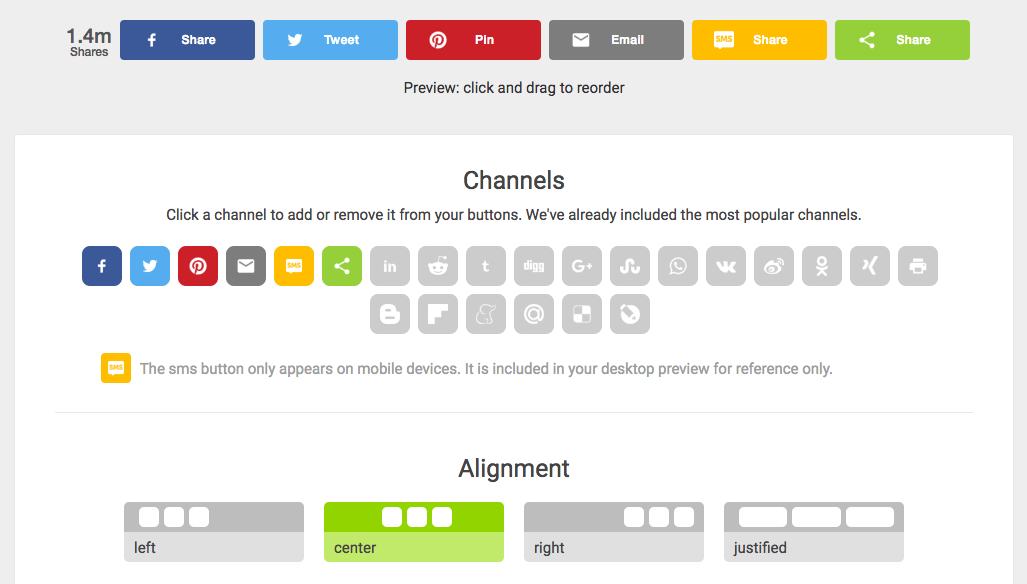
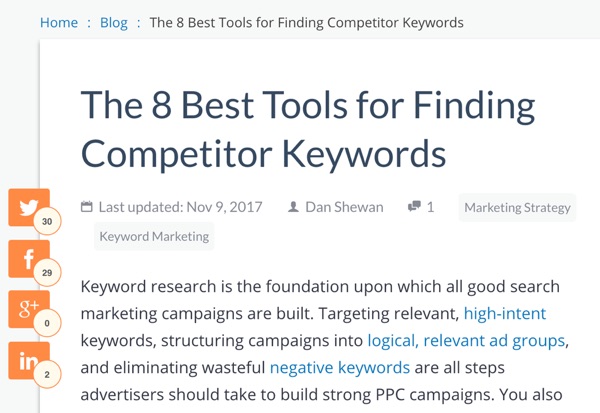
Your choice? Simple. Pick the style that suits your site the best.
When it comes to social forum sites, you’re looking at three main contenders: Reddit, Quora, and Inbound. Each of these sites is full of active communities that are chatting, sharing, and getting support.
If you participate on these sites, you’ll get more attention on your brand. Here’s a great example of a Quora answer that shot to the top because of the time and insight shared in the answer:
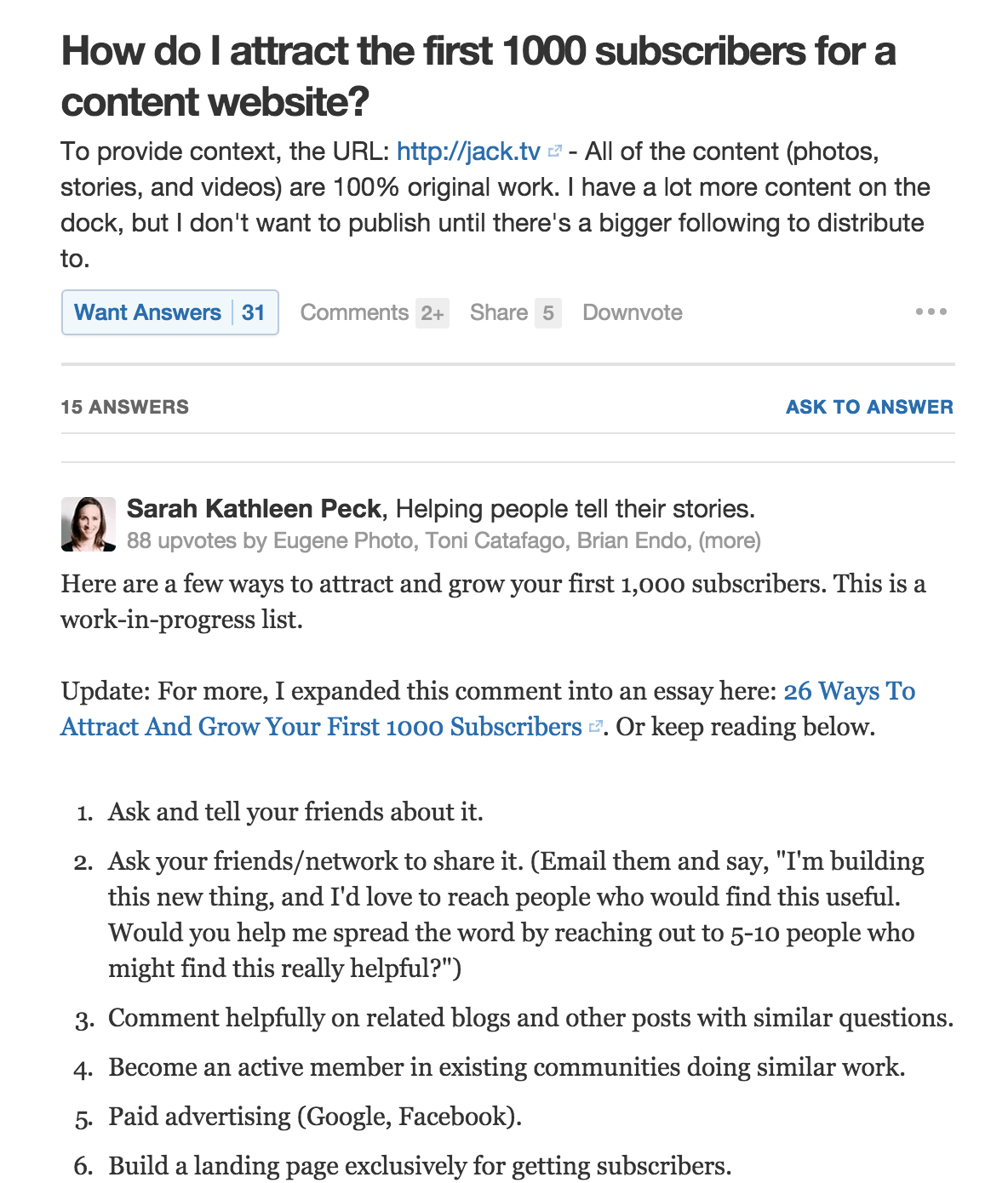
If you have read this Quora marketing guide, you’ll remember the site gives you exposure to 1.5 million monthly viewers so you stand a good chance of drawing more attention to your site. If even a fraction of those eyes want to check out more about you and what you do, the investment you’ve made in sharing value online will pay off.
Are you thinking like a data-driven marketer? If not, you should. You need to analyze data to figure out which platforms performs the best in driving brand awareness, engagement, and ultimately conversions.
A key component of data analysis is A/B testing. Perform A/B tests on your social ads to find out which version resonates more with your audience. On most of the social media platforms, you can invest a relatively small amount of money to gain insights that could generate huge returns. Facebook is big on promoting its own A/B testing platform, which means that most of the work is already done for you.
Not sure you want to spend any money on social A/B testing just yet? You can even use strategies to test your Facebook posts without putting a single penny down.
Given the variance in demographics of different social media platforms, it’s not surprising to see that some products sell better on one platform than another. Some sales processes are built for the platform. Others…well, they’ll take a while.
For example, an email service provider may not capture many direct sales from Twitter, but that doesn’t mean it can’t build brand awareness and long-term name recognition. On the other hand, when Kylie Jenner announces a new lip kit on social media, she can expect instant sales.
Posting my first Kylie Cosmetics YouTube video today!!! Jordyn and I are revealing my brand new lipkits for fall!
— Kylie Jenner (@KylieJenner) September 28, 2017
The bottom line? Understand the sales process of your audience and create a social media strategy tailored to the demographic of each platform.
According to CoSchedule, there are three headline formats that perform particularly well. These can be used as headline for your blog posts, and can then be used on social media to increase conversions.
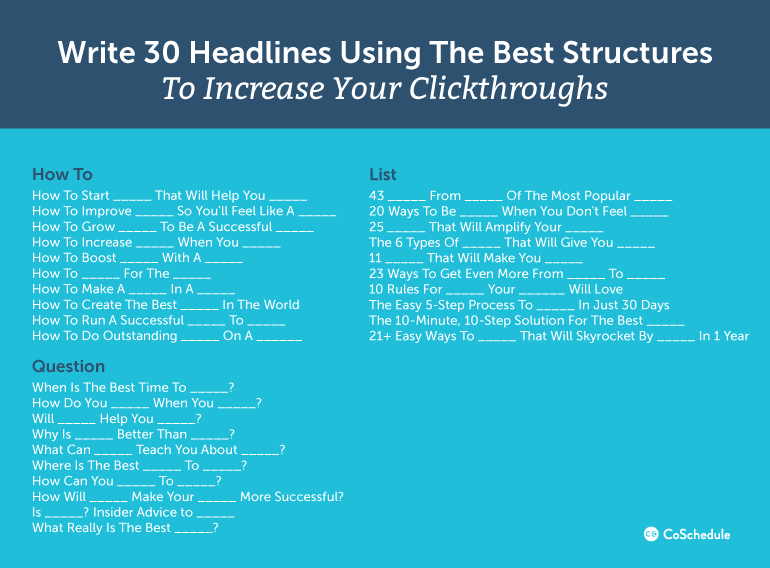
These headlines share a few things in common. First, they get to the point: there’s no doubt in what you can expect to get or learn when you read the post. Second, they take on the customer’s perspective — some of them even sound like keyphrases that customers and readers are entering as they search for your solutions.
When it comes to headlines, start from the customer’s perspective. Think about what will resonate most with them, and you’ll rarely go wrong.
No one wants to follow a social media robot online. Follow this golden rule: be the kind of social media account you would want to follow. For example:
For example, toilet paper is the opposite of a sexy product, but Charmin’s Twitter account is so generous and engaging that social media users can’t help but interact. The brand replies to Tweets that come in, and runs campaigns, such as #Tweet4ATree to encourage participation.
.@emily_maggie We know you love sports so we hope this tree someday shades kids & families as they play. #Tweet4ATree pic.twitter.com/YTdeWMiRR6
— Charmin (@Charmin) October 27, 2017
Did you know that in the last two years, customer service interactions on Twitter have increased 250%? That’s a lot of people asking for help on social media.
Today’s social media user expects your service to be timely and responsive, even in matters of customer support. Why not give them what they want? Send personalized and timely replies on social media, even if it’s simply to direct someone to the right customer support channel.
For example, Casper, an online retailer for mattresses, responds in a natural, friendly way to customers with questions. They don’t be belabor the interaction or make it tough on the customer– they simply give a friendly answer quickly and efficiently.
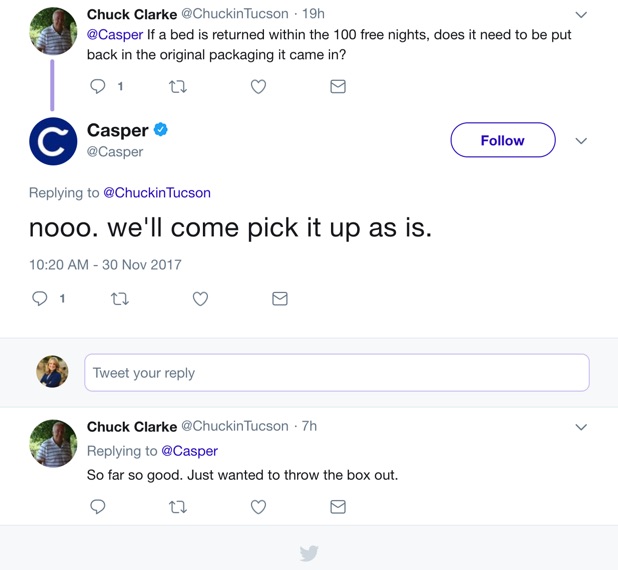
Let’s face it: you’re on social media anyway. If your old routine has gotten you nowhere, it might be time to incorporate the overlooked tactics that boost conversions and even sales. Let us know about any of your experiences with these tactics below!
About the Author: Paul Lentz is the SVP of Publisher & Business Operations at ShareThis, a technology company that provides free sharing and content optimization tools to help more than three million publishers grow their digital audiences. When not doing what he can to support the publishers, he’s taking a break from digital devices and experiencing nature through skiing, hiking, and running.


Youtobe


