Wednesday, August 26, 2020

The Best Web Hosting Services (In-Depth Review)

email marketing effectiveness statistics
Looking for a hosting solution for your website?

You’re in luck because with today’s options, it has never been easier to keep your website online.

They take care of all the technical stuff and you get to enjoy casually updating your website for conversions.

And the best part is that most of them are very affordable which helps startups get a hold of their business quickly.

That’s why I put together a list of the best hosting services of 2020 for you.

So without further ado…

The Top 7 Options For Hosting Your Website in 2020:

  1. Dreamhost
  2. Bluehost
  3. HostGator
  4. WP Engine
  5. Hostinger
  6. InMotion
  7. Siteground 

How to Choose The Best Hosting Service For Your Website:

When it comes to the best web hosting services you have to look at various important factors.

If you jump in too quick you might get into something that’s not suitable for your business.

But don’t let any of that doubt creep into your mind. 

Instead, sit back and relax while we present to you all the factors that you need to be aware of before making a decision.

You can weigh the different web hosting services and decide which is the best solution for your specific business.

Hosting factor #1 – Uptime reliability: 

If your hosting is down, no one would be able to access your website.

And obviously you want your website running 24/7.

Luckily, in 2020 this is not a huge problem since most web hosting providers offer a ‘99.99% network uptime guarantee’.

That means that your website would go down very rarely.

And even when it does, you can contact your hosting service and you will get compensation.

Most of the time that would be in the form of hosting credits.

If you want to prepare for the worst, you can check out our Website Downtime Survival Guide.

One of the best practices to making sure everything runs smoothly even when you’re taking a break is to sign up for a tracking tool like uptime robot

If your hosting service crosses the line, this tool will notify you that you need to find a new webserver to host.

Hosting factor #2 – Speed is key:

Website loading speed is extremely crucial when it comes to SEO optimization in 2020.

That’s simply because if your pages load slowly, people will bounce out of your website and your ranking will fall down the drain.

You need a trustworthy host provider that can guarantee optimal website loading speed.

The thing is that you can’t know the exact loading speed before you try the hosting service yourself.

But you can always optimize your website loading speed using free tools and effective loading speed practices.

And the best news is that even if your budget is tight, you can still get a good loading speed.

But don’t expect anything spectacular for say $4/month.

Generally, the higher the price, the faster your pages will load.

Anyways, we will include our personal experience regarding loading speed for each of the options down below.

Hosting factor #3 – Customer service:

Good Customer Service will come in handy when something goes wrong.

Especially if you’re new to websites, you’re bound to make mistakes that may lead to your website being down for a while.

And the more time it’s out, the more it will cost you.

So a good support team will help you get the issues solved in no time.
Even if you made a major mistake that’s impossible to come back from…

Most support teams will have a full backup of your website so you can get back to a working version.

You always want your support team to have a live chat or a telephone you can call.

Email just doesn’t make the cut if you want to resolve the issue fast, which you should want, given that your website is down.

We made sure to include only website hosting services with strong communication skills.

The Different Types of Web Hosting Services:

In 2020 there are a lot of different types of web hosting services.

The most commonly used being:

Shared Hosting

This means your website will be stored on the same server as a bunch of other websites.

It is a cheap option for startup websites.

With the right one, you can have customizable options and average loading speed.

Don’t look at Shared Hosting as a long-term solution because Shared Hosting can not withstand high levels of traffic.

It’s definitely a good solution for people that just want to get their website up and running fast.

VPS Hosting

The Virtual Private Server (VPS) is definitely a better option than Shared Hosting.

Each website is hosted in its own virtual space which speeds up your loading speed and also allows you to get more traffic on your website.

This option is best if you’re planning to scale your website fast.

Yet again, it’s not a long-term option if you want to be one of the top websites in your industry.

Simply because it still has limitations when it comes to website traffic.

Dedicated Hosting

This is considered the most reliable and overall the best option out there.

You get a dedicated server just for your website with full control over everything.

But prepare yourself for a pricey alternative.

That option is mainly for the best of the best.

If you have plans to scale your traffic to enormously high levels, this is the only option for you.

But if you’re just starting out, we recommend one of the other 2 options.

Anyways, the web hosting services below give you the option to choose between different types of hosting services.

So just choose the one that fits your business and your budget best.

#1 – Dreamhost — Best option if you want quick and responsive website changes

Dreamhost has been a big player for the longest time now. 

Founded in 1996 it is one of the oldest hosting services available online.

Some people might think it must be outdated by now.

But that can’t be further from the truth.

Exactly because of their ability to adapt quickly to new trends they’re still considered one of the best in the business.

They don’t look at your website as just another website.

They know that your website is your own vision for the future.

“We Make Sure Your Purpose, Is Our Purpose”

And that’s not just words. Over 1.5 million websites host with Dreamhost.

You can expect great loading speed and friendly, helpful customer support on your side.
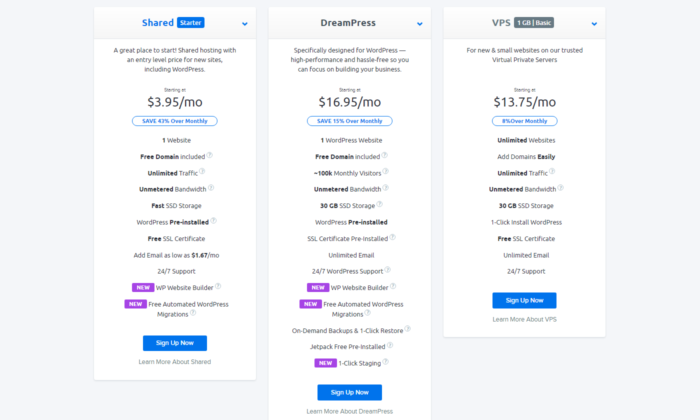
With incredibly adaptable services you can literally change your business in a matter of hours.

They know that things change as time passes.

Maybe you want to try out something new.

Maybe you’re certain that your current business model is outdated.

With their fascinating adaptable features, they will be your best friend when making major changes in your website.

#2 – Bluehost — Best for WordPress Hosting

If you’re looking to set up your website in less than a week, you’re probably considering WordPress.

After all, according to NetCraft, 35% of the Internet is powered by WordPress.

And it’s not a surprise. WordPress has been a leader in the industry for years now.

So if you’re looking for the best hosting option for your WordPress website, you can definitely trust Bluehost.

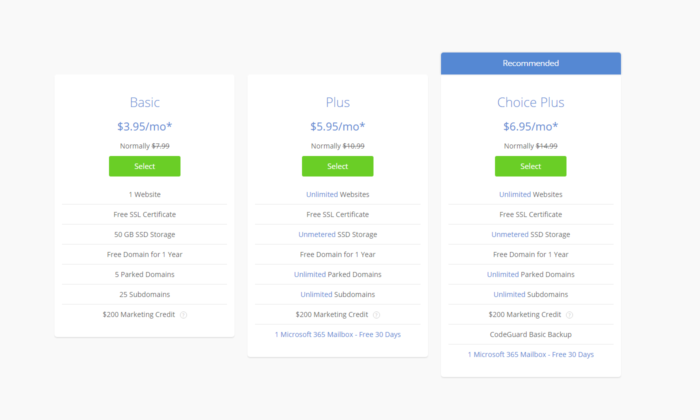
Their Pricing Options start from as low as $3.95/month and get up to $6.95/month.

Which is still not that expensive considering all the unlimited features they bring to the table.

Regarding website loading speed, as long as you don’t fill your WordPress site with plugins, you should be good.

And even if you make a crucial mistake or overload your website with different plugins, you’re in good hands.

Their Customer Support is extremely responsive. They have both an active telephone line and a live chat you can rely on at all times.

#3 – HostGator — The most affordable option for Startups

HostGator is one of the most preferred options when it comes to blogging.

They are perfect if you’re looking for the most affordable way to begin posting online.
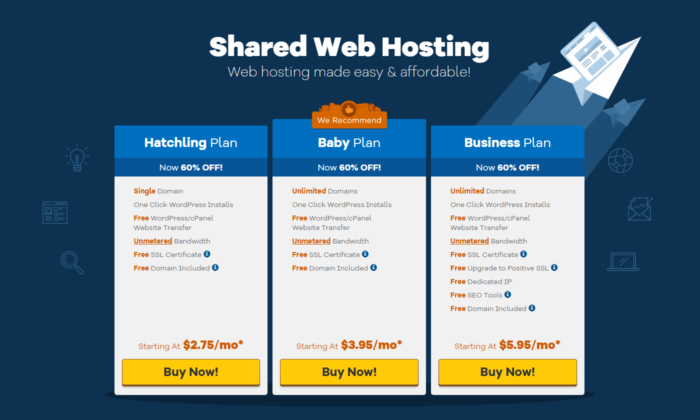
Pricing options start from the jaw-dropping $2.75/month.

Once again, you can’t expect the best features for such a low price.

But it’s a great alternative for startups that want to get their website up and running.

And just like Bluehost, they have a responsive telephone line with a live chat you can access at any moment.

You can also find a giant database with common questions beginners have, together with professional opinions and solutions to those problems.

Everything is explained and demonstrated step-by-step and if you’re still not sure that you can do it on your own.

Just shoot them a message and start chatting with their professional customer support.

#4 – WP Engine — Best option if you know your limits

We’re getting to the more advanced options now.

With WP Engine you can customize and get the exact features you need.

Of course, their services are not as cheap as some of the others on the list.

But if you’re certain what are the exact characteristics you need in a website, then WP Engine got your back.
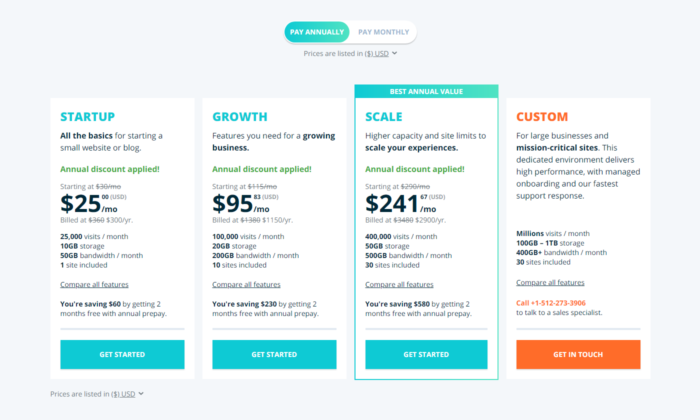
You just have to contact them and work out the best plan for your specific situation.

Of course, their experts are going to help you choose the correct option without pushing you to stuff you wouldn’t need.

It’s a great Hosting Service if you’re looking to scale big.

Don’t expect cheap services, but expect great quality and support on the way to your successful business.

#5 – Hostinger — Low-Cost Shared Hosting options for Startups

Hostinger is unique with it’s Shared Hosting Services.

Their prices literally start from $0.99/month. WOW.

Of course, you’ll be very limited with this option but it shows how much they are ready to do in order to satisfy their customers.

We personally recommend one of the higher tier options:
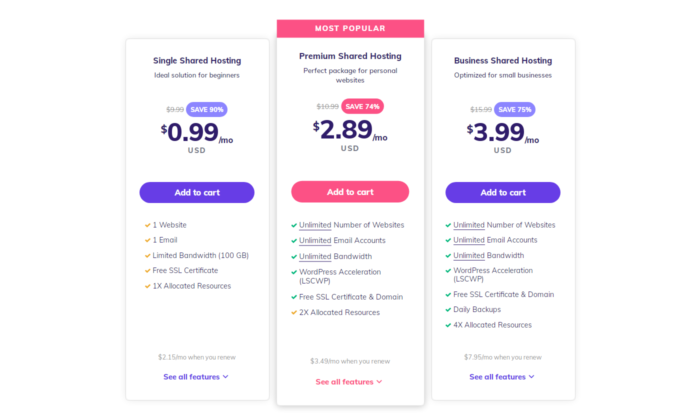
The good thing with Hostinger is that for as low as $3.99/month you can get unlimited access to everything.

With 24/7/365 support, you can expect professional assistance at any point.

For $3.99/month you get great loading speed and daily website backups.

That means even if you mess up badly, you always have access to previous versions of your website.

It is the best option if you’re searching specifically for a Shared Hosting Service that’s affordable and reliable.

#6 – InMotion — Best option for Scaling BIG

Are you positive that your website is going to dominate the online space?

If you’re 100% sure, then you should definitely take a closer look at InMotion.

Their VPS and Dedicated hosting services are far from cheap.

But with Premium prices come Premium services. We are talking fast loading speed and devoted customer support.
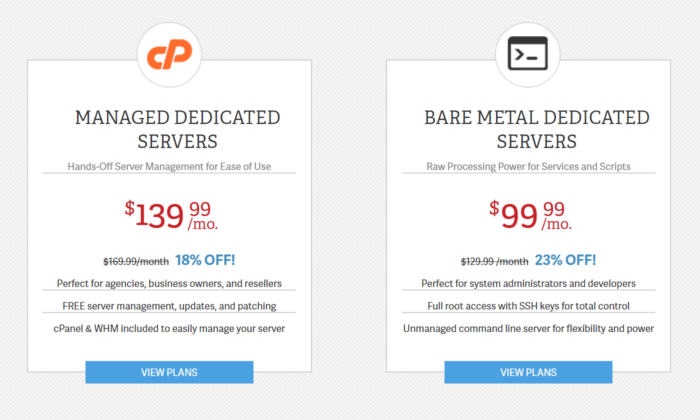
Obviously there’s also affordable WordPress Hosting and Shared Hosting options.

But if you’ve tried these before and now you’re looking for the next step.

InMotion is going to overdeliver on every promise.

Check out their plans and choose the one that fits your needs best.

#7 – Siteground — Best for WooCommerce Hosting

Do you want to sell your products online?

Then you’re probably in need of a good, reliable WooCommerce Hosting Service.

If that’s that case, then you should take a look at Siteground.
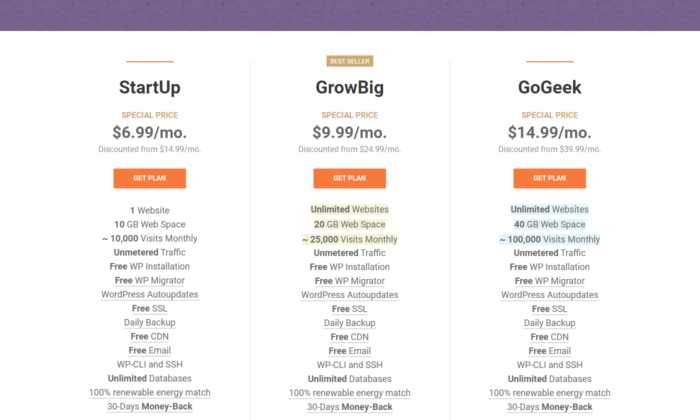
They have separated their pricing options depending on your scalability.

Most Hosting Services cut you here and there when it comes to cheaper options.

This is not the case here!

Siteground really wants to overdeliver, even if you choose their cheapest options.

Their Customer Service has a whopping 90% resolution at first contact.

That means that 90% of the time you’ll chat or speak with an expert in their team and resolve your issue in no time.

So if you’re looking for the best WooCommerce solution, Siteground is the hosting service for you.

Your Hosting Service Is Your Best Friend

Make sure you make a well-thought-out decision.

You’re most likely going to have a long-term relationship with the hosting service you choose.

So carefully look into every option that caught your eye today and choose the one that fits your needs best.

So, whether you choose one of my top recommendations or scout out your own, use the tips and best practices we talked about to make an educated decision… like the future of your business depends on it. 

Because it does!

Have you worked with any website hosting companies in the past? How did it go and did you get the results you hoped for?

FaceBook

Tuesday, August 25, 2020

How to Choose The Right PPC Agency

email marketing getting started

In 2017, PPC advertisers invested over $10 billion dollars

If you stacked that many $100 dollar bills on top of each other, you’d have a nearly seven-mile tall tower of money. So, that’s a TON of money. 

But year after year, global ad spend across every major PPC channel is growing even higher. 

Source: Statistica

And this explosive growth isn’t happening for no reason. 

It’s happening because PPC works. It’s the classic “spend money to make money” model. From social media to paid search, PPC is a smart way to see quick results. 

But that’s only true if you know what you’re doing. 

Which… is where an experienced PPC agency comes in. They spend countless hours experimenting and learning everything there is to know so you don’t have to. 

So if you’re looking to hire an agency to create and manage your PPC campaigns but aren’t sure where to start, you’re in the right place. In this article, I cover:

  • What to look for in a PPC agency
  • How to work with them for maximum results
  • Steps to finding the right agency
  • My top five recommendations

Let’s dive in!

Know your goals and desired outcomes

PPC campaigns exist for a wide variety of reasons. And it’s crucial to have a clear picture of what you hope to achieve before you go through the process of finding the right PPC agency. 

Without this essential set of information, you’ll have a hard time making an educated decision. 

So before you get started, sit down with your team and set clear goals and expectations. There aren’t any right or wrong answers, but it’s good to understand this from the get-go. 

Your goals may include:

Right now, you need to set an overall goal for your next campaign. Understanding your expectations makes it easier to communicate what you’re after and ensures everyone’s on the same page. 

The idea is to reach a high-level agreement on why you want to hire a PPC agency. 

You should also consider the level of participation you want to have throughout the process. Do you want to be super hands-on, or are you hoping for someone to completely take over? 

Lastly, don’t worry about the finer details just yet. You can work through the specific metrics and KPIs you want to measure later when you actually sit down with your new PPC partner. 

7 characteristics that make a great PPC agency

Now you have a crystal clear picture of your goals, expectations, and level of participation. So it’s time to start talking about what characteristics to look for. 

Not all PPC agencies are equal. Some excel at specific advertising types, while others specialize in creating excellent customer experiences across every platform. 

One isn’t necessarily better than the other, but it ultimately depends on what you’re looking for. 

So use these characteristics as a baseline for creating a list of viable options. They’ll help you narrow your choices down to those PPC agencies that are worth every penny. 

From there, you can sit down with them before making a final decision. 

Let’s get started!

1. They value data, analytics, and results

PPC is an exciting form of digital marketing because you can directly tie revenue generated to ad spend. So data and analytics are crucial to the success of future campaigns. 

The best PPC agencies understand how to use numbers to strategize new ideas that improve your overall ROI. They use what they already know and what they learn about your target market to develop high-yield campaigns. 

Furthermore, they also understand the importance of collecting as much information as possible as well as sharing that data with you. 

If it’s not clear on their website, be sure to ask questions to help you gauge this before working together. You can ask things like:

  • What tools do you use to measure essential PPC metrics?
  • Will you actively share data and results with us?
  • Do I have independent access to analytics and reporting?
  • Is a full analytics report included with your offer? 
  • If so, what do you include in those reports?

2. Strategic partnerships and first-party data sources

The longer you’re in business, and the more campaigns you run, the more first-party data you gather about your specific audience and how they behave. 

But the best PPC agencies have an extensive database of their own first-party data as well. 

Furthermore, they know how to use it to predict your audience’s buying behavior based on similar industries and past clients. And they may also connect with first-party data sources to tap into their pool of information as well. 

Aside from data, smart agencies partner with leading search and social media platforms. Partners are the first to know about new changes and updates.

This means they’re ahead of the game when things change. 

Which… seems to happen by the second. So, these strategic partnerships give PPC agencies in-depth insight non-partners don’t have. 

Look for indications of this on their website or ask about it if you’re unsure. 

3. Knowledge of local search

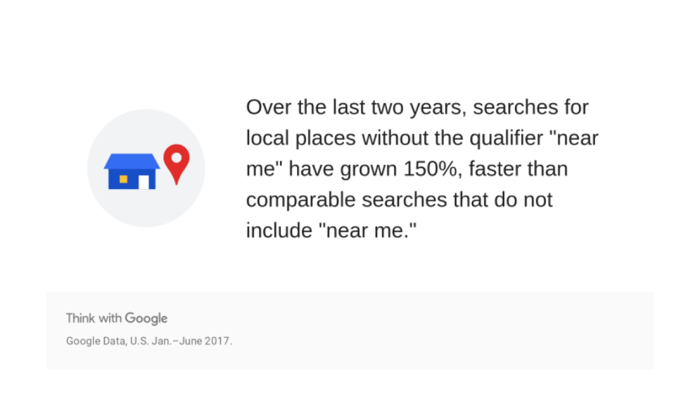
82% of smartphone users turn to search engines to find businesses close to them. They use phrases like “near me” to decide where to eat lunch, go shopping, and find entertainment, among other things as well. 

Furthermore, 76% of those searches lead to an in-store visit on the same day. 

Source: Think With Google

So, local search isn’t something your business can afford to ignore if you want to drive foot traffic to a physical location. 

Whether you use your business to sell products or meet with clients, it’s crucial to show up in search results at the right time. 

Make sure to choose an agency with a strong knowledge of local search (both paid and organic). You may not be able to find this information on their website, so be sure to ask questions. 

During your first call, it may help to ask things like:

  • How do you approach local paid search objectives? 
  • Can you share any local PPC results you’ve produced for similar businesses? 
  • We want to reach our local community. Can you tell me a bit about how that works? 
  • How do you measure the success of location-based keywords?
  • Do you use bid modifiers for location-specific queries?

4. Strong mobile optimization capabilities

Mobile devices account for over half (53%) of clicks on search ads. The era of designing creatives and writing copy for desktop first… is over.

It’s more important than ever before for PPC ads to be easily accessible on devices of all sizes. 

And the world of mobile optimization is tricky, especially when combined with ever-changing search and social algorithms. So it’s crucial to hire a PPC agency that knows how to tackle this transition to on-the-go browsing. 

Some agencies may highlight this as a feature on their website, while others may not. So be sure to ask questions during your initial phone calls to ensure they know their stuff. 

To gauge this, you can ask things like:

  • Can you share any mobile-specific results for previous campaigns? 
  • What’re your thoughts on designing PPC ads for mobile rather than desktop?
  • Do you provide mobile-optimized copy and display ads, or suggestions to improve them?
  • Do you leverage bid modifiers for mobile devices?

5. They focus on the right PPC channels

Whether you’re interested in search, social, programmatic, shopping, or multi-channel PPC campaigns, it’s essential to find a PPC agency specializing in the platforms you want to use. 

There’s no right or wrong marketing channel. But it does depend on your end goal. 

Some agencies may only manage search campaigns while others may consult, design, and manage paid social media campaigns. No two campaigns are alike, nor are two PPC agencies. 

So first, you have to understand what you’re looking for. 

What channels are you considering? Do you need help with design or ad copy as well? Maybe you want a collaborative project, or perhaps you prefer entirely hands-off.

Decide what you need and expect from a PPC agency and use that to guide your decision. 

Be sure to sare your expectations and goals during your first meeting to ensure they’re a good fit. 

6. Impeccable keyword research

The quickest way to see a return on your investment is by targeting commercial-intent (transactional) keywords. People searching for things like “Buy iPhone X” or “best web hosting services” are ready to buy. 

But making more money isn’t the only goal behind PPC advertising. Maybe you want to grow your email list to add more leads into your sales funnel. Or raise brand awareness. Or drive traffic to help increase ad revenue. 

Regardless of the end goal, your PPC agency must understand your campaign’s purpose and help you choose appropriate keywords to target. 

This isn’t something you can usually find on their website. So you’ll have to do some digging. 

Here are some great questions to ask during your first call:

  • How do you decide what keywords to focus on?
  • What keyword research tools do you use?
  • Can you tell us about your keyword strategy for a similar business? 
  • What metrics do you use to decide if a keyword is performing well?

7. Well-versed in all things digital marketing

PPC advertising doesn’t exist in a vacuum. 

It’s usually a small piece of a broader digital marketing strategy

And the best PPC agencies know this and work to create effective campaigns and PPC strategies to support your high-level business goals. 

Sure, PPC requires strong keywords that target the right audiences. But it goes much further than that as well. 

Great agencies understand the big picture and oftentimes can help improve other pieces of your digital marketing system because they’re great marketers themselves. 

How to work with a PPC agency

Now you know what to look for in a PPC agency. 

But if you’ve never worked with one before, you may feel unsure of what to expect going into your new partnership. And there are several things you can do as a client to enhance the overall experience. 

Doing these things helps put both your business and your agency in a strong position for success. 

Set clear goals and communicate your expectations

We talked about this briefly at the beginning of this article, but I want to come back to it again because it’s so important. 

Your goals and expectations set the stage for the rest of your partnership. 

It’s critical to understand your goals and communicate them with your PPC agency. The best agencies use your goals and expectations to develop a strategic plan that works well for both of you. 

So if you’re hesitant or unsure of what you’re after, sit down with your team and revisit this. And make sure you know how to communicate what you want. 

Gather and share data from past campaigns

Any first-party data you have can significantly impact the outcome of future campaigns. 

Think back to previous partnerships or campaigns you’ve run and gather that information into a clean and easy-to-understand report. 

Then, share it with your agency. 

Hard data is the best way for them to learn more about your audience’s attributes and behaviors as well as what worked, what didn’t, and why. 

This way, they don’t have to reinvent the wheel or start their research from scratch. 

Choose one point of contact

To avoid confusion, choose one central point of contact for communications from your agency. This ensures there are no miscommunications or wasted time from several people managing that relationship. 

You can certainly have a team working on the project but limit communications to one person. 

It also helps simplify things for your agency as well. They always know who to talk to, and they don’t have to worry about waiting too long for your response. 

Be prepared for advice and suggestions

PPC agencies are excellent at what they do, so it’s essential to listen to their advice and suggestions. This could be advice on improving your home page for conversions or redesigning landing pages to increase sales. 

Perhaps it’s a suggestion to improve your ad copy or headline. 

Always remember they’re the experts, and you hired them for a reason — they know their stuff. So take the time to listen and keep an open mind throughout the process. 

Ask all the questions you need to ask

There’s no such thing as a stupid question. And there’s no such thing as too many questions, either. If you’re unsure or confused about anything, the best thing to do is ask. 

There’s nothing wrong with not knowing, but there is something wrong with not asking about it. 

This helps you learn, and it also helps clear up any confusion about the project. You can rest easy every day, understanding the hows and whys of your campaign. 

How to find the right PPC agency for you

There are hundreds (if not more) of PPC agencies to choose from. And choosing the right one is often the hardest part of getting started. 

But the best PPC agencies for you specialize in the types of campaigns you’re interested in. They should also have in-depth knowledge of your specific industry. These characteristics combined help pave the way for the best results. 

It may also help to make a list of your expectations and requirements before starting your search. 

From there, list the companies you’re considering. Be sure to include:

  • Their specialty areas
  • What makes them stand out to you
  • Why they seem like a good fit
  • Pricing if it’s available online
  • Any negatives about their business

Then you can use your requirements and expectations to cross off agencies that don’t match what you need. Lastly, schedule a call with the remaining agencies on your list. 

This is your chance to interview them just as much as it’s their chance to interview you. 

So ask all your questions and take notes throughout the meeting so you can come back to them when making a final decision. 

The 5 top PPC agencies

Now you know what to look for, what to expect, and how to decide. 

Here are my top PPC agency recommendations for different business types and sizes to kick off your search. 

1. Neil Patel Digital — Best multi-channel PPC company

At NPDigital, we leverage our first-party data and search partners to create multi-channel campaigns designed to meet potential customers wherever they hang out online. 

Furthermore, we focus on using data to design an excellent customer experience regardless of how and where they interact with your brand. 

And now more than ever, consumers are researching before they buy. 

We care about giving shoppers the content and information they need to make informed decisions, all while helping you conquer your PPC goals. 

From paid search and social media to Amazon and shopping ads, your PPC campaigns are in good hands. 

2. Loud Mouth Media — Best small agency in the UK

Hiring a partner close to your time zone can have a massive impact on the type of communication you have as well as how long it takes to get a response. 

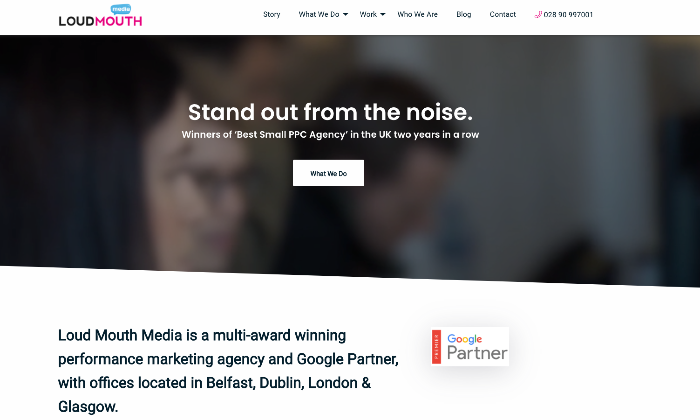
If you’re in Europe or the UK, Loud Mouth Media is an excellent small PPC agency serving big clients like Volvo and BBC, as well as small businesses around the world. 

And there’s a reason Loud Mouth Media’s won the “Best Small PPC Agency” in the UK two years in a row — they’re phenomenal at what they do. 

With the data and results to back it up. 

Plus, they’re Google, Bing, and Facebook partners, so Loud Mouth Media is an excellent choice if you’re interested in those channels. 

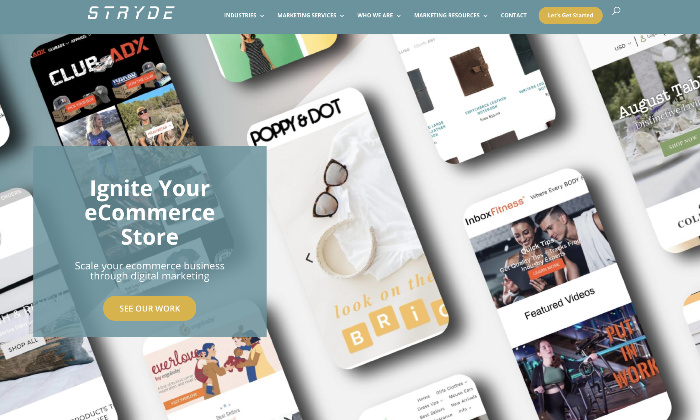
3. Stryde — Best for eCommerce and B2C businesses

If you’re a B2C business or running an eCommerce store, Stryde is a superb choice because they specialize in eCommerce digital marketing for businesses of all sizes.

Furthermore, the B2B and B2C industries couldn’t’ be more different when it comes to PPC. 

And there’s no one better to strategize and manage your product-focused campaigns than an agency that solely works with eCommerce and B2C businesses. 

Plus, they have an extensive portfolio of case studies that prove they’re great at what they do. 

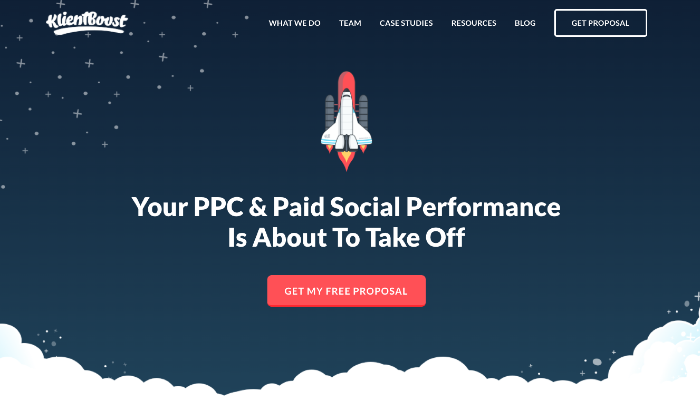
4. KlientBoost — Best for landing page design + management services

PPC ads drive traffic, and landing pages (typically) convert that traffic into revenue or leads.

So it’s no surprise that landing page design and optimization are crucial to successful PPC campaigns regardless of your industry and business type. 

If you don’t have an in-house designer or struggle with creating conversion-focused landing pages, KlientBoost is an excellent PPC partner for your business. 

Aside from PPC and social media management, they also specialize in designing new landing pages and optimizing existing ones to help you reach and exceed your PPC goals. 

Their in-house team of designers and developers is ready to help you craft excellent customer experiences from their first click to their last. 

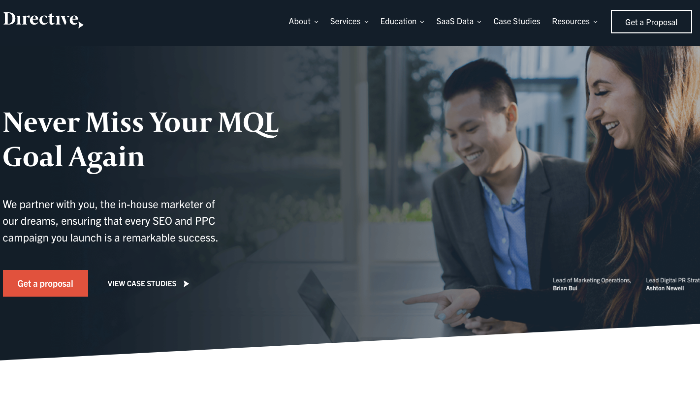
5. Directive Consulting — Best for SaaS and B2B businesses

B2B businesses and SaaS tools face their own set of unique challenges when it comes to PPC campaigns. After all, you’re targeting other businesses… not individuals. 

So you need a PPC strategist and partner that understands how to overcome those challenges. 

Directive Consulting specializes in helping software companies conquer every marketing channel from paid search and shopping ads to SEO and CRO

Whether you’re looking solely for PPC or interested in an entire digital marketing plan from one of the top agencies around, Directive is a fantastic choice. Plus, they offer digital marketing education, and they have a pool of first-party SaaS data you can tap into. 

You + the right agency = reliable results

Choosing the best PPC agency for your business is just as important as crafting the perfect copy, designing eye-catching creatives, and publishing conversion-focused landing pages. 

There’s no doubt you have a powerful message and life-changing products for the right audience. Plus, you owe it to them to put it in front of them when they need it. 

The right PPC agency helps you do just that while helping you generate more leads, make more money, and get more eyes on your brand. It’s a win-win for everyone involved. 

The good news is that you now know what to look for throughout the process. So next time you’re looking for your dream PPC agency, use the tips, tricks, and characteristics we talked about. 

And remember: an excellent PPC partner and reliable results can make a world of difference for your business. You deserve it and your customers do too. 

What do you look for when hiring a PPC agency?

Google

Sunday, August 23, 2020

Here’s What You Should Do When Your Search Rankings Drop

email marketing 2017 stats

rankings drop

If you’ve ever done SEO, you know how good it feels to see your rankings go up.

You put a ton of hard work into moving up in the SERPs and it finally pays off.

But then the unexpected happens. Your rankings drop.

Few things in SEO are more discouraging than a fall in the rankings. It makes you feel like everything you did was useless.

You wonder what went wrong or if you made a mistake. You beat yourself up for not doing it right.

You’re back to square one again, and you have to start all over.

Or do you?

In my experience, that’s not always the case.

My rankings have dropped more times than I can count. At first, I panicked.

As I learned more, I found out that it’s not the end of the world if you go down a position or two. It’s obviously not ideal, but there’s a lot you can do to fix it.

That’s what I’m going to show you today. Even if your rankings are where you want them to be, you need to be aware of how to bring them back up when they drop (because they will).

Analyze the drop

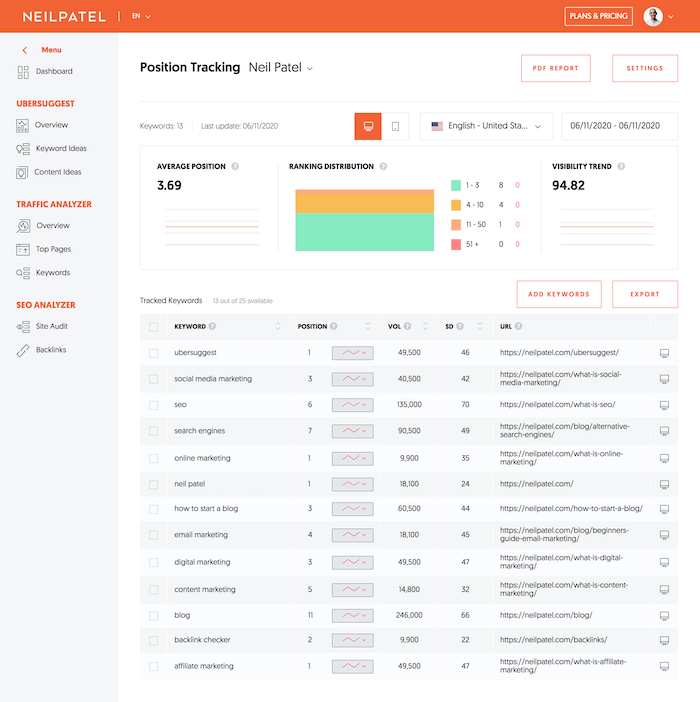
Before you take action to raise your rankings, you need to track your rankings, ideally on a daily basis so you can see if they are increasing or decreasing.

The reason you want to track your rankings on a daily basis is that Google makes 3200 algorithm changes per year, which is a bit more than 8 algorithm changes per day.

Hence you don’t really have a choice but to track your rankings daily.

So how do you do that?

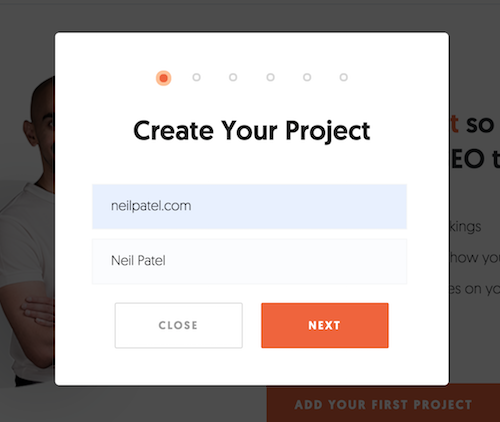
First, you’ll want to head to the Ubersuggest dashboard and click on “Add Your First Project”.

It’s as simple as adding in your URL.

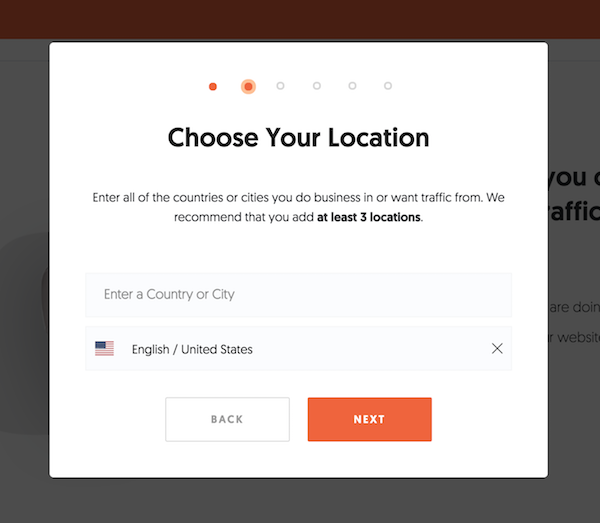
Then select the locations you do business in and want traffic from.

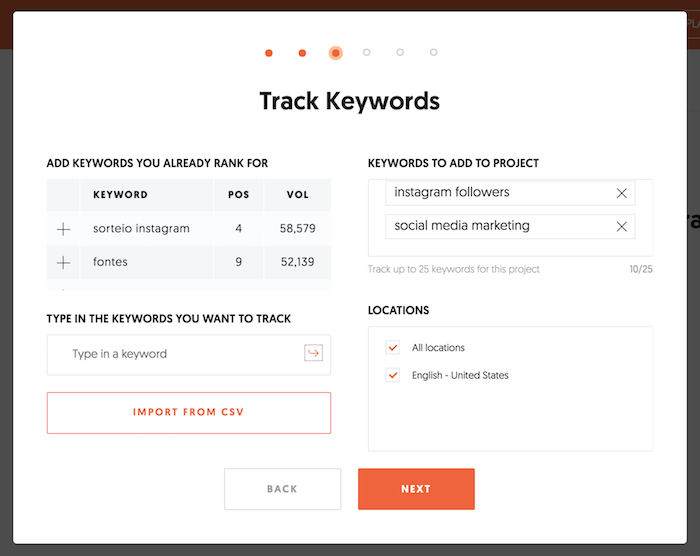
Then add in the keywords you currently rank for or want to go after.

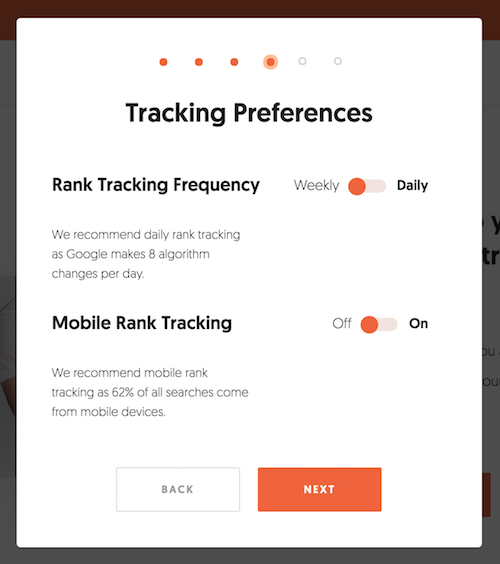
And of course, set up your traffic preferences. Make sure you select “daily” rank tracking and you turn on mobile rank tracking.

And then you’ll be good to go.

Then you will be notified via email when your rankings go down (or up) as there is no way you are going to have the time to manually check every day.

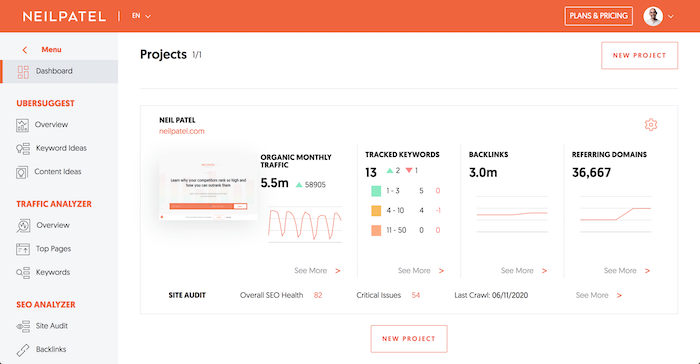
Or when you log into your Ubersuggest dashboard you’ll see an updated view of your site:

And then when you drill down into your rankings you’ll see a report of what is increasing or decreasing.

Now when looking at your rankings it is normal for them to fluctuate a few spots here or there… but if you see all of your rankings all of a sudden drop, then you know you need to do something.

Did you get penalized?

In most cases, your site has not been penalized and you don’t need to worry about this.

If you didn’t do anything fishy like “buying links” you don’t really need to worry about a penalty.

If you are unsure, read through this list and ask yourself if your site is guilty of any of these SEO sins. If so, identify the problems and take steps to fix them.

Even if you haven’t done anything on that list, you could still have gotten a penalty. Google’s algorithms are updated frequently, and they’re incredibly complex.

They take hundreds of factors into account when considering ranking. One day, your site might not deserve a penalty, and the next, it might.

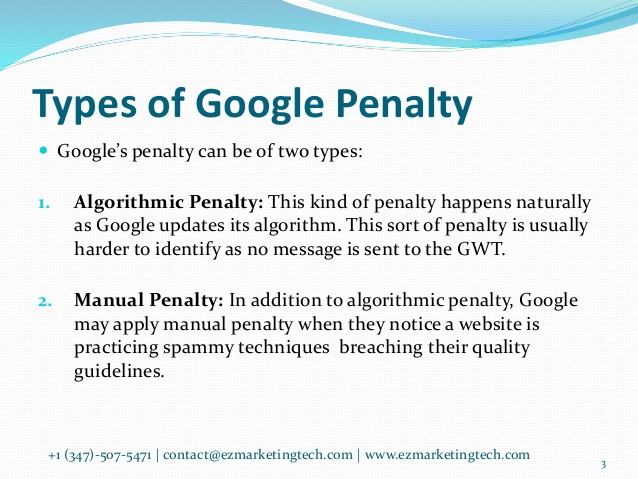
It’s important to understand the types of penalties: manual and algorithmic.

Source: Slideshare.net

Manual penalties are given out by Google’s webspam team when they get alerted of suspicious activity.

This could be the result of having unnatural links, or someone could have filed a spam report against you.

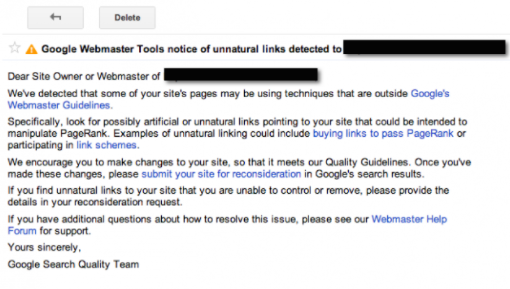
If you’ve received a manual penalty, you should have gotten a notification in Google Webmaster Tools. Here’s an example of a message about unnatural links:

The other type of penalty is an algorithmic penalty.

These penalties are harder to track because there’s no definitive way of knowing you received one.

To determine if you’ve gotten an algorithmic penalty, you have to understand how Google’s algorithms work.

If you find that you’re doing something an algorithm doesn’t like, there’s a good chance you’ve gotten a penalty. But you also have to think about new penalties.

If your rankings dropped randomly, check Moz’s handy directory of Google’s algorithm updates to see if there’s a new one at work.

A new algorithm could be the reason why you’re seeing lower rankings. If that happens, research the algorithm and find out what it’s penalizing.

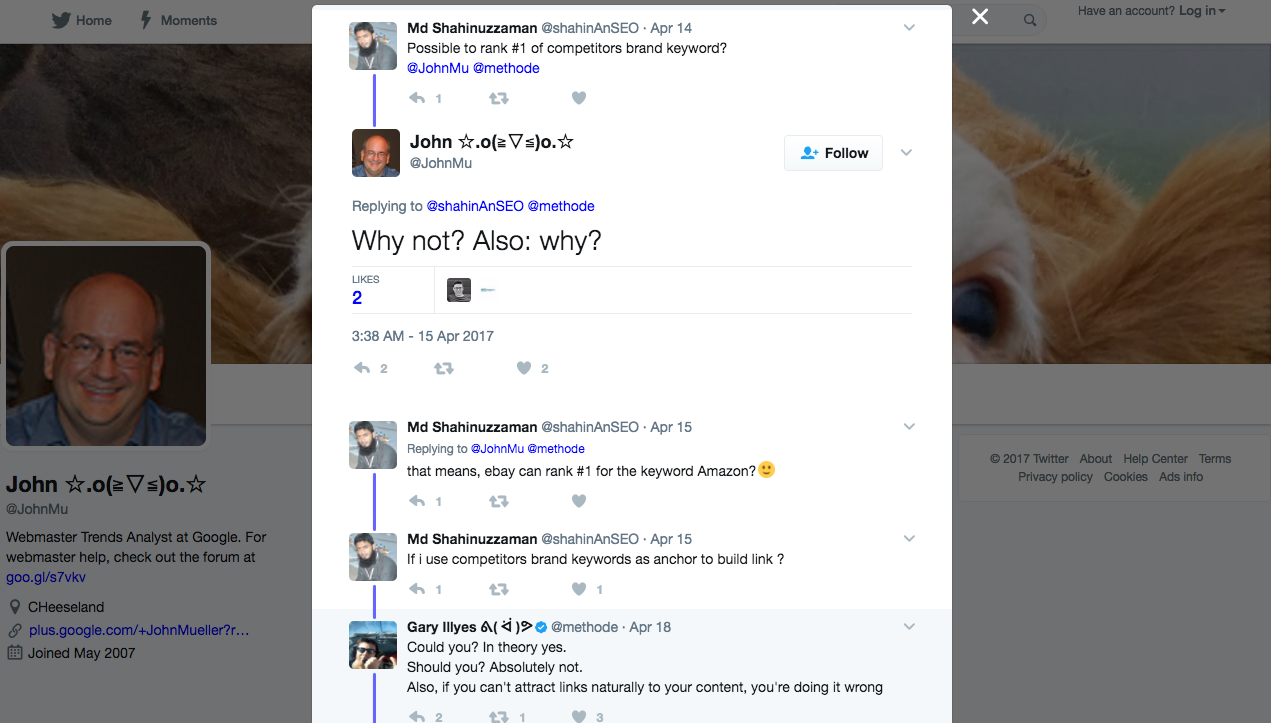
One cool way to keep track of new penalties (and a bunch of other Google-related stuff) is to follow Gary Illyes, John Mueller, and Google Webmasters on Twitter.

Gary and John, in particular, give out a ton of awesome advice, and you can often find them talking with other Twitter users.

You can even ask them a question directly and get it answered… you may not get a response, but it is worth a shot.

Do you have link problems?

This is a big one.

Think of links as the currency of SEO. It’s essentially how you “gain” authority.

So it’s no surprise that a strong link profile is correlated with high rankings.

The flipside is that a weak link profile is correlated with low rankings.

I spend lots of time working with clients on SEO, and I’ve seen lots of sites that have numerous link problems.

Usually, the business isn’t aware.

That’s because weak links are the silent killer of SEO. That’s why you need to make sure your link profile is robust.

First, conduct a link audit of your site. Here’s a step-by-step guide on how to do that.

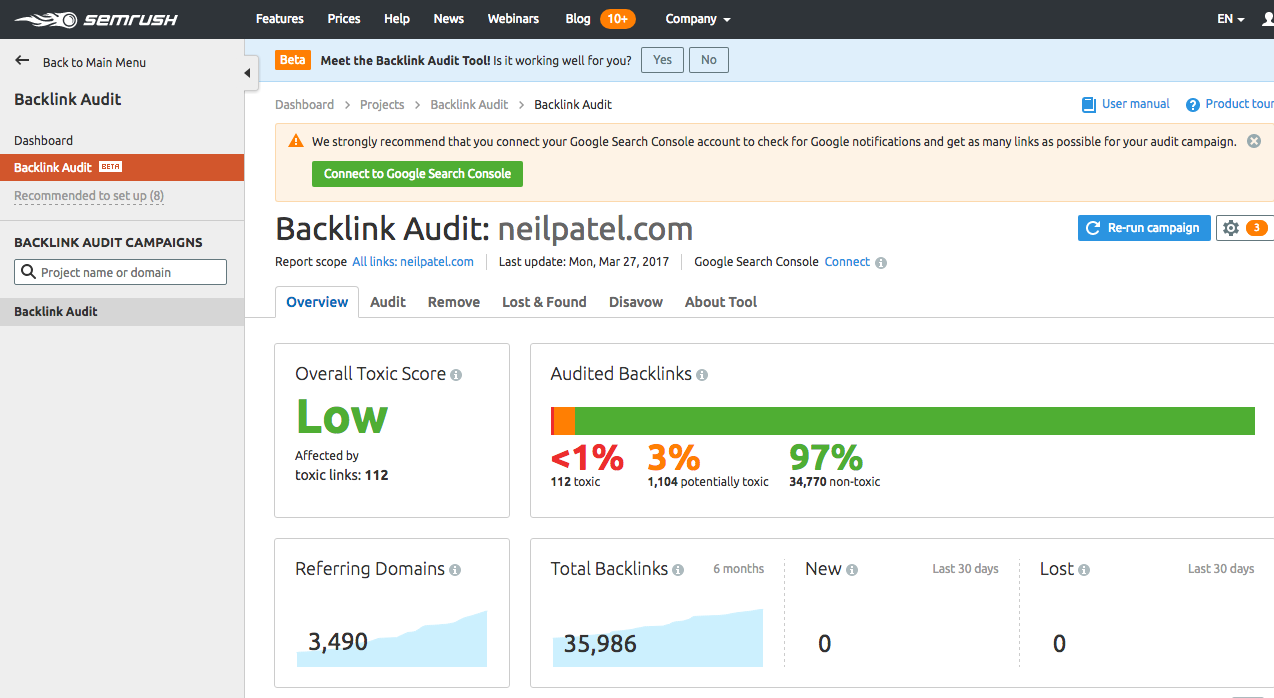
For the short version, use a backlink analysis tool like SEMrush Backlink Checker to see where your bad links are.

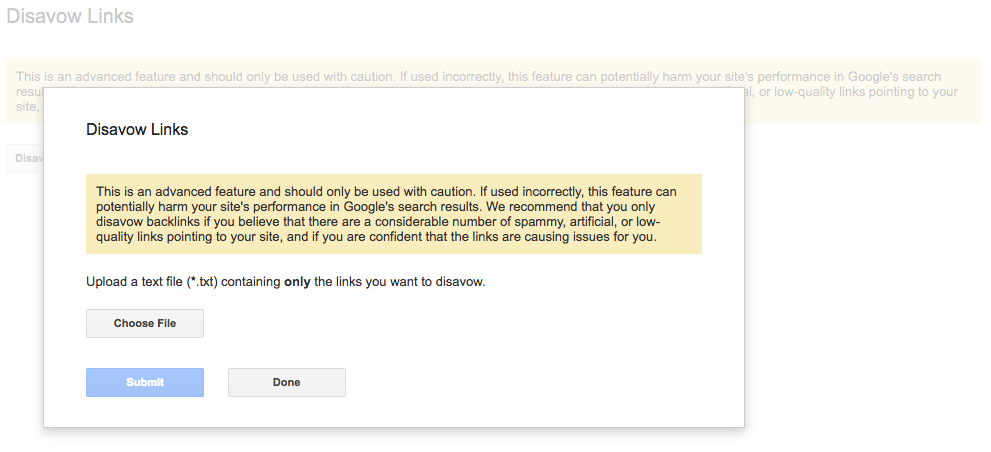
When you find bad links, contact those sites and nicely ask them to remove the link. If that doesn’t work, use Google’s Disavow tool as a last resort.

However, I’ve found that about 90% of the time, conducting a backlink audit will help you find bad links.
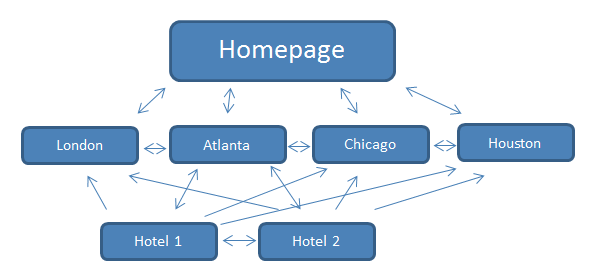
But there’s a problem here. Often, the reasons behind link problems aren’t so obvious.

If your link profile looks okay after an audit, there could still be problems. Here are a few of the issues your link profile could be facing.

Losing links

Did you know you can lose links? Both internal and external links?

It could be the cause of your ranking drop as well.

Yep, you can lose internal links even if it’s to content you already own.

Let’s talk about those first.

If you often relaunch, rebrand, or redesign your site, you may lose some links along the way.

Why does this happen?

It has to do with redirects and transitioning your site over smoothly.

Let’s talk about site transitions first. If you deleted an old blog post, then links to that post aren’t going to work. In turn, this will weaken the internal linking structure of your site and compromise your SEO.

You’ll have one less link, which is removing a part of your internal linking network.

This isn’t optimal because it means two things:

  1. You’ll have to fix the link
  2. You’ll have less content on your site to link to. That’s why I recommend not deleting content unless you absolutely have to. You can always update it.

That’s just one example of a lost link.

Another reason you could lose an internal link is a faulty redirect.

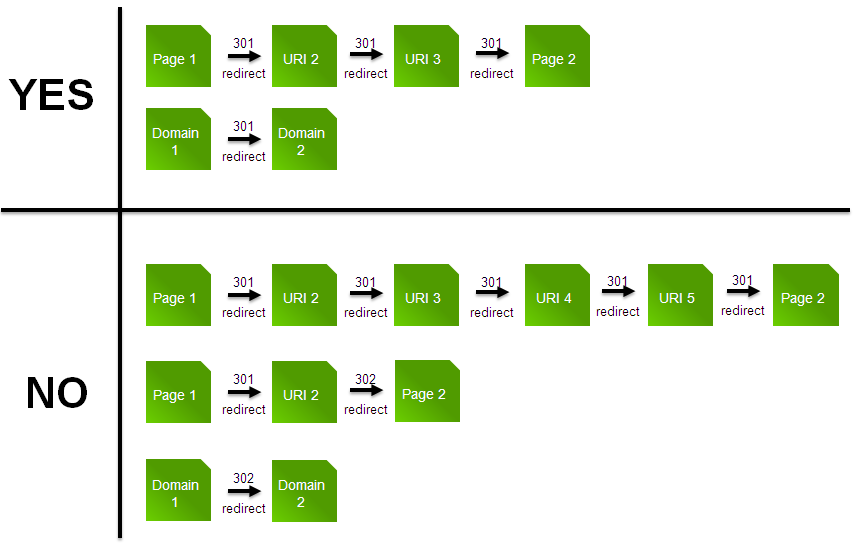
This often happens with 301 redirects. I’ve talked about 301s before, but there’s a unique issue you need to be aware of.

Because a 301 is called a permanent redirect, lots of people assume that the redirect will always work.

But it doesn’t.

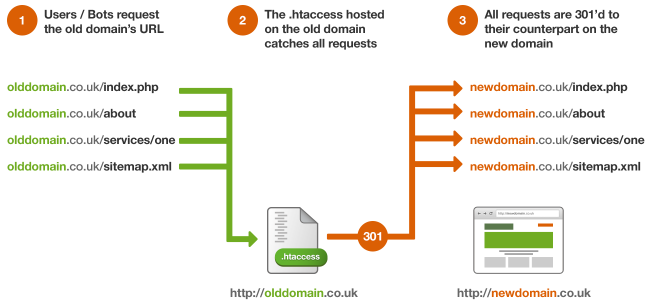
Here’s precisely how a 301 redirect works:

If you just set up a new site, you can 301 from the old domain to the new one without a hitch. The issue is when you revamp your site more than once.

That’s because redirects from older versions of a site are rarely passed on to newer ones.

On top of that, if you get a new domain and an older domain expires, it could cause a significant loss in traffic because the 301s will no longer work.

It’s messy.

If you discover a bad 301 giving you problems, you need to fix that.

First, you need to find the target links your 301s are trying to go to.

If those links are dead, you’ll most likely need to remove the link.

You could also put the old content back up or create new content to keep the link on your page. This is a good idea if the page in question gets a lot of traffic.

You need to do what’s best for your visitors. If they’ll miss out on great, comprehensive content, you should make sure that content is still on your site.

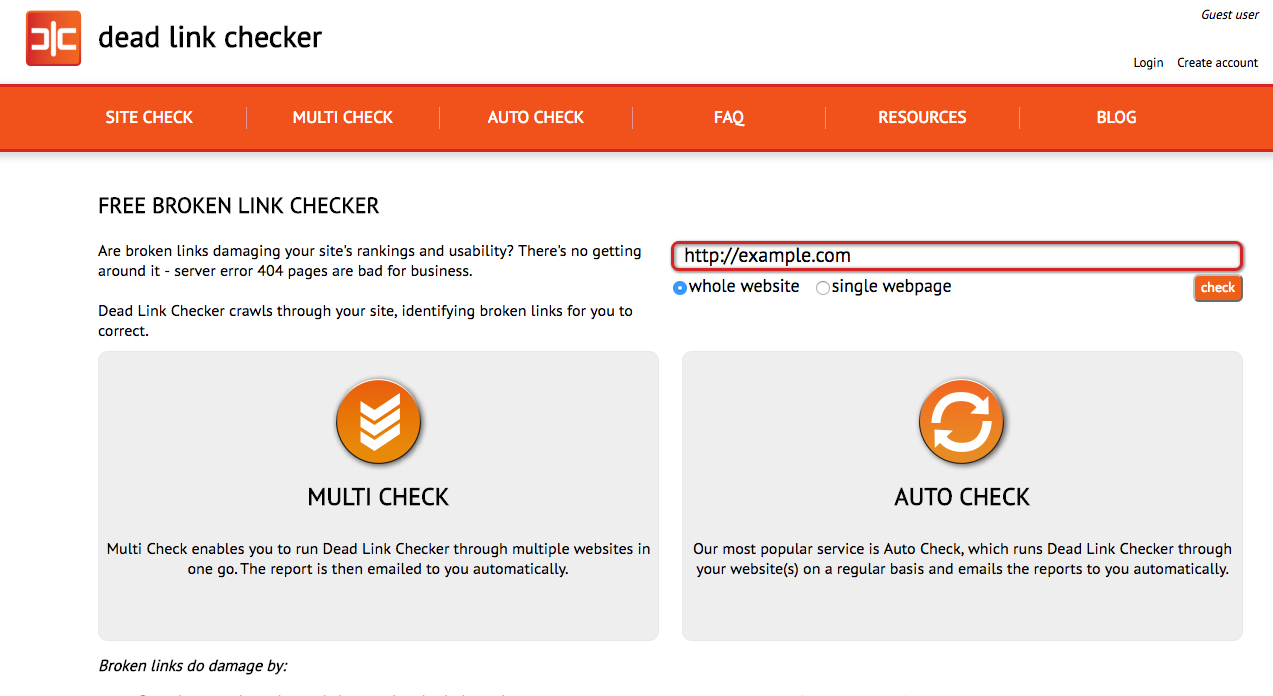
You should also check for broken links. You can use a tool like deadlinkchecker.com to do this:

Ideally, you want to see no errors:

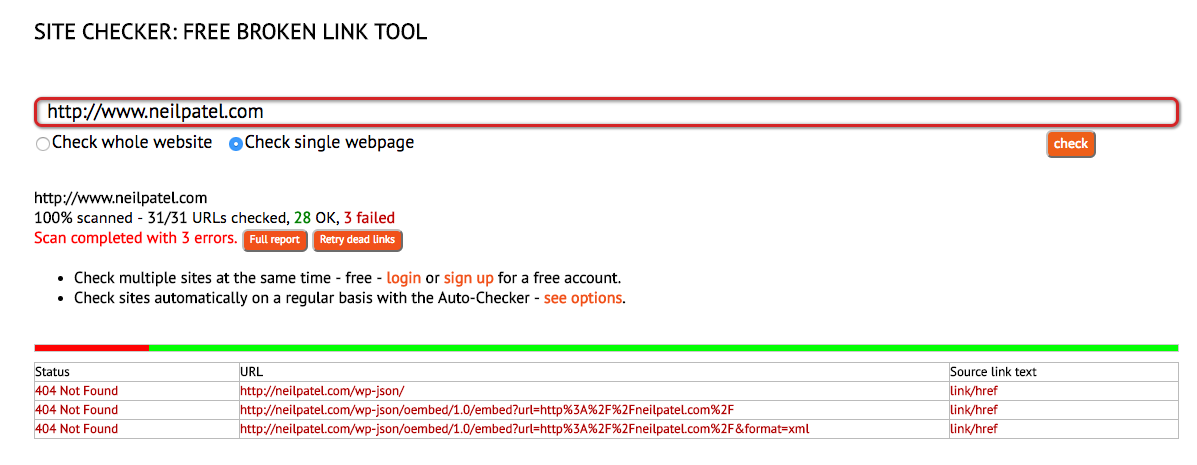
But if you do see errors, you’ll be able to see the URLs that aren’t behaving correctly:

But what about outbound links? If you find an outbound link that no longer works, just remove it and replace it by linking to another authority site.

Finally, let’s talk about backlinks you’ve gotten from other sites.

Go here and type in your URL.

link growth

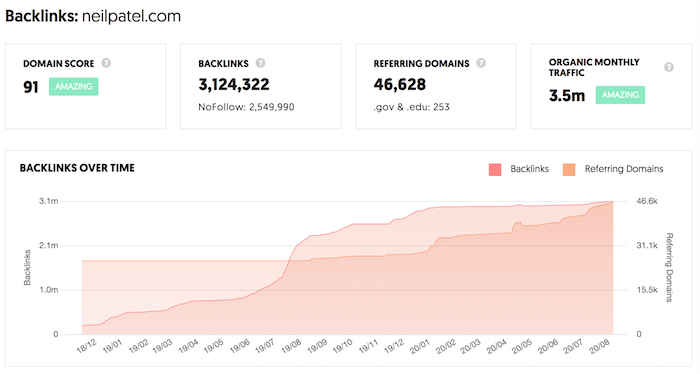
If you see your link chart going up and to the right, you are fine. If it is going down, then we have to fix it. For example, using Ubersuggest you can see which sites don’t link to your anymore.

And for those sites, you can use a template like this one to get those links back:

Hi [Name of site owner],

I hope you’re doing well!

You linked to my site a while back, and I want to thank you for that. However, it looks like the link is actually gone.

The link appeared in your [piece of content/page here], but it seems that it’s not there anymore.

Here’s the page on my site you linked to: [Link URL here]

If you could put the link back up, I’d really appreciate it. I’m a big fan of your site, and it’d be my pleasure to return the favor if I can.

Sincerely,

[Your name]

Most people will ignore you, but a percentage of the people you email will link back.

Polish up your site

If all else fails, you might need to spend some time improving your site.

I’m talking about design, user experience, and speed. Each of these is integral to a site that performs and ranks well.

I’ll go over each category briefly:

Design

Having a mobile-friendly design is important as there are more searches on mobile devices using Google than there are for desktop.

If you’re not considering mobile users first, you need to start doing that.

Having a mobile-optimized site isn’t as simple as making sure your site is responsive. That’s definitely important, and you should do that, but it’s not enough by itself.

Think about making all of your content mobile-friendly.

There’s one big reason you should focus on this. Google has a mobile-first index. That alone should be more than enough to persuade you to focus on mobile-first design.

You might want to read my article on mobile usability for more information on this.

User experience (UX)

This is another reason why a responsive design is so important.

Your mobile users should have a great experience that’s designed for mobile devices. Similarly, your desktop users should have a great experience that’s designed for desktops.

If your UX is bad either way, you will lose visitors.

If you take a look at the most popular sites in your niche, you’ll notice that 9 times out of 10, they’ll have great UX.

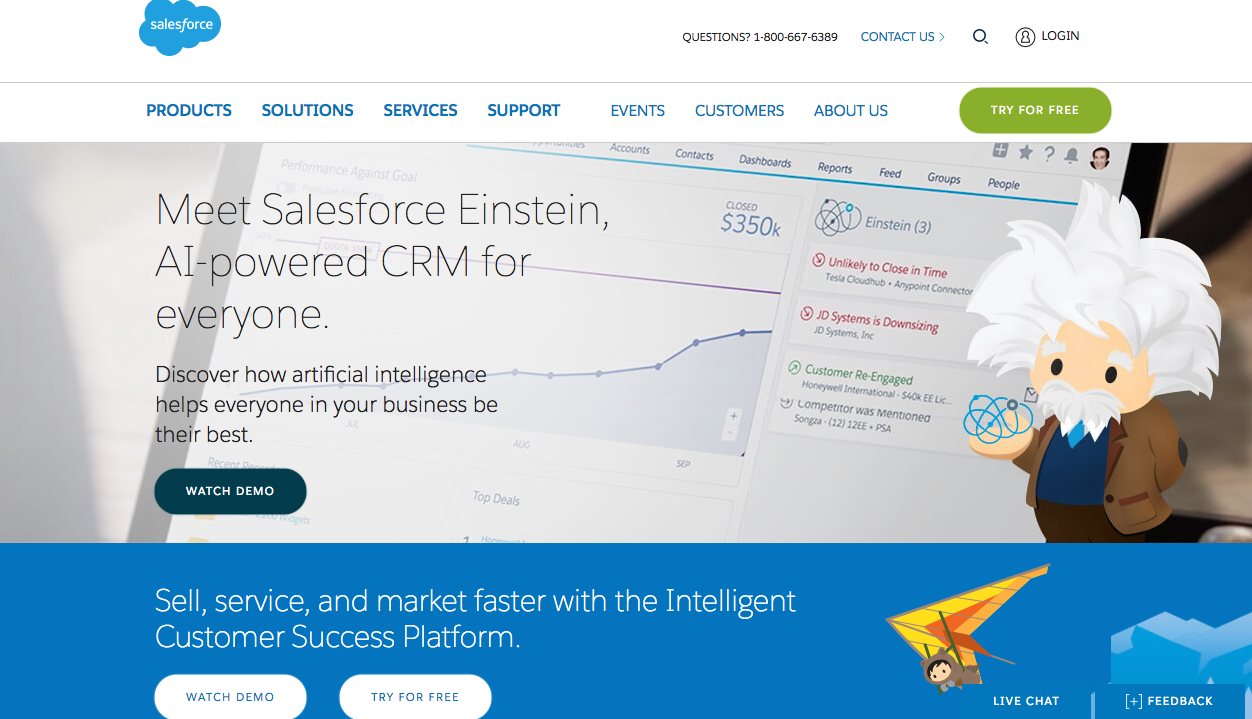
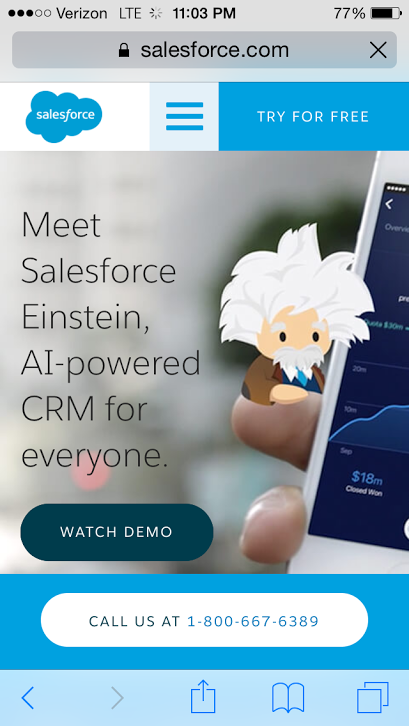
Say you’re in SaaS. Without a doubt, Salesforce is one of the biggest SaaS players in the niche.

And sure enough, their desktop and mobile UX is fantastic.

Desktop:

Mobile:

This is what you should strive for when polishing your own site.

Speed

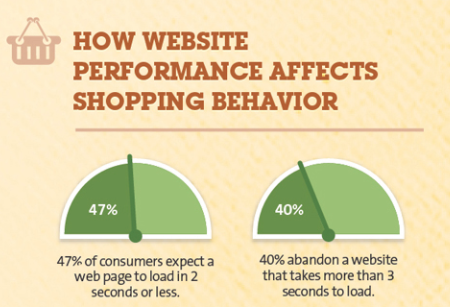
Search engines (and people) love fast-loading pages. In fact, 47% of customers expect a page to load in 2 seconds or less.

So if your site speed is longer than 2 seconds, you could lose traffic.

Yikes.

Making your site faster is a long-term strategy. You have to monitor your site and make sure nothing’s dragging it down.

Start by adding compression.

Next, make sure your server has adequate speed. It should be no longer than 200 milliseconds.

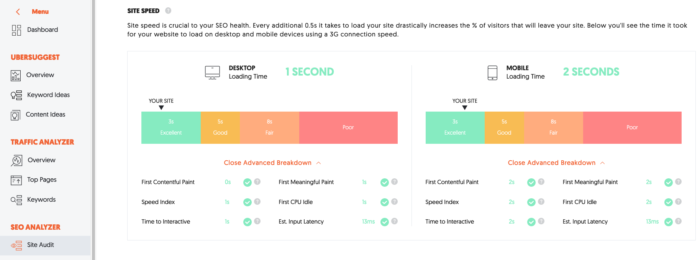
You can test your site speed by using Ubersuggest’s “Site Audit” feature. Type in your URL and click “Search.”

From there, click “Site Audit” in the left sidebar and scroll down to “Site Speed.” Here’s what you’ll see:

There are tons of factors that can cause slow site speed, so the best way to prevent slowness is to keep your site as lightweight as possible. And Ubersuggest will break down how to do that and what to fix.

As a rule of thumb, if you have anything unnecessary on your site, remove it so your speed is the best it can be.

Don’t forget about content

Through Ubersuggest we track millions of popular sites around the world to get better data insights on algorithm changes.

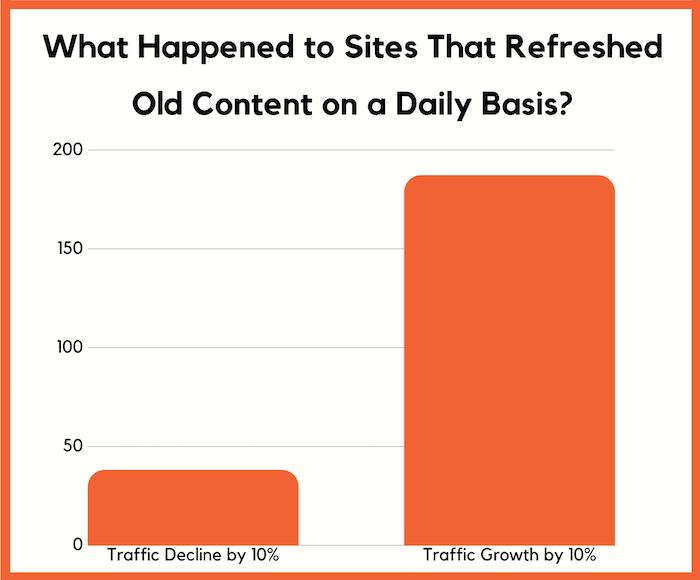
We know for certain that 641 sites we track are updating old content on a daily basis.

Can you guess how many of them saw a search traffic dip of 10% or more from the last algorithm update?

Only 38! That’s 5.92%, which is extremely low.

What’s crazy, though, is that 187 sites saw an increase in their search traffic of 10% or more.

So make sure you are keeping your old content up to date. Because why would Google want to rank old, stale content, when they can rank something fresh and useful for people?

Another strategy I love to deploy is to expand my content that is already ranking well.

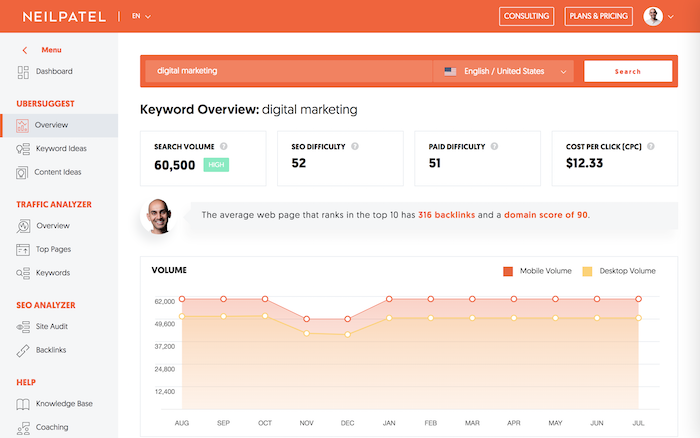
For example, lets say you rank for the term “digital marketing”.

You’ll want to head to Ubersuggest and type in the phrase “digital marketing”. You’ll see a report that looks like this:

From there in the left navigation bar, click on “keyword ideas”.

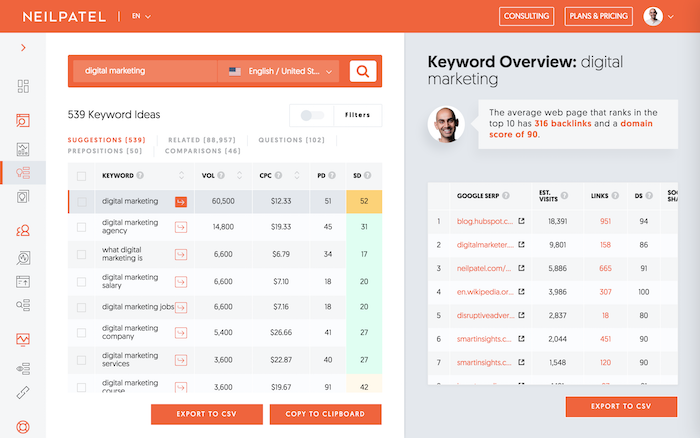
You should now see a report that looks like:

This will give you a list of keywords that are similar, longer tail terms that also are searched frequently.

If you rank for the main term, it is easy to also rank for the longer tail terms. So make sure you add the relevant ones to your content.

It may seem tedious, but go through 100s if not 1000s of keywords in the keyword ideas report as it will allow you to get quick traffic gains.

When adding in the new keywords into your content, don’t just stuff them in there. It has to flow naturally and make sense for your website visitor.

And if you can’t make it make sense for a particular keyword, don’t do it… put the user first. Remember you are writing for humans, not Google.

Now the strategy I broke down here may seem simple and silly, but it’s one of the big reasons on why I am getting roughly 9 million visitors a month.

Conclusion

Going down a position or two in the rankings happens to the best of us.

It’s even happened to me.

If this happens, don’t panic.

Almost every client I’ve had who’s experienced a loss of rankings got really scared when it happened.

You probably felt this way too. But you don’t need to worry.

You can easily bounce back from a ranking drop.

Don’t believe me? Give these strategies a try. These aren’t just little tips. They’re tried-and-true methods that will help you reclaim your spot on Google.

No one deserves to lose ranking when they have an amazing site that users love. What’s more, it’s easy to fix.

Don’t let the initial shock stop you from getting your ranking back.

So, when was the last time your rankings dropped?

FaceBook