email marketing developer cover letter


Youtobe
email marketing for small business

Identify and target groups and connections which are relevant to your aims and capabilities. Relevance can be according to several different things, for example:

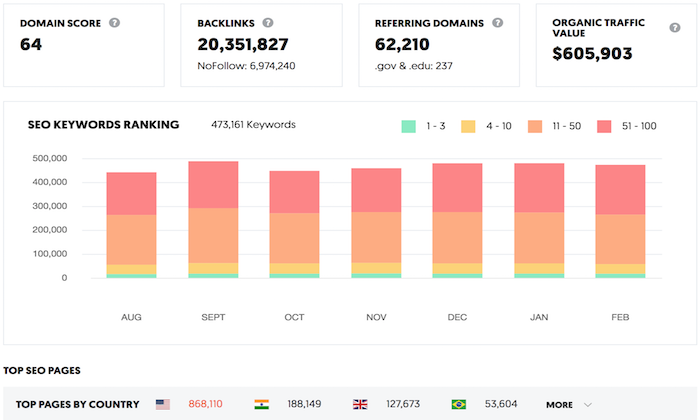
Do you want more traffic?
Well, who doesn’t?
The reason you want more traffic is that you think more traffic equals more revenue.
But here is what you’ll learn the hard way… as your traffic goes up, your revenue won’t increase at the same pace.
And in many cases, as your traffic goes up, your revenue won’t increase one bit.
In other words, if you get the wrong kind of traffic, you’ll find yourself spinning your wheels and becoming frustrated.
It happens to all of us, let me show you what I’ve learned the hard way.
Take a look at the screenshot below.
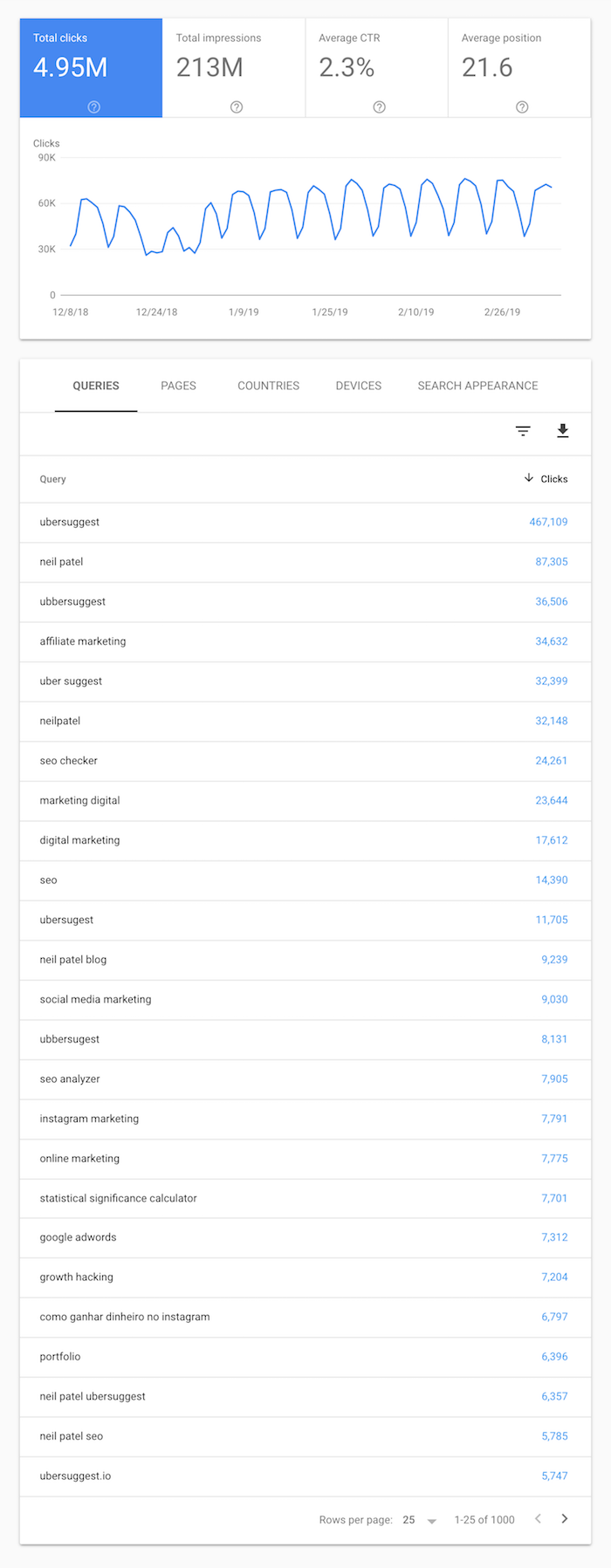
That’s a laundry list of keywords that drive me the most traffic. But there is an issue with a lot of those keywords. They drive traffic but not revenue.
Keywords like affiliate marketing, SEO analyzer, SEO checker, statistical significance calculator are all terms that won’t drive me any revenue.
I don’t offer affiliate marketing services and anyone searching for terms like “SEO analyzer” are looking to do SEO themselves versus paying my agency to do it for them.
Even terms like “statistical significance calculator” don’t drive revenue. Anyone searching for that is looking to see how their A/B tests are performing versus hiring my agency to run tests for them.
If I naturally ranked for these terms without any effort, that’s one thing. But I created dedicated landing pages, like this one, because I was trying to rank for them.
In other words, I spent time and money ranking for keywords that don’t drive any revenue.
Now, there is a reason why I rank for these terms and I do want this traffic, even though they don’t drive revenue, but I will get to that later in this post.
First, let’s go over how you can pick the right keywords to rank number 1 for.
You probably already have some ideas are a good fit for your business. I want you to type them into Ubersuggest.
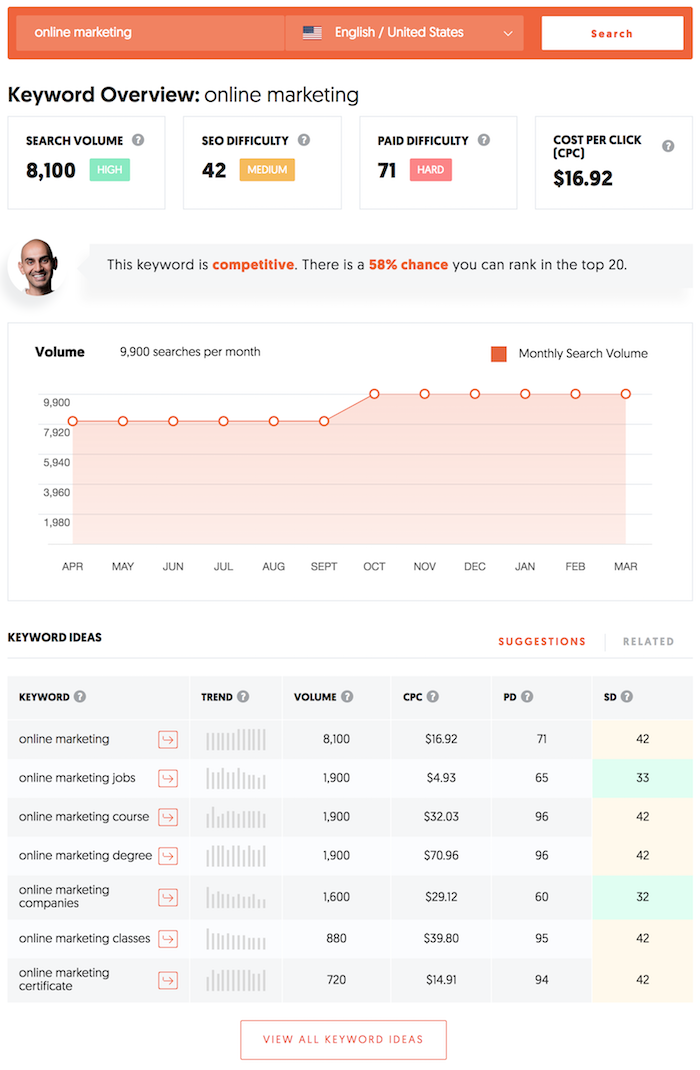
Ubersuggest will show how many people search for that keyword within a particular region as well as the SEO difficulty and paid difficulty.
In addition to that, you’ll see a laundry list of keyword ideas if you click on the “keyword ideas” navigational option.
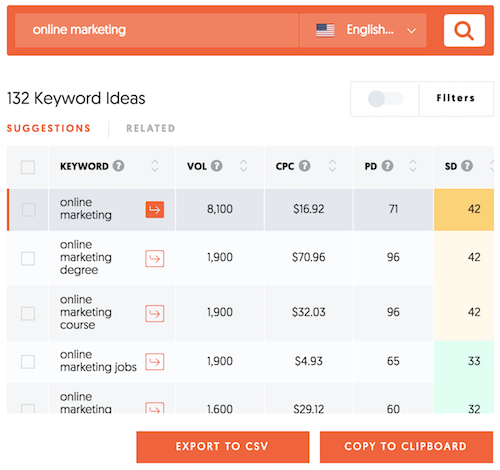
What you’ll want to look for are keywords that have high paid difficulty, which means the keyword is so valuable that a lot of people are competing for the paid ad spots.
In addition to looking at the paid difficulty number, you’ll want to find keywords that have a low SEO difficulty score.
When a keyword meets those 2 requirements it means it is easy to rank and people find it valuable enough to buy ads on the keyword. And if they find it valuable enough for people to buy paid ads, that means the traffic is converting into customers.
That’s more important than just finding popular keywords as traffic doesn’t always equal sales.
And when you are doing keyword research, make sure you pick the right regions.
Again, you already know I get good traffic, but as I mentioned earlier, not all of the traffic is equal.
Just look at the regions that made up my traffic in the last 7 days:
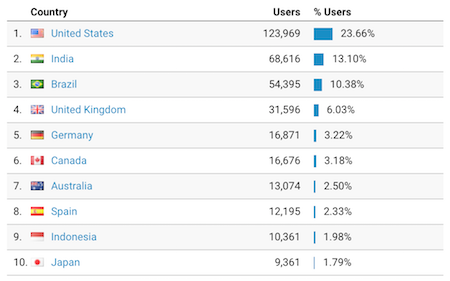
The United States makes up a large portion of my traffic. Over time I’ve expanded globally, hence you are seeing my traffic increase in regions like India and Brazil. Even Japan, which is the newest region I have been expanding to, has been growing rapidly.
Knowing the split between regions, which ones would you say make up the largest portion of revenue?
If you guess the United States, you are correct. But what region do you think is in second place?
If you guess India or Brazil, you are wrong.
I love those two countries, but the United Kingdom generates more revenue than both of those regions combined, even though it produces 25.6% of the traffic as Brazil and India combined.
When you are doing keyword research, you need to think about regions. This is also the main reason why I integrated regions within Ubersuggest.
You can’t just focus on keywords that have high paid difficulty and low SEO difficulty. You need to focus on the countries where the majority of your customer base is.
Now, you know SEO is competitive and it takes a while to rank. So if you can go after up and coming regions that you know you’ll want to target in a few years, then you should go after those keywords right away.
It takes a while for people to see this, but the reason I have done pretty well when it comes to picking the right terms is that I focus on regions that aren’t ready for my company just yet but will be over the next 5 to 10 years.
I know that sounds crazy, but to do well you need long-term goals and a strategic outlook for your business.
To give you an idea of how I think, let’s look at how the worlds GDP is going to change over the next 10 years:
That video bases GDP growth off of historical data. Companies like Standard Chartered believe there will be much more aggressive GDP growth, especially coming out of Asia.
No matter what source you look at, almost everyone is coming to the same conclusion… countries with big populations will see faster GDP growth.
If I were you and I was trying to pick the best keywords to rank number 1 on Google, I wouldn’t just focus on countries that are already established and saturated, I would also focus on countries that are growing fast and aren’t competitive yet.
Even in the short run, although some of these countries may not have as much demand, there is no competition, which means it will be easier to take up a larger chunk of the market.
Doing keyword research in new countries isn’t as simple as typing in random keywords and seeing what’s popular.
You can do that with tools like Ubersuggest, but that may still cause you to pick the wrong ones.
For example, in the United States, the keyword “SEO” is more lucrative than the phrase “digital marketing.” But in Brazil, the phrase “marketing digital” (their version of digital marketing) is more lucrative than the term SEO.
In other words, cultures are different.
So, what you should do is use a tool like Similar Web to see who your closest competitors are. When I look at NeilPatel.com on Similar Web, it gives me the following results:
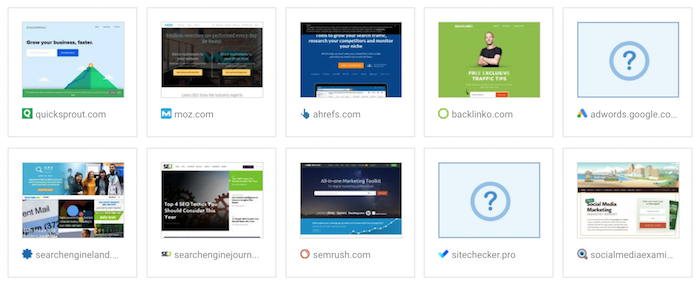
You can then take those competing URLs and enter them into Ubersuggest.
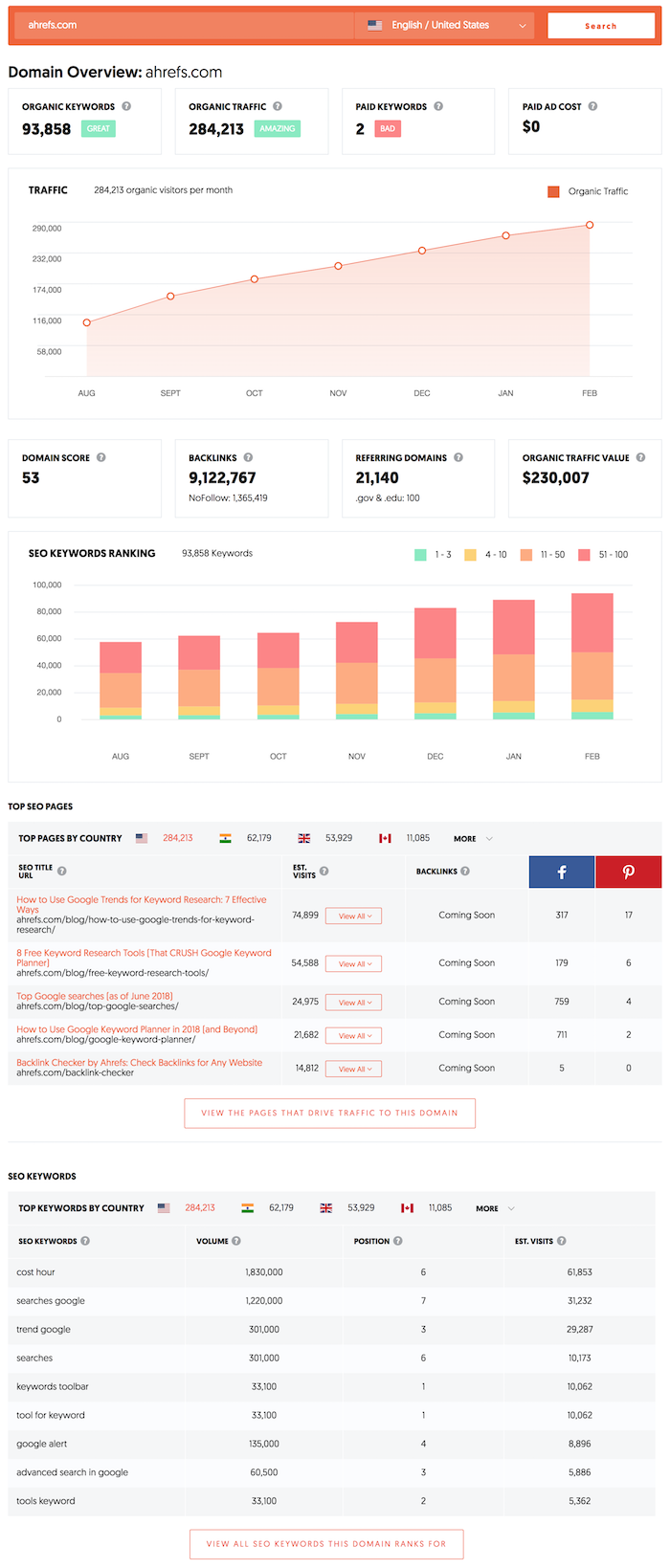
What I want you to do is first look at the “top pages” report. This report shows you the most popular pages that are driving traffic to any given site.
The best part about this report is that you can break down popular pages by country.
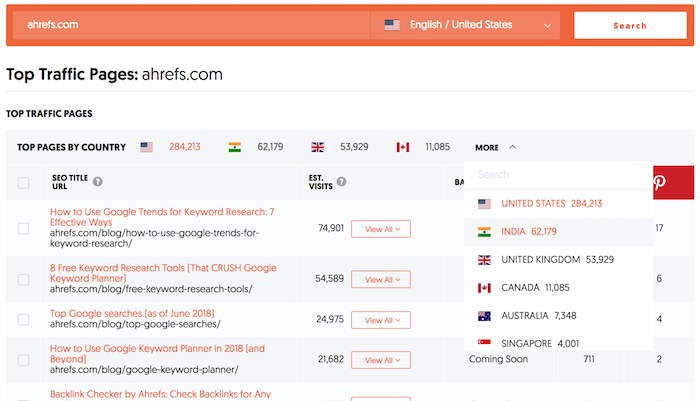
From there you can see the popular pages and even the keywords that drive traffic to that page within that country.
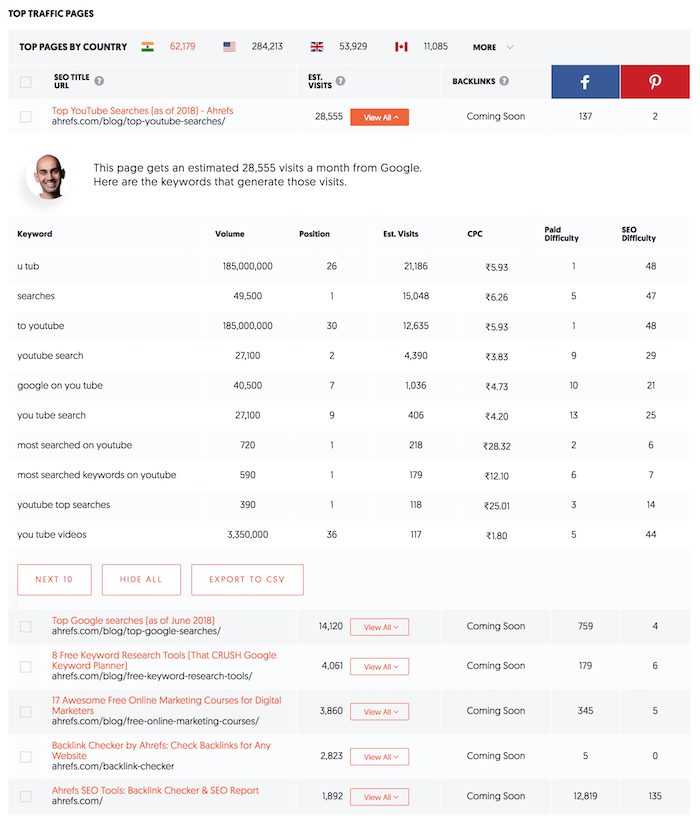
And similar to the top pages report, you can do the same thing with the keywords report.
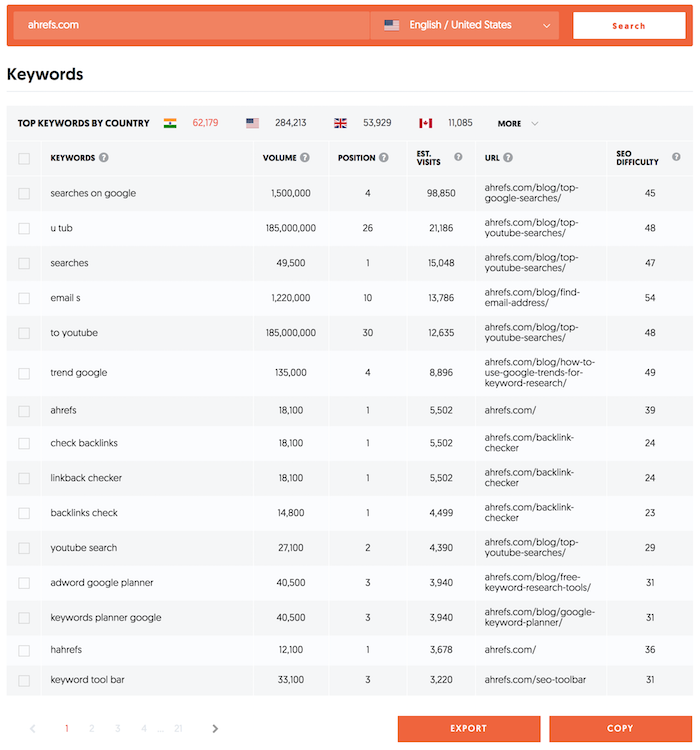
With the combination of the top pages and keywords report, you should have a list of great keywords to go after. Not just from a domestic standpoint, but from a global standpoint as you can see the popular keywords for each country in Ubersuggest.
Once you have a list of keywords, it’s time to create content and focus on ranking at the top of Google. But you already know that. 😉
The real question is, how do you rank high?
Well, I have tons of blog posts on that. Here are a few of my favorites that will help you out:
Once you start ranking for the terms you want to go after, you need to do one last thing.
Remember how I said earlier in this post that I rank for terms like “SEO analyzer” that don’t drive me any sales?
And how I want to rank for those terms?
Once you rank for the main terms and even the long tail ones that will drive you direct revenue, you need to start winning mindshare.
The way you create a successful SEO campaign is to capture an audience before they are even ready to become your customer. This way your brand will grow with all segments of your potential customer base.
Just think of it this way, when people Google the term “SEO analyzer” and land on my site, the majority of those people will want to do SEO on their own.
But a small portion of those people may get frustrated and realize that they should just hire someone to do it for them.
And then there is another group that will search for that term, want to do SEO for their own site, and they’ll even get great results over time. Then when their friends asked them how they did it, they’ll mention how they used a free tool on NeilPatel.com.
Their friend will probably check out my site and maybe even contact me for services as they don’t care to do their own SEO.
In other words, when you are doing keyword research, you’ll want to focus on ranking for all the terms in your industry if you want to build the biggest brand and dominate.
The mistake I made is I went after those terms too soon. It worked out in the end, but I should have first focused on keywords that drove direct sales and then went after the keywords that would grow my brand.
SEO isn’t free! It takes time and money.
You have to look at it as an investment just like you would with paid ads.
So, if you are going to rank for keywords and do SEO, go after the correct terms. Spend a little bit of time doing keyword research and competitive analysis because you don’t waste a year climbing to the top of Google only to find that the term you went after doesn’t drive any sales.
And if you happen to be lucky enough to have extra money to invest in SEO, consider expanding internationally. It’s the best move I made, and I am dumping in as much money as I can to dominate the globe.
Businesses no longer have to live within one city, region, state, or even country. You have to think global if you want to win in the long run.
So, what do you think about my keyword research process?


email marketing is typically performed
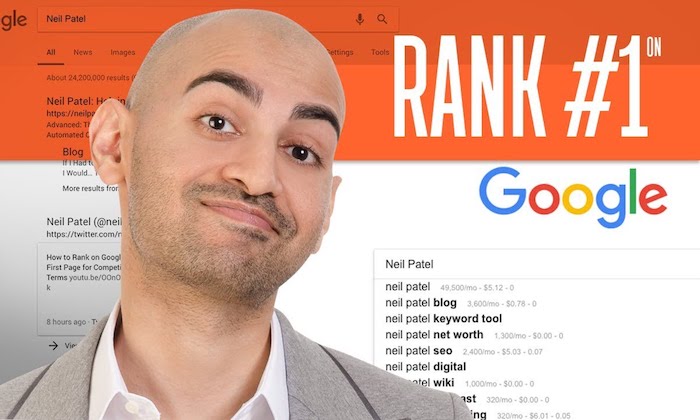
Don’t you hate how it takes forever to get results when it comes to SEO?
Everyone says it takes 6 months to a year and even in some cases many years to see results.
Well, I have some bad news and some good news for you.
Let’s start with the bad news…
SEO is a long-term strategy. It’s not about doing it for a few months and forgetting about it. And if you stop focusing on it eventually your competitors will outrank you.
And now let’s get on to the good news.
You can get results in the short run. You may not get all of the results you want right away, and you may not rank for your ideal keywords, but that doesn’t mean you can’t get results within 90, 60, and even potentially 30 days.
So how do you get results within a few months?
Well first, let’s rewire your brain so you think about SEO in the correct way.
If you want to rank number 1 on Google, what do you need?
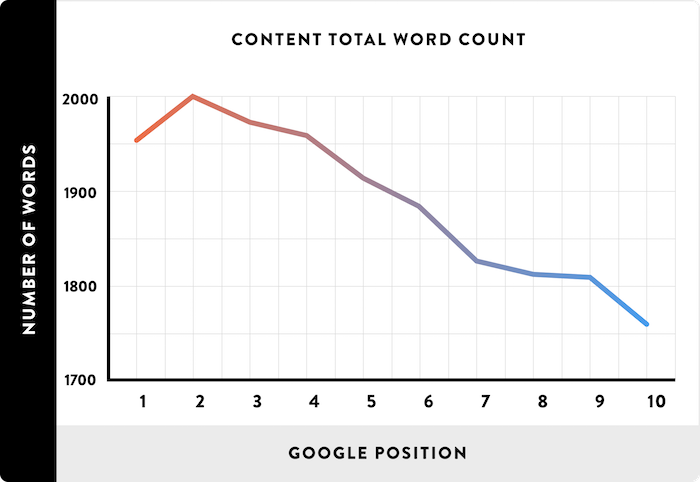
Well, the data shows you need to write lengthy content. Because the average web page that ranks on page 1 of Google contains 1,890 words.
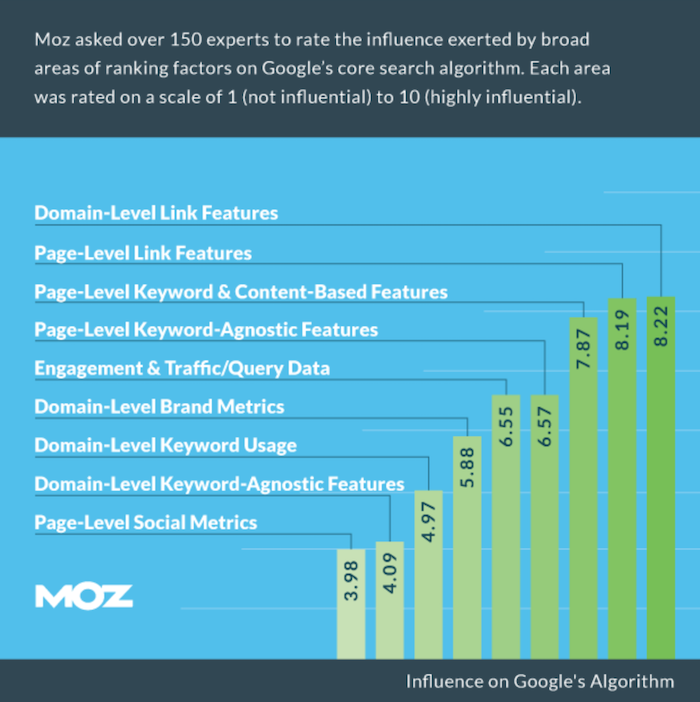
And of course, what’s content without links? Because the 2 most important factors that affect rankings according to the SEO industry are domain level links and page level links.
But here is the thing: SEO isn’t what it used to be. Until 2010, you used to be able to add keywords in your meta tags and you would get rankings within a few months.
And as the web got more crowded, you could then get results by doing the same old thing but you also had to build a few links. That worked really well between 2010 and 2013.
As more businesses popped up, everyone started focusing on content marketing. That was the hot thing. From 2013 to 2017, if you created tons of text-based content, got a few social shares, and picked up a few natural backlinks you could dominate Google.
But now, there are over a billion blogs if you include WordPress.com, Medium, and Tumblr.
That means Google has their choice when it comes to determining what sites to rank at the top.
In other words, just because you write lengthy content or build backlinks it doesn’t mean you are going to ranks. Millions of other sites do that as well.
And even if you got in early and your site is 10 years old, it’s no longer that easy to dominate the web.
Just look at sites like Wisegeek. They used to dominate the web as it’s a site with thousands of informative articles.
And now look at their traffic…
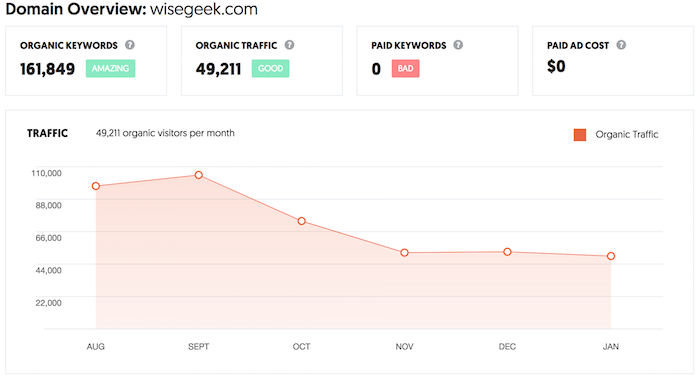
According to Ubersuggest, they get roughly 49,211 visitors a month from Google within the United States. It may seem like a lot, but their traffic is continually going down.
When I met the founder years ago it was in the millions… but not anymore.
It doesn’t even matter that the site has 8,761,524 backlinks from 74,147 referring domains.
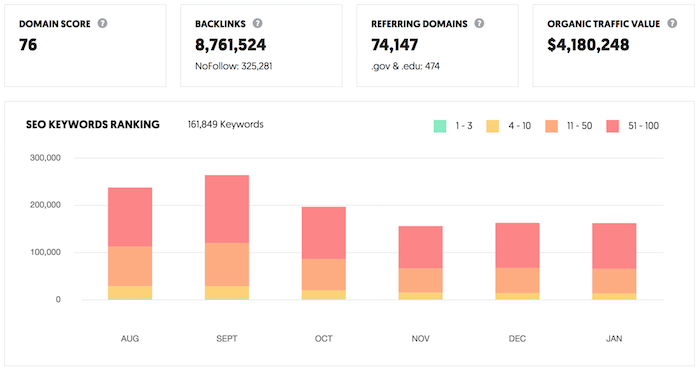
Now you may make the argument that Wisegeek doesn’t have the best content. But I have tons of examples of sites with amazing content that have the same issues.
For example, Derek Halpern from Social Triggers creates great content. Just go check out some of his blog posts if you don’t believe me.
But let’s dive into his traffic stats…
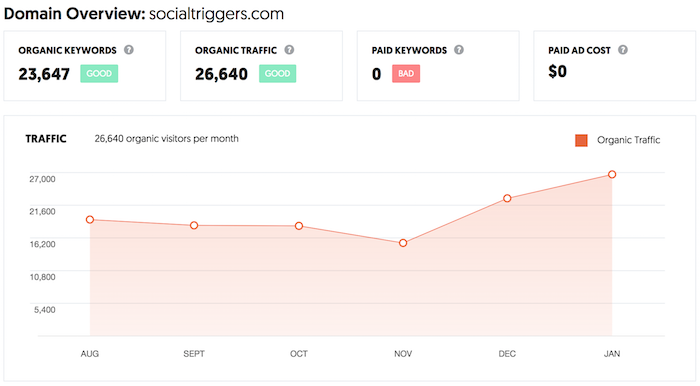
According to Ubersuggest, he gets roughly 26,640 visitors a month from Google in the United States and he has 993,790 backlinks from 5,678 referring domains.
And he ranks for some great terms. Just look at the top pages he is ranking for with terms like “how to become more confident.”
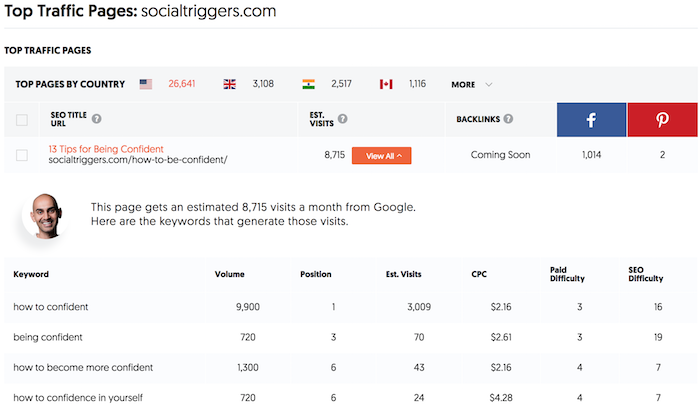
But even Social Triggers has struggled to keep their traffic over time. It’s nothing to do with Derek, he’s a smart entrepreneur, but he decided to quit and focus on his new venture Truvani, which has been doing well.
In other words, content and links don’t guarantee success.
You have to go after low hanging fruit.
Sure, you need content, you need links, and you need to optimize for the other 198 factors Google keeps track of the optimal amount of traffic.
But it’s UNREALISTIC for you to do everything. Even if you hire an SEO agency to help you out.
And there is no way you can wait 12 months to get results from an SEO campaign.
Which means your only solution is going after the low hanging fruit.
Now I wish I could tell you the exact low hanging fruit to go after, but it varies for every site. What I can do is show some of the simple tactics that have worked for me and are easy to implement.
I used to have dates in my URL because it was a default option from WordPress. I didn’t think twice about it. But the moment I removed the dates from my posts, my search traffic went up by 58%.
Best of all, it only took 30 days to get the boost in traffic. 🙂
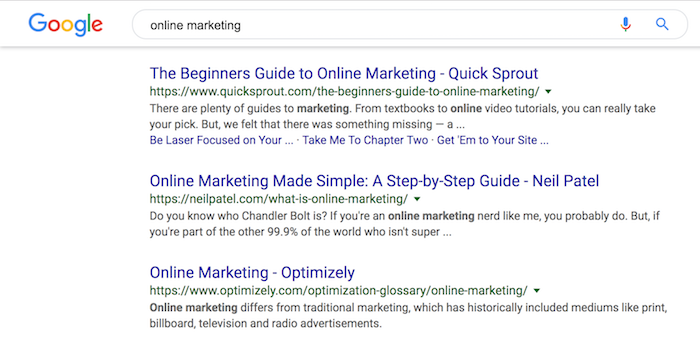
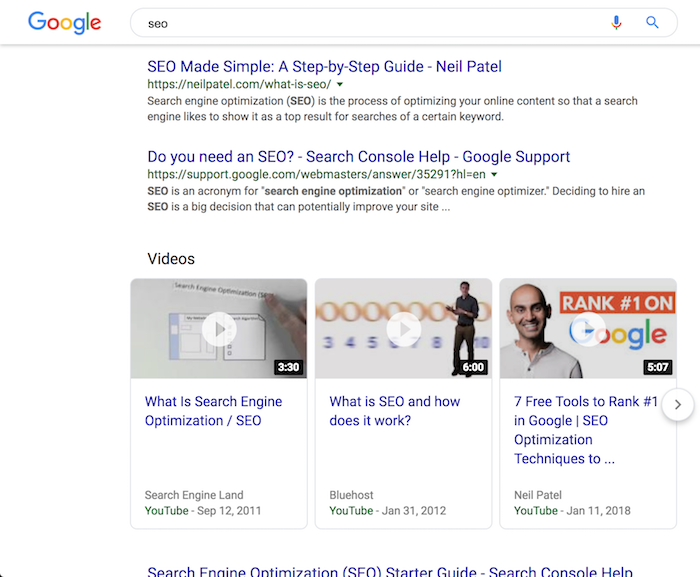
Have you noticed that I rank for terms like “online marketing” and “SEO”?
I’m currently number 2 for the term online marketing:
And number 5 for the term SEO:
Do you want to know a hack that helped me rank higher for those terms? Well, I’ll give you a hint… you’ll find it in my sidebar.
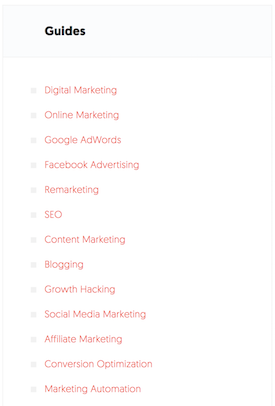
As you can see, I’ve linked to all of my major guides in my sidebar. It helps give them the juice they need so they can rank higher for terms like SEO and online marketing.
If you haven’t done this, you should consider trying it out as it will provide a quick win.
You won’t see the results in 30 days, but within a few months, you’ll notice that those pages will climb in the ranks.
I’ve talked about this one a lot in the past, but only because it works really, really, really, well.
It’s also one of the main reasons I’ve made Ubersuggest into a robust SEO tool. Not just for you, but also because I use it for the land and expand strategy to grow my search traffic.
It’s how I get 2,105,896 visitors a month from just Google…
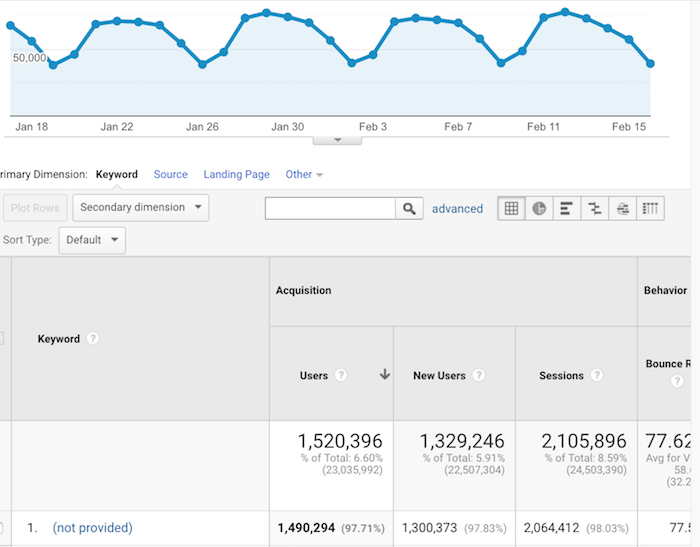
So, what’s this land and expand SEO strategy I use?
You need to first log into Google Search Console.
Once you are logged in, click the “performance” link and you’ll see a list of keywords you are currently ranking for.
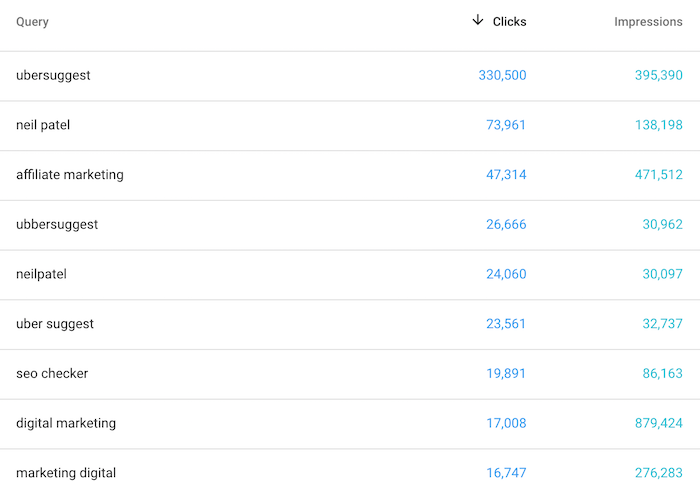
Then click on the most popular term you rank for. Make sure that keyword isn’t your brand name.
Then click on “pages.” You’ll see the page that is ranking for that keyword.
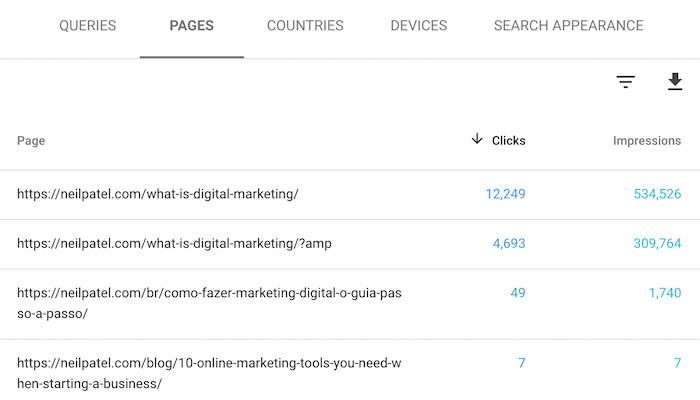
I want you to then head over to Ubersuggest and type in that keyword. Once the report loads click on “keyword ideas” in the sidebar. You’ll see a report that looks something like this:
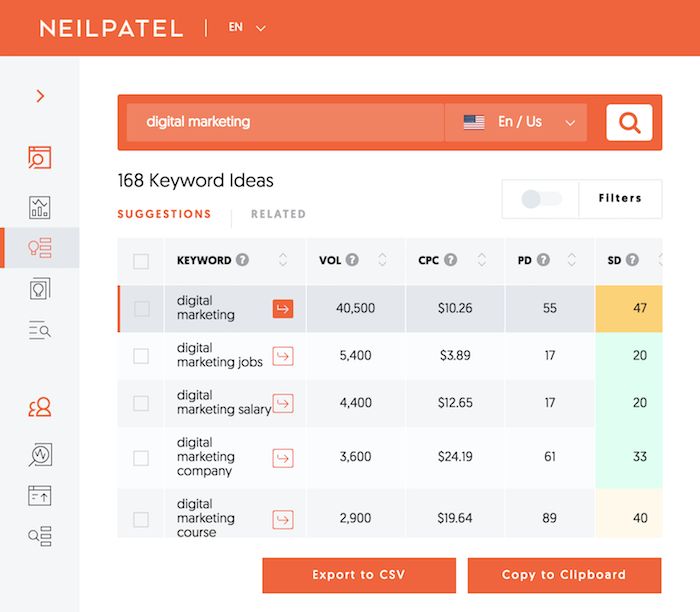
You’ll see a long list of keywords that are variations of the main keyword that you already rank for. Most of those terms are pulled from Google Suggest.
If you take the popular phrases that are related to the main term you already rank for and integrate them into that page, you’ll notice within 30 to 60 days your search traffic will shoot up.
But when leveraging this strategy you need to make sure you adjust your content. You can’t just shove in more keywords, you have to rework your content so it makes sense and it flows naturally.
The reason this SEO strategy is my favorite tactic of all time is that content marketing is a hit or miss. Just because you write content and build links, it doesn’t guarantee success. But if you expand the pages that Google already loves, there is a high chance that you’ll get more traffic.
In many of my companies, I generate more revenue from outside of the United States than I do within the United States.
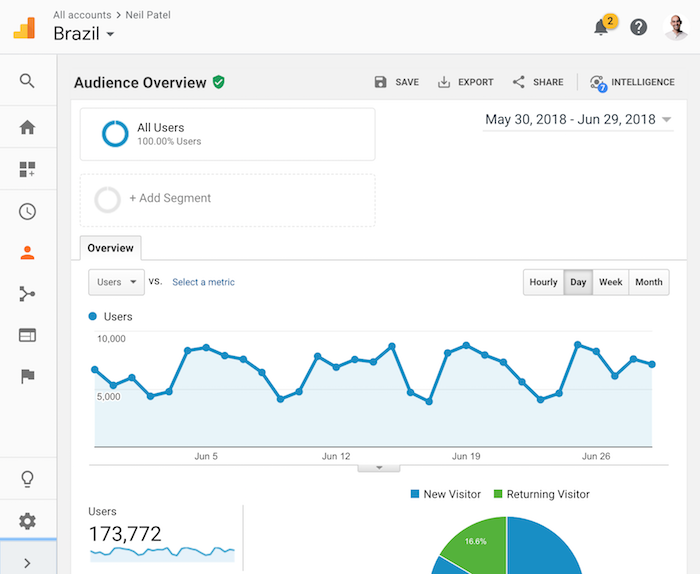
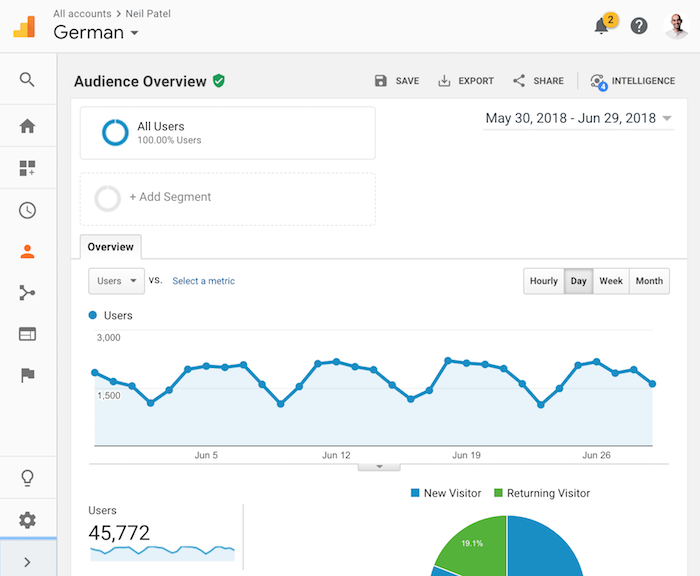
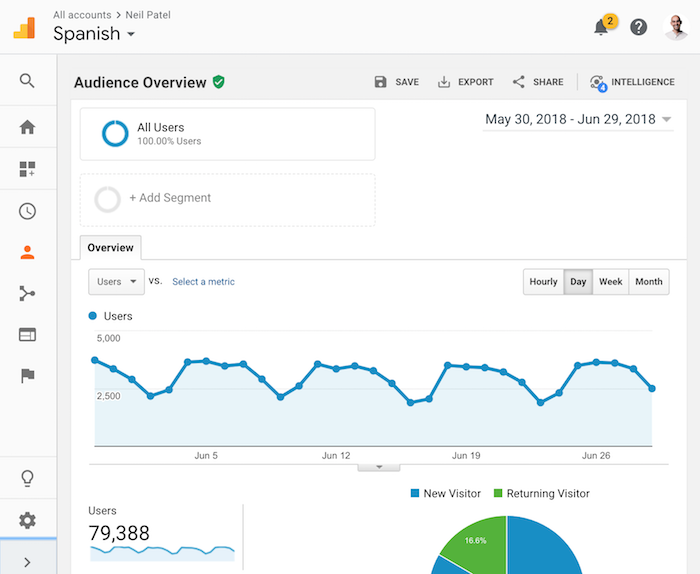
For that reason, plus it was a piece of advice I got from a Google employee, I’ve translated my site into multiple languages.
Just look at my traffic from Brazil…
And here is my traffic from Germany…
And the Spanish market…
What I learned from a Google employee is that they lack content in regions where English isn’t their primary language. So if you focus on these regions, you’ll quickly notice a quick traffic boost and your conversion rate from visitor to customer within those regions should also go up.
Google loves brands. It really is the future of SEO. In addition, brands are more defensible.
As the EX-CEO of Google said:
Brands are the solution, not the problem. Brands are how you sort out the cesspool.
In other words, if more people search for your brand name on Google, you’ll notice that your rankings will go up.
As more people typed in “Neil Patel” within Google, my traffic went from 185,980 a month:
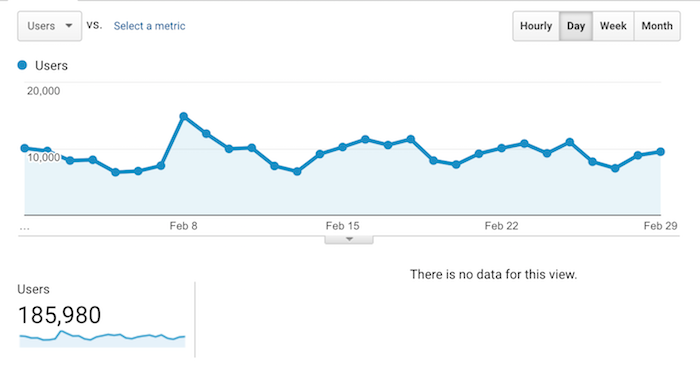
to 454,382 visitors a month:
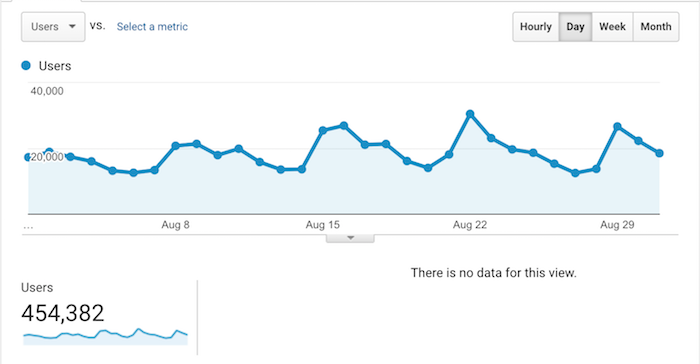
That’s a huge increase considering I saw the increase in a 6-month time frame. And even though I pulled that off back in 2016, it works even better today.
Building a brand isn’t easy and it is a long-term approach. But I am going to give you a head start… one that only takes 5 minutes.
Before I break it down, it follows the rule of 7. Someone needs to see your brand 7 times before they build up loyalty to it. In other words, if you can keep getting people to come back to your site in the short run, you’ll start building a brand and you’ll find your brand queries increase in the long run.
Now here’s a screenshot of my stats so you can see it in the works:
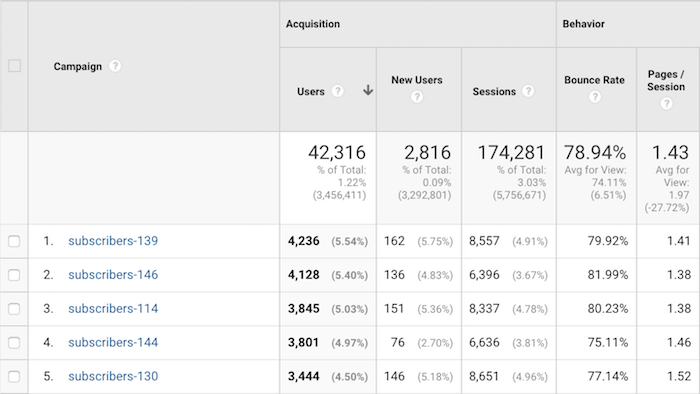
So far, I’ve gotten 42,316 people back to my site 174,281 times. That’s roughly 4 times, which means I have 3 more to go according to the rule of 7.
How did I do this?
I used a tool called Subscribers.
In which I send out a push notification every time I release a new blog post:
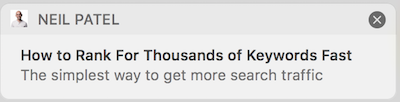
Plus, it allows me to generate 4,000 plus visitors for every push I send. 🙂

You don’t have to write new content or build links to boost your rankings.
You can do something as simple as optimizing your click-through-rate.
Just think of it this way, if 1,000 people performed a Google search and everyone clicked on the second listing instead of the first listing, what does that tell Google?
It tells Google that the second listing should, in theory, be the first listing. And that’s what Google does… they take the listings people are clicking on and move it up to the top and move down the ones people don’t click on.
If you want step-by-step instructions to increasing your click-through-rate, follow hack #1.
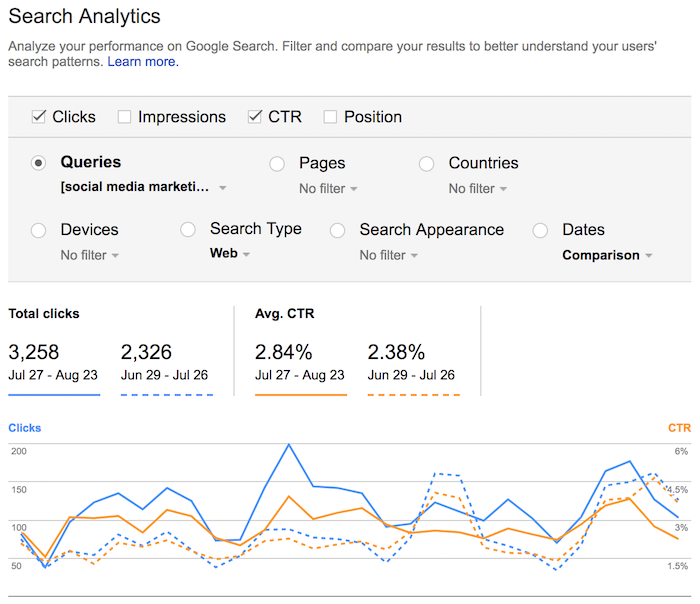
It works really well and fast too. It’s how I boosted my search traffic for one of my main keywords by 1,289 visitors in 30 days.
SEO and paid ads have something in common, in which if you stop doing it your traffic goes down.
Paid ads are a bit worse in which once you stop paying your traffic goes back down to where it was.
With SEO, once you stop you’ll see a slow decline over time.
Now, this strategy is so effective that I employ a full-time person to help me out with it and this is all they do.
Remember how I talked about there being over a billion blogs on the web now?
Well, I have one full-time person updating my old content to ensure it doesn’t get out of date.
Because Google has so many options to choose from when it comes to ranking sites for any keyword out there, they are going to rank sites that are fresher.
By updating your old content, not only do you ensure that you’ll maintain your traffic, but you’ll also get more traffic.
There isn’t any real strategy to this other than to go through your old pieces of content that get traffic and make sure they are up to date.
Sometimes you won’t have to make any changes, other times you may have to change a few sentences or links, and hopefully, not too often will you have to re-write a whole article.
And every blue moon you’ll need to delete a page or a post because it is irrelevant. For example, I’ve deleted my older blog posts that discuss social networks like MySpace that no one uses.
Yes, SEO does take time if you think about it the same way everyone else does.
But if you think about it from a strategical perspective, you’ll find new opportunities that can provide quick results.
You may not get all of the traffic you want tomorrow but going after the low hanging fruit will give the quickest results.
If you want help finding the low hanging fruit with your SEO campaign, you can always reach out to my ad agency and someone will help out. Or you can leave a comment below.
So, are you going to stop thinking of SEO as just link building and content and start thinking of ways to get quick wins?


Youtobe


